The first weekend of August has left crypto in a strange place. Prices look steady, yet the ground beneath them feels busy. Bitcoin is holding in the mid-$60,000s, Ether keeps grinding higher, and traders are paying more attention to Washington than to weekend candles.
However, the quieter tape flatters the market. Politics, protocol fights, custody scares and local bans are all crowding into the same frame. For investors, August has opened less like a summer lull and more like a stress test with better weather.
Markets: the calm before a difficult month
Bitcoin enters the month after a strong July, with major crypto indices posting their best run of the year. Yet traders rarely treat August kindly. Historical returns put it among Bitcoin’s weakest months, with a median decline near 8%.
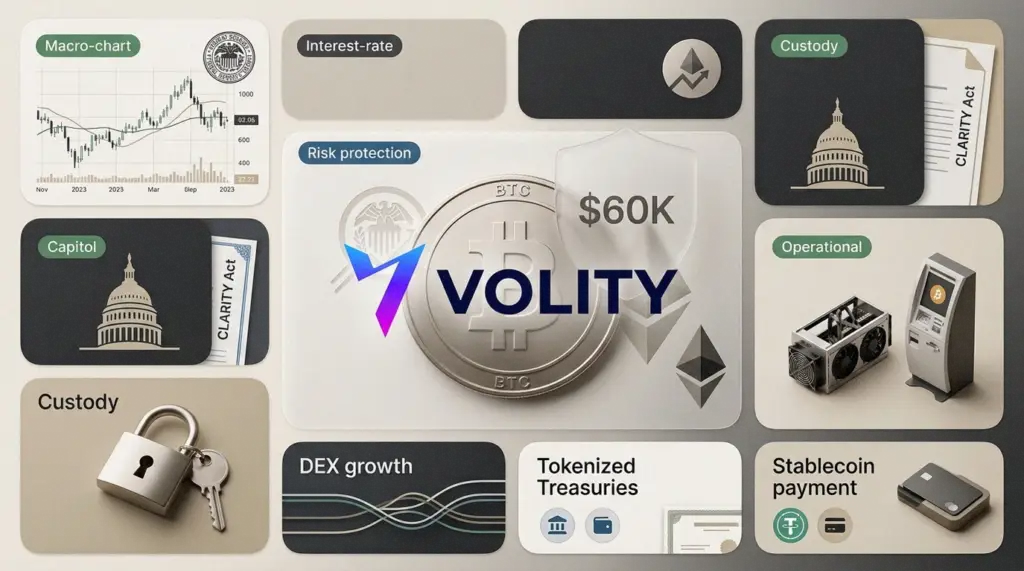
That memory is showing up in options. Put demand around the $60,000 strike has become one of the clearest hedges on desks. The market is not calling for a crash, but it is paying for protection.
Ether, meanwhile, remains the quieter outperformer. ETH is up roughly 40% this year, even as many large altcoins still look patchy. That divergence matters. It suggests investors are rewarding networks with revenue, liquidity and institutional paths.
The macro backdrop gives crypto little space to relax. The Federal Reserve left rates at 3.5% to 3.75% in late July. However, officials kept the door open to tighter policy if inflation proves stubborn.
For risk assets, that creates a narrow corridor. Payrolls, inflation prints and ETF flows now matter as much as trend lines. A dull-looking week can still become expensive quickly.
By the numbers
- $60,000 – the key Bitcoin put strike attracting August hedges.
- About 40% – Ether’s year-to-date gain, despite weak breadth across altcoins.
- 2,628 BTC – the size of a reported Trump Media-linked transfer.
- $88.6 million – reported losses tied to Coldcard wallet incidents.
- 24% – decentralised exchange spot volume as a share of centralised exchange trading.
Politics: Bitcoin moves closer to the campaign trail
Crypto’s political turn is no longer background noise. A Trump Media-linked wallet reportedly moved 2,628 BTC, keeping attention on politically branded balance sheets. These assets trade like investments, but they often behave like campaign weather.
Meanwhile, crypto-aligned political action committees have passed $2 million in spending on a single Michigan House race. That is not loose change. It shows the industry is trying to shape the people who will shape the rules.
The CLARITY Act remains the larger prize. The bill could reach a Senate vote before the August recess, though market odds still sit near 25%. Grayscale and other large players want movement, because legal definitions drive institutional comfort.
Still, politics cuts both ways. An ethics agreement covering how elected officials hold and promote digital assets could change the tone. A pro-crypto headline may not always mean a lighter regulatory touch.
Protocol: Saylor draws a line on BIP-110
Bitcoin’s internal politics are also heating up. Michael Saylor has criticised BIP-110, a proposed soft fork, arguing it lacks enough miner support. His objection matters because he speaks for one of the largest corporate Bitcoin treasuries.
The fight is not only technical. It asks who carries real weight inside Bitcoin today. Developers write code. Miners secure blocks. ETF issuers funnel capital. Corporate holders, including Strategy, shape the public case.
However, miners are under pressure. Difficulty has reportedly dropped by almost 20%, while some operators shift capacity toward AI computing. When margins compress, governance debates become more dangerous.
For long-term holders, the lesson is simple. Bitcoin’s value rests partly on its resistance to hasty change. Yet paralysis also has costs when the network faces new demands.
Security: self-custody gets another bruise
The weekend brought another uncomfortable custody reminder. Reported losses tied to Coldcard hardware wallets have climbed to $88.6 million. The incidents followed earlier firmware troubles, which allegedly drained large sums within minutes.
Self-custody remains one of crypto’s core promises. However, the promise only works when hardware, firmware and user habits all hold up. One weak link can turn sovereignty into a very private disaster.
Regulators are drawing their own conclusions. Minnesota’s ban on crypto ATMs has now taken effect after about $1 million in reported scam losses. The machines offered easy access, especially for cash users.
Yet easy access also made them useful to fraudsters. Activity may now move back to exchanges and peer-to-peer channels. That means stronger checks in some places, but clumsier access in others.
Crackdowns: mining loses ground in Moscow
Russia has moved to ban crypto mining operations in Moscow from August 15. Officials point to power demand and grid stability in the capital. Still, the decision carries a wider meaning.
Large-scale mining sits awkwardly beside sanctions, energy policy and capital controls. Governments may tolerate crypto trading while squeezing production. That distinction matters for miners and equipment makers.
Elsewhere, the direction is similar. Authorities are targeting illegal trading hubs, sanctioned flows and opaque stablecoin routes. For traders, that means fewer informal exits. For institutions, it means cleaner pipes, albeit with more paperwork.
Beneath the regulatory noise, liquidity keeps migrating. Decentralised exchanges now handle about 24% of centralised exchange spot volume. A few years ago, that would have sounded ambitious.
The shift comes as some centralised names wobble. Coinbase, ticker COIN, posted a $359 million quarterly loss after missing revenue estimates again. The stock fell by double digits, reminding investors that exchange equities are not simple crypto proxies.
Strategy, ticker MSTR, has also had a rougher spell. The company reported an $8.2 billion paper loss as Bitcoin traded below its cost basis. Saylor’s pause in further Bitcoin purchases added to the pressure.
Meanwhile, DeFi builders see an opening. Uniswap has launched Earn products around Morpho lending vaults, seeking steadier yields inside a non-custodial wrapper. The pitch is familiar, but the packaging is improving.
Stablecoins are also moving beyond trading. European remittance tests, including a Bank of Italy pilot, put digital dollars and euros near 9% of cross-border volume. If legal rails improve, payment use could grow faster than many traders expect.
Altcoins: tokenisation becomes harder to ignore
XRP remains a magnet for institutional speculation. ETF inflows have crossed $1.5 billion, while structured products have advertised large daily payouts to sizeable holders. However, the token’s price has still slipped from recent highs.
That split is important. Institutional interest can support liquidity, but it does not repeal gravity. When flows slow, highly marketed altcoins can fall just as quickly as they rose.
Tokenised securities look more durable. Ondo Finance is said to be weighing a $500 million acquisition as tokenised assets pass $36 billion. That scale now interests treasury managers, not only crypto funds.
Standard Chartered, BlackRock and OKX have also introduced a collateral framework using tokenised US Treasuries. “real-world assets” are moving from conference language toward balance-sheet plumbing.
Trading: what matters this week
- Respect seasonality. August has punished Bitcoin before, and the $60,000 put wall shows traders remember.
- Watch Washington. The CLARITY Act, ethics rules and campaign spending can all move sector risk.
- Check custody. Hardware wallets, firmware updates and recovery processes deserve the same attention as entries.
- Follow liquidity. DEX volume, tokenised Treasuries and stablecoin pilots point toward the next revenue pools.
- Avoid lazy proxies. COIN and MSTR can diverge sharply from spot BTC during earnings and balance-sheet shocks.
August begins without fireworks, but with plenty of dry timber. Bitcoin’s price may look calm. However, the next decisive move could come from a bill, a wallet bug, a miner vote or one crowded options strike.
Related coverage on Volity
- How to Avoid Crypto Scams: A Beginner Safety Checklist
- How to Choose a Trading Platform: A 10-Point Checklist
- Demo vs Live Trading Account: A 7-Step Checklist Before You Go Live
- How to Size a Trade: Position Sizing and Risk Per Trade for Beginners
- Risk-Reward Ratio Explained: How to Set It and Why It Matters
- ETF vs Index Fund: The Difference and Which to Pick