Crypto’s Sunday test: money pours in as trust takes a hit
Bitcoin is drawing institutional money, while tokenised collateral and stablecoin rules edge closer to everyday finance. Yet the Bitget breach has reminded traders that fast-moving digital rails can also move stolen money with alarming ease.
Sunday’s market offers plenty of bullish fuel. However, it sits beside mounting concerns over custody, protocol governance and the resilience of crypto’s operational plumbing.
Bitcoin finds buyers as miners trim holdings
Bitcoin briefly rose above $87,000 this week, supported by heavy buying in United States spot exchange-traded funds.
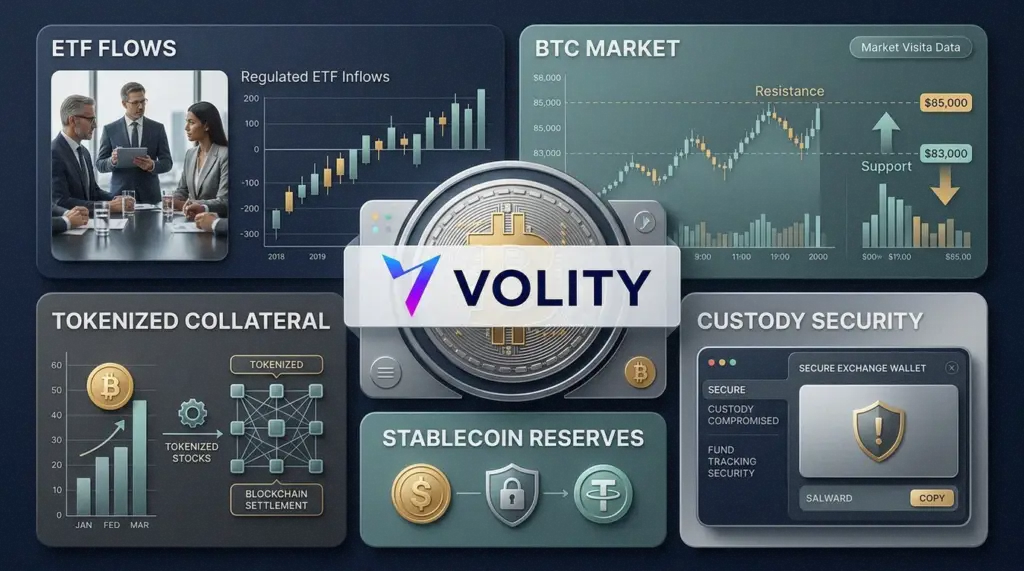
Those funds absorbed roughly $1.7 billion across two sessions. Weekly inflows reached about $2.39 billion, according to market estimates.
Another report put subsequent Bitcoin ETF inflows at $5.3 billion after a Treasury buyback announcement. The figures showed persistent demand for regulated Bitcoin exposure.
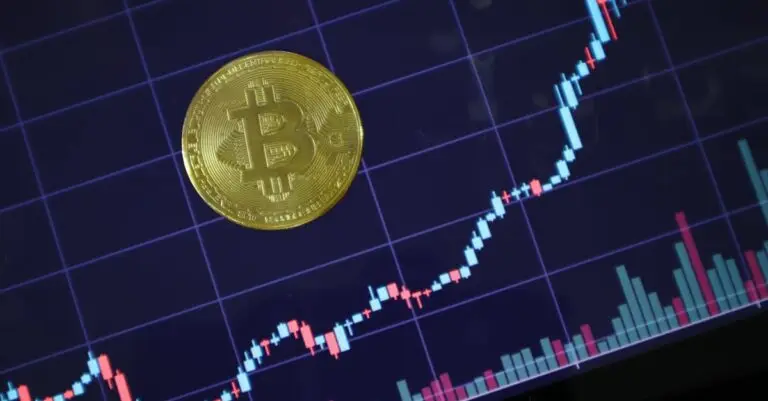
Price action, though, has become less comfortable. Bitcoin has repeatedly struggled around $85,000, while short-term momentum readings have weakened.
Some holders have started taking profits after the latest advance. Traders are now watching $83,000 as the nearest meaningful support level.
A sustained break below that point would test confidence in the rally. Conversely, a clean recovery above $85,000 could bring momentum buyers back.
Mining data has added another caution signal. Network hashrate fell to a three-week low as miners reduced their Bitcoin balances.
Hashrate changes often reflect maintenance, power costs or weather. Still, miner sales add supply when the market already depends on ETF demand.
Tokenised collateral moves towards production
The larger shift may be occurring away from the trading screen. Citi says 77% of financial institutions expect tokenised collateral use during 2026.
Tokenisation places securities or other financial claims on blockchain-based systems. Institutions can then move, pledge and settle those claims more quickly.
Back-office savings remain the main attraction. Faster collateral transfers can reduce capital demands and shorten settlement delays during volatile periods.
Crypto firms are now pursuing the same opportunity. Backpack’s chief executive has outlined plans for up to 10,000 tokenised stocks on Solana.
Meanwhile, Aave V4 is preparing support for Coinbase tokenised stocks. Ethena also plans to extend its USDe trading model into tokenised American equities.
Such products could broaden crypto’s role beyond native coins. They could also bring stock claims, collateral and yield products onto public networks.
The risks travel with them. A blockchain record cannot guarantee issuer solvency, sound custody or ready buyers during a market shock.
Investors must still examine the underlying asset and legal claim. The token is only as reliable as the structure behind it.
Bitget breach sharpens the decentralisation argument
Bitget says attackers moved about $351.6 million from hot and warm wallets across several networks.
The affected networks included Ethereum, XRP Ledger, Arbitrum, Avalanche, Optimism, BNB Chain and Base.
Investigators say attackers compromised a backend wallet system and falsified transfer information. That allegedly triggered the exchange’s internal authorisation process.
Bitget has cited preliminary similarities with previous North Korea-linked operations. Attribution, though, remains unconfirmed.
On-chain analysts have tracked some stolen assets through swaps into Bitcoin. TRM Labs said funds moved through THORChain.
GoPlus reported that 101.5 BTC linked to the incident exited through the protocol. It also identified 27.63 million XRP moving towards Bitcoin.
These figures show observed wallet activity, not the theft’s final destination. Nor do they account for every asset taken.
The breach has reopened an uncomfortable question for permissionless protocols. Should censorship resistance apply equally when funds are visibly stolen?
THORChain argues that it cannot control each user or transaction. Critics say that argument becomes harder when criminal flows recur.
Bitget has offered a 5% bounty for help freezing or recovering assets. The exchange expects staged withdrawal resumptions from September 28.
The immediate lesson is simple. Exchange deposits are claims on a platform, not the same thing as self-custody.
Stablecoins approach a tougher rulebook
United States regulators are also pressing ahead with stablecoin oversight. The Federal Reserve has drafted rules for supervised payment-stablecoin issuers.
The proposal would require full backing with permitted assets. Short-term Treasury bills and other highly liquid holdings would qualify.
Issuers would also face capital and risk-management requirements. A separate proposal covers bank subsidiaries seeking permission to issue stablecoins.
South Korea is weighing liquidity rules for won-denominated stablecoins. Elsewhere, Circle has gained fresh Binance support against market leader Tether.
Circle is also financing payment trials involving the United Nations Development Programme and World Food Programme. Such projects frame stablecoins as settlement infrastructure, not merely trading chips.
That shift raises the bar for every issuer. Traders will increasingly judge coins by reserves, redemption capacity and legal jurisdiction.
Altcoins rise as speculation heats up
The altcoin market reportedly added $371 billion in capitalisation as 87% of surveyed participants turned bullish.
Quant, Ethena and Bitway led weekly gains. Zcash doubled over a month after its co-founder repeated a $5,000 price target.
Fast gains can attract momentum traders. They can also turn a strong trend into a crowded trade within hours.
Solana’s Alpenglow upgrade has reached devnet with a target near 150-millisecond finality. If testing holds, it could strengthen Solana’s payments and trading case.
XRP Ledger stablecoin supply has risen 6%, with Ripple’s RLUSD approaching $2.5 billion. Polygon also reported payment-channel throughput of 11 million updates per second across 25 hubs.
Benchmarks deserve caution, especially before broad production testing. Laboratory speed and stressed-market performance rarely look identical.
Even meme coins have drawn sharper scrutiny. Jason Calacanis called them a “giant scam”, while Pump.fun transferred $5.83 million of SOL to Kraken.
The transfer does not prove a coming sale. Yet traders tend to watch exchange-bound wallets closely when sentiment becomes euphoric.
What traders are watching
- Bitcoin: ETF inflows versus miner sales and profit-taking near $83,000.
- Exchanges: Withdrawal updates and wallet-security disclosures after the Bitget breach.
- Stablecoins: Reserve rules, redemption terms and issuer jurisdictions.
- Tokenised assets: Legal claims, custody arrangements and actual market liquidity.
- Altcoins: Whether rising volumes support gains or merely amplify crowded positioning.
Crypto begins the week pulled by three forces: institutional demand, developing regulation and renewed security anxiety.
Bitcoin needs ETF buyers to absorb supply. Protocols need to prove that openness does not become helplessness.
Meanwhile, token issuers must show that faster settlement comes with real reserves, enforceable ownership and functioning exits.
Related coverage on Volity
- How to Avoid Crypto Scams: A Beginner Safety Checklist
- How to Choose a Trading Platform: A 10-Point Checklist
- Demo vs Live Trading Account: A 7-Step Checklist Before You Go Live
- How to Size a Trade: Position Sizing and Risk Per Trade for Beginners
- Risk-Reward Ratio Explained: How to Set It and Why It Matters
- ETF vs Index Fund: The Difference and Which to Pick