Investing in financial products involves risk. Losses may exceed the value of your original investment.
China 8 4b is a core topic for traders in 2026. The complete guide follows.
Big money, green revolution: China’s $8.4B blockchain bet
A quiet but seismic shift is rippling through the global energy and digital finance sectors: Ant Digital, the tech arm of Jack Ma’s Ant Group, is placing $8.4 billion worth of Chinese green energy assets on the blockchain. This isn’t hype or vaporware-15 million real-world renewable devices (from solar farms to wind turbines) are streaming their data to AntChain, their proprietary blockchain, providing transparent, real-time snapshots of China’s renewable backbone.
Why does this matter? Three words: tokenised real-world assets (RWAs). By digitising vast energy projects, Ant Digital unlocks a globally accessible green energy market. Investors-ordinary people and institutions alike-could soon gain direct exposure to Chinese wind and solar infrastructure, bypassing the banks and underwriting monoliths. Already, Ant has raised about $42 million through tokenised financing for three clean energy projects, demonstrating the tangible possibilities of decentralised capital formation.
How does it work? Energy data from millions of devices is verified, logged, and turned into blockchain tokens. These become tradable real-world asset tokens, offering fractional ownership or revenue streams from actual wind- or sun-powered megawatts. Ant Digital even hints at listing these tokens on global decentralised exchanges – pending regulatory nods.
- Transparency: Immutable ledgers for output, performance, and outages.
- Access: Direct investment for global retail and institutional players.
- Efficiency: Sidesteps traditional finance, accelerates project funding.
- Sustainability: Aligns blockchain with climate goals, not just speculation.
China, notorious for past crypto crackdowns due to energy concerns, is now touting renewables as its route to energy independence and a reduced carbon footprint. The move makes sense: with over 50% of its energy generation sourced from renewables, China is betting that blockchain transparency and financing can supercharge its green ambitions.
Bitcoin futures: whales out, retail in, volatility up
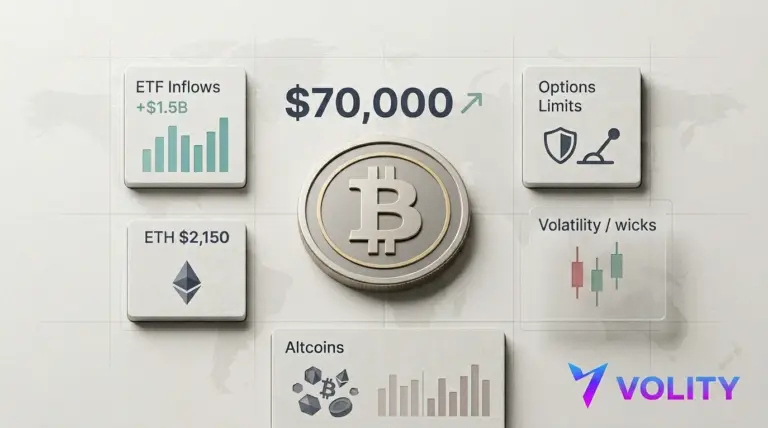
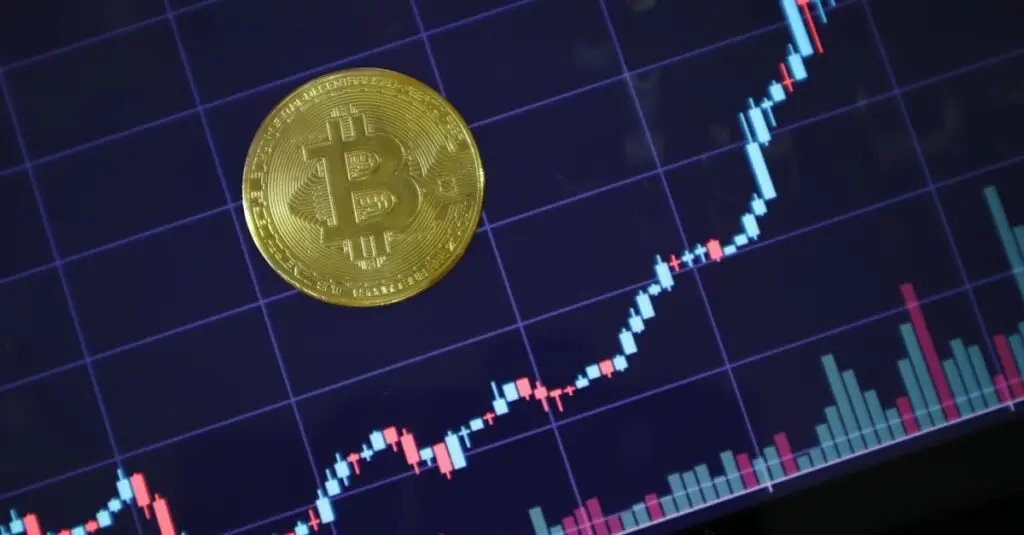
Shift scene to Bitcoin land, where the futures market has notably cooled. Big-money whales-those legendary market movers-are out of the pool, replaced by a surge of retail traders with smaller orders.
- Average order size is down-whales are shrinking their trades or leaving entirely.
- Retail traders are the main force, driving most of the recent volume and volatility.
- This retail dominance means greater price chop and less structural stability.
- Sentiment has turned bearish-taker sell volume outweighs buys, with price stuck in a $100K-$125K range.
Wasn’t Bitcoin at all-time highs just months ago? Indeed-but after whales accumulated heavily during the run from $82,000 to $124,000, August saw major profit-taking: over 112,000 BTC offloaded in a sharp market rotation. Whales’ exit signals caution, and with retail left holding the bag, upward momentum looks anaemic without fresh institutional firepower.
VCs dethroned? Welcome to the crowdfunding revolution
Cap tables in crypto are changing. The old model-where a handful of venture capital titans snagged all the juicy allocations-faces disruption by decentralized crowdfunding. New Web3 teams are skipping the closed VC circle and going straight to their communities:
- Direct token sales to retail backers.
- Chain-agnostic tools that lower the technical barrier for global fundraising.
- FOMO meets democracy: more people, smaller checks, and organic investor communities.
For projects, this means more engaged users but also fiercer public scrutiny. For VCs, it marks a slow-motion revolution: adapt or watch influence melt away.
The quick hits
- XRP is in the spotlight as its price rockets past $3, fueling speculators’ hopes for a fresh altseason rally.
- Gemini’s IPO ambitions get a shot in the arm as Nasdaq reportedly emerges as a strategic backer, signaling public markets’ renewed interest in crypto exchanges.
- Kazakhstan wants its own official crypto reserves as part of a national “digital transformation” push, a tactical move blending monetary sovereignty with financial innovation.
- On the security front: Ledger’s CTO warns of supply chain attacks targeting crypto users via npm packages, another reminder that not all code on the decentralized web is created equal.
- CleanCore Solutions now holds the biggest individual Dogecoin treasury after acquiring 285 million DOGE-meme meets megatreasury.
What to watch next
- Will Chinese regulators green-light tokenised energy globally? The answer could fuse the world’s largest renewables buildout with digital finance at scale.
- Will Bitcoin whales return – or will retail volatility trigger sharper corrections? Watch for upticks in large order volume for clues.
- Will decentralised crowdfunding continue to erode VC monopolies? The balance of power in project finance could reshape everything from token utility to community loyalty.
Bottom line:
This isn’t just another week in crypto. The collision of tokenised infrastructure, shifting market power, and new funding models is actively redrawing the map. Watch these trends closely-they’re where tomorrow’s headlines (and winners) are minted.
For more on this topic see our deep-dives on How ETFs and Stablecoins Are Reshaping the Crypto Market, Crypto Market Turmoil and the XRP ETF: Investment Insights, and Crypto Market: Bitcoin, Ethereum and Top Investments at New Highs.
What our analysts watch: China RWA initiatives sit at an unusual policy intersection. Three desk signals we track. The pace of tokenised-asset capital raised on AntChain and competing platforms (a real adoption metric, separate from announcements). Cross-border participation: whether Hong Kong virtual-asset rules let international allocators access these tokens through regulated wrappers. And the regulatory tone from Beijing (China simultaneously runs a hard ban on retail crypto and a green-light for permissioned RWA tokenisation, a duality the desk reads as deliberate). When the cross-border channels open without policy reversal, China RWA becomes investable capital rather than a closed-loop pilot.
Frequently asked questions
Are tokenised Chinese green-energy assets accessible to global investors?
Currently the AntChain RWA tokens are issued under Chinese regulatory frameworks with limited foreign access. Hong Kong is the gateway: licensed virtual-asset platforms there can list compliant RWA products to non-mainland investors under the Securities and Futures Commission framework. The pathway is real but bottlenecked by VASP licensing capacity. IMF publications cover the broader RWA tokenisation landscape.
How do real-world asset tokens differ from crypto?
RWAs represent legal claims on off-chain assets (renewable-energy revenues, treasury bills, real estate, commodities). Crypto-native tokens (Bitcoin, Ether) have no off-chain claim; their value derives from network properties and market demand alone. The tokenisation wrapper for RWAs adds traditional securities-law obligations (KYC, accredited-investor checks, prospectus disclosure) on top of on-chain settlement. Investopedia covers the RWA category.
What risks do RWA tokens carry that pure crypto does not?
RWAs introduce off-chain enforcement risk. If the underlying solar farm fails to generate the contracted output, the token holder relies on legal recourse against the issuer rather than a purely on-chain settlement. Custodian risk, audit risk, and jurisdictional risk all apply. The FATF Travel Rule and FCA tokenisation guidance shape how compliant platforms structure these products. The benefit (real economic exposure on-chain) comes with traditional securities-law plumbing layered onto blockchain rails.
Is China actually pro-blockchain or anti-crypto?
Both, by design. Mainland China bans retail crypto trading and mining while actively building permissioned blockchain infrastructure (the Blockchain Service Network) and authorising tokenised RWAs through licensed platforms. The policy logic separates speculative crypto (banned) from utility-driven blockchain (encouraged) and digital yuan settlement (state-led). BIS research covers the China CBDC and permissioned-blockchain trajectory in detail.
Related guides
- Bitcoin explained
- Ethereum explained
- Cryptocurrency trading
- Best crypto investments
- Crypto trading platforms
Volity operates a trading platform and also publishes educational and analytical content about trading. The content on this page is for educational purposes only and should not be considered financial advice. Volity may benefit commercially when readers open trading accounts through links on this site.
Our content is produced and reviewed under documented editorial standards; see our comparison and review methodology.