Crypto’s October test: bullish forecasts meet real-world friction
Bitcoin enters October with a strong chart and an awkward question. Can institutional buying push prices higher, or has the rally exhausted its easiest fuel?
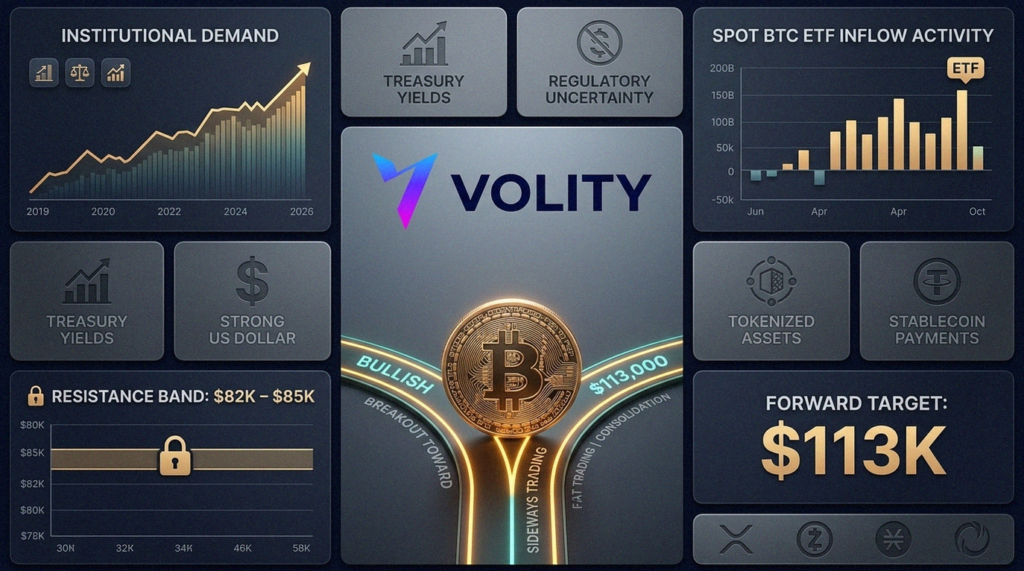
Citigroup has raised its 12-month Bitcoin target to $113,000, from $82,000. It also lifted its Ether forecast to $3,028, from $2,240.
The bank cites healthier crypto activity, a softer macro backdrop and returning exchange-traded-fund demand. Bitcoin’s roughly 42.5% third-quarter rise has also restored investors’ taste for risk.
Yet the market now faces a less exciting task: absorbing supply. Bitcoin has traded near $82,000 to $85,000, where about 1.39 million BTC sits close to break-even.
Those holders may sell if prices recover, creating a stubborn ceiling. Analysts estimate US spot Bitcoin ETFs may need roughly $190 million in daily inflows.
That level would help Bitcoin clear the range with conviction. Without it, the market could spend October moving sideways and frustrating both camps.
The case for $113,000
Citi expects financial advisers and brokerages to increase Bitcoin allocations gradually. Its outlook assumes about $5 billion of crypto inflows during the next 12 months.
That forecast does not depend on another retail stampede. Instead, it assumes traditional investors will slowly make room for digital assets.
Slow money lacks the spectacle of a speculative frenzy. Still, it can prove more durable when markets turn volatile.
September offered some support for that argument. US spot Bitcoin ETFs attracted roughly $2.65 billion in net inflows during the month.
However, the run briefly broke on Wednesday. The funds recorded about $148.69 million in net outflows, ending a nine-session inflow streak.
Bulls see that withdrawal as routine profit-taking. Bears see a warning that ETF demand may weaken near major resistance.
The dollar and Treasury yields will shape the next move. A softer dollar could support risk assets, while rising yields could quickly cool enthusiasm.
- Bitcoin resistance: $82,000 to $85,000
- Citi’s 12-month Bitcoin target: $113,000
- September spot ETF inflows: about $2.65 billion
- Estimated daily ETF demand needed: $190 million
Washington slows the legislative route
The Senate’s failure to advance the CLARITY Act has complicated hopes for a broad market-structure law. Exchanges, issuers and large investors wanted clearer statutory rules.
Instead, the industry remains governed by overlapping agencies, court disputes and state-level challenges. That uncertainty affects which products firms can offer and where they can offer them.
The Commodity Futures Trading Commission has sent proposed prediction-market rules to the White House. Meanwhile, Securities and Exchange Commission rulemaking has eased some immediate anxiety.
Neither development resolves the larger jurisdictional fight. Traders should expect policy headlines to remain capable of moving individual tokens sharply.
Europe has its own pressure point. Binance’s ability to serve customers without Markets in Crypto-Assets authorisation faces growing scrutiny.
A licensing decision could affect customer access, product lists and competition across the bloc. For exchanges, regulation is becoming an operating cost rather than a distant risk.
Tokenisation gains working parts
Tokenised assets now total about $34 billion, with single-stock products drawing particular interest. South Korea is preparing to put shares, bonds and funds onchain.
The focus has shifted from promotional language to settlement mechanics. Institutions want programmable restrictions, controlled transfers and records that satisfy auditors.
Base’s Cobalt upgrade aims to add controls for tokenised assets. Those tools could help issuers manage ownership rules and compliance obligations.
Payments are moving along the same track. Lloyds reportedly settled a $750,000 payment with Visa using USDC in less than an hour.
The transaction barely registers beside global daily payment volumes. Yet it tests stablecoins as financial plumbing, not merely as trading collateral.
Chainlink is supplying data infrastructure for Open USD, a stablecoin project with more than $1 billion in liquidity commitments. The commitments still need real usage, transparency and credible controls.
Security presents the market’s bill
September became crypto’s worst hacking month of 2026, with losses of about $768 million. Two events caused most of the damage.
The Bitget breach reportedly cost roughly $388 million. An exploit involving Liquid Network accounted for another $320 million.
More than $270 million linked to the Liquid incident was later returned. Even so, the episode exposed vulnerabilities across cross-chain and layer-two systems.
MetaMask is also exiting validator operations during a security investigation. The withdrawal involves around 17,000 validators and roughly 523,000 ETH.
MetaMask says user wallets face no immediate threat. Still, the exit could affect staking liquidity and confidence in outsourced infrastructure.
For investors, this distinction matters. Self-custody risks differ from validator risks, although both can affect token prices.
Altcoins offer bigger swings
Midnight rose more than 20% as interest returned to privacy-focused technology. Privacy tokens remain commercially attractive and politically sensitive.
Users value confidentiality, while regulators and exchanges demand traceability. That tension can produce rapid rallies, followed by equally rapid reversals.
Stacks gained about 20% after Muneeb Ali became chief executive. The move returned attention to leadership and Bitcoin-linked development.
Zcash held near $1,400 after holders approved about $8.4 million in grants. The funding supports development, though traders still question its long-term treasury model.
XRP started October with competing forces. Ripple released one billion XRP from escrow, adding a familiar supply event.
At the same time, XRP Ledger activity reportedly exceeded 929 million XRP on September 29. XRP recently moved back above $1.50 after an Evernorth merger vote passed.
Traders now watch $1.56 as near-term resistance and $1.65 as the next level. A break lower would revive concerns about escrow-related supply.
- Watch ETF flows: sustained inflows would strengthen Bitcoin’s breakout case.
- Watch $85,000: failure there could keep Bitcoin range-bound.
- Watch security news: exploits can hit infrastructure tokens before broader crypto markets.
- Watch regulation: exchange access and stablecoin rules may shape winners more than narratives.
Bitcoin has the broadest institutional story, while tokenisation carries the largest infrastructure ambition. Hacks, however, remain the market’s most expensive reminder.
October will test whether demand can outrun supply. It will also test whether crypto’s financial machinery can become safer before its next major wave of capital arrives.
Related coverage on Volity
- How to Avoid Crypto Scams: A Beginner Safety Checklist
- How to Choose a Trading Platform: A 10-Point Checklist
- Demo vs Live Trading Account: A 7-Step Checklist Before You Go Live
- How to Size a Trade: Position Sizing and Risk Per Trade for Beginners
- Risk-Reward Ratio Explained: How to Set It and Why It Matters
- ETF vs Index Fund: The Difference and Which to Pick