Crypto’s new fault lines: Bitcoin waits, stablecoins advance
Wednesday, October 28, 2026. Bitcoin is losing altitude before the Federal Reserve’s decision. Meanwhile, stablecoins are gaining distribution through exchanges, banks and corporate payment systems.
The split is becoming harder to miss. Speculative trading still sets the daily mood, while settlement infrastructure is attracting the industry’s longer-term capital.
Bitcoin meets a colder October
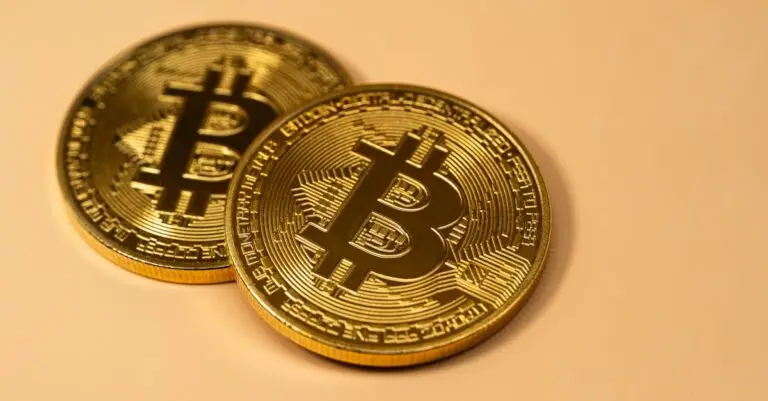
Bitcoin traded near $80,800 on Wednesday, down about 4% this month. It is heading for its weakest October in six years.
That result cuts against a familiar seasonal pattern. Since 2020, Bitcoin has gained roughly 18% on average during October.
Spot demand in the United States has stayed negative since October 14. Coinbase’s premium over offshore venues has also remained below zero throughout the month.
The premium reached about minus 0.146 on October 24. That reading suggests American buyers have shown less urgency than traders elsewhere.
CryptoQuant’s Bull Score Index has fallen from 90 to 60. The figure still supports a broadly constructive market, but momentum has plainly weakened.
Traders are watching $73,000 to $77,600 as the main support area. A break below that range could force recent buyers to reconsider their positions.
Large holders have added pressure. One update showed whales taking about $156 million in profits while cutting 8,162 Bitcoin.
Those sales represented roughly $664 million at prevailing prices. Yet a single day’s whale activity rarely settles the market’s wider direction.
The Fed decision will likely trigger the first move. The following 24 hours may reveal whether that move has real sponsorship.
- Bitcoin: about $80,800 on October 28
- October performance: roughly minus 4%
- Key support: $73,000 to $77,600
- Coinbase premium: about minus 0.146 on October 24
RLUSD gains a wider audience
Ripple’s RLUSD stablecoin has reached Coinbase’s retail, institutional and prime-brokerage customers. The listing covers Coinbase Exchange, the main app and Coinbase Prime.
Users can move RLUSD across the XRP Ledger, Ethereum and Base. Ripple also plans to provide liquidity on Base.
The arrangement permits one-to-one conversion between RLUSD, dollars and eligible dollar stablecoins. Coinbase intends to add the token to its Global Exchange collateral system.
No launch date has been set for that expansion. Still, collateral eligibility would give RLUSD a more useful role than simple spot trading.
RLUSD launched in December 2024 and now exceeds $2.4 billion in market value. Moody’s has assigned A2 long-term and Prime-1 short-term ratings.
The rating reflects reserves estimated at about 103% coverage. It also considers reserve quality, liquidity and operational oversight.
That is the stablecoin contest in miniature. Distribution, redemption confidence and collateral use matter more than a loud marketing campaign.
Banks test the settlement rails
Circle and ACI Worldwide are preparing a USDC settlement test within Colombia’s banking system. The project would connect regulated banks with blockchain-based dollar transfers.
Brazil is moving along a parallel track. Itaú has formalised crypto trading, while Binance has sought a local crypto licence.
The deadline for that Brazilian application is October 30. Local companies have increased stablecoin activity amid currency and election concerns.
Stripe is extending the commercial contest as well. Its business payment tools will support instant transfers through company handles, including stablecoin settlement.
Consumers may barely notice these changes. A faster supplier payment or cheaper international invoice could become crypto’s most valuable public face.
Tokenised assets seek real utility
Tokenised U.S. Treasuries on Avalanche can now support loans and trading positions. That shift turns onchain government debt into working collateral.
Securitize plans to add Stellar as its 17th blockchain for tokenised assets. Issuers want more distribution choices, while networks want assets with dependable cash flows.
The question has changed over the past year. Markets no longer ask whether funds and Treasuries can appear onchain.
They ask whether lenders will accept them, whether investors can trade them, and whether legal ownership holds up under stress. Those details decide whether tokenisation remains a polished pilot.
JQQQ has also brought Nasdaq-100 exposure into the onchain debate. Investors should distinguish between index-linked structures and direct ownership of underlying shares.
That difference can affect dividends, voting rights, custody arrangements and counterparty exposure. A token can track an asset without carrying every right attached to it.
Washington enters the trade
Crypto groups have reportedly spent $176 million on the November 3 midterm elections. Fairshake and allied organisations are targeting candidates and market-structure legislation.
The CLARITY Act sits near the centre of that campaign. The bill would draw boundaries between securities and commodities oversight.
Those boundaries matter to exchanges, custodians and token issuers. They may also determine which products reach mainstream American platforms.
Markets can price campaign promises in minutes. Legislation, rulemaking and enforcement usually take much longer.
Security remains the industry’s bill
Trust Wallet has warned customers about a fraudulent crypto-card website. The site sought sensitive information that could later support phishing or account takeovers.
Data leaks have also affected users connected with Coinbase, Bithumb, Daishin and Mirae Asset. Exposed personal information does not automatically mean stolen funds.
Yet it can give criminals the raw material for SIM swaps and social-engineering attacks. Investors should treat unexpected messages as suspect, even when branding looks convincing.
Predict.fun has confirmed the theft of about $400,000 in USDT and promised full refunds. Earlier reports put suspected user losses near $260,000.
Google has previewed a custody system using multiparty computation for a planned 2027 launch. MPC spreads signing authority across several parties or devices.
That design reduces the risk from one compromised private key. It cannot eliminate failure, but it removes an obvious single point of attack.
What traders are watching
- The Fed’s language on rates, inflation and liquidity.
- Bitcoin’s ability to reclaim $80,000 after the announcement.
- Whether spot demand in the United States turns positive.
- RLUSD’s progress as exchange collateral and payment infrastructure.
- Fresh security disclosures from wallets, exchanges and token platforms.
Bitcoin remains crypto’s loudest asset, but it is not the only important one. Stablecoins are winning access, tokenised Treasuries are gaining utility, and banks are edging closer to blockchain settlement.
Price traders will focus on the Fed and Bitcoin’s support levels. Longer-term investors may find the more durable signal in the quieter business of moving dollars, collateral and invoices.
Related coverage on Volity
- How to Avoid Crypto Scams: A Beginner Safety Checklist
- How to Choose a Trading Platform: A 10-Point Checklist
- Demo vs Live Trading Account: A 7-Step Checklist Before You Go Live
- How to Size a Trade: Position Sizing and Risk Per Trade for Beginners
- Risk-Reward Ratio Explained: How to Set It and Why It Matters
- ETF vs Index Fund: The Difference and Which to Pick