Tuesday opens with investors willing to add risk, although they are still buying insurance. SPY, QQQ and DIA rose modestly in the previous session. Meanwhile, GLD also edged higher.
That split mood centres on the 10-year Treasury yield, which is hovering near 5%. This is no longer a background number. It is the market’s loudest valuation input.
Ed Yardeni’s framework puts S&P 500 fair value near 8,300 under current earnings and rate assumptions. However, a sustained yield above 5% would make bonds more competitive. Equity multiples would face renewed pressure.
For now, the rally has room to continue. Yet traders should keep one eye on the Treasury screen. Higher yields would hit long-duration technology shares first.
AI spending meets its first big questions
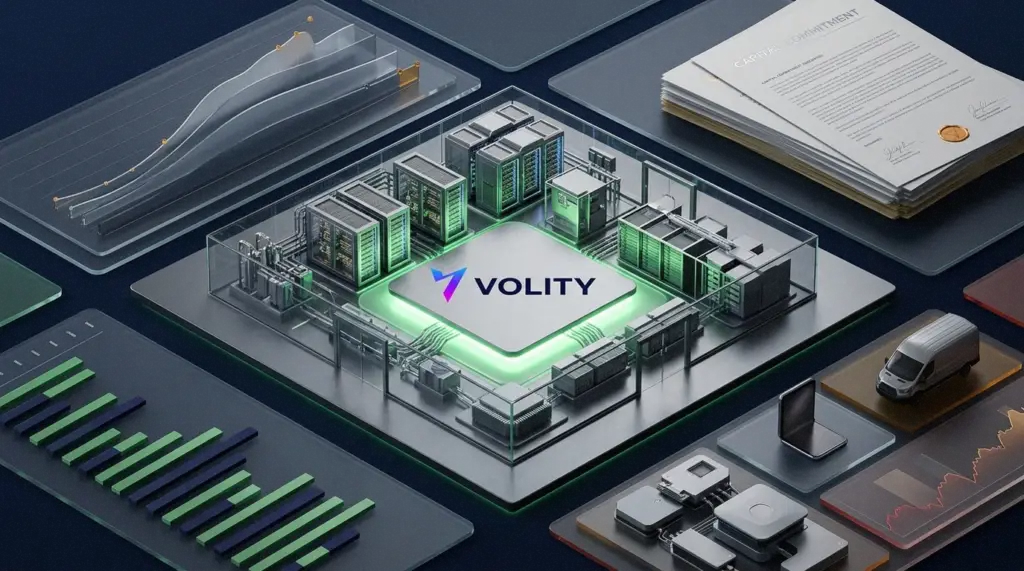
Nvidia has agreed to guarantee up to $105 billion in conditional lease and power obligations. The commitments support OpenAI’s planned 10-gigawatt Ohio data-centre campus.
Nvidia will reportedly serve as the exclusive AI compute provider under a 20-year lease. The campus targets roughly eight IT gigawatts of computing capacity. Initial phases could arrive in 2028.
The arrangement underlines Nvidia’s central role in AI infrastructure. It also turns abstract demand forecasts into a visible, enormous construction pipeline. Earlier discussions reportedly considered broader backstops reaching $250 billion.
However, the headline creates near-term complications for NVDA. Investors must weigh future GPU demand against capital intensity, counterparty exposure and rising-rate sensitivity.
NVDA looks more like a catalyst watch than a clean directional trade. A strong open without follow-through could invite profit-taking. Conversely, stable yields and heavy volume could keep buyers engaged.
- NVDA: Watch the 10-year yield, early volume and whether AI peers confirm the move.
- FNET: A quieter route into AI spending through optics and electronic manufacturing.
- Key risk: Large data-centre projects create demand visibility, but their timing can shift suddenly.
Fabrinet supplies optical and electronic manufacturing services to clients including Cisco, Nvidia, Amazon and Nokia. FNET benefits when hyperscalers upgrade high-speed networking links.
The company lacks Nvidia’s glamour, which can be an advantage during crowded AI trades. Still, FNET carries customer concentration risk. A delayed cloud buildout can quickly affect orders and margins.
Traders seeking less obvious AI exposure should watch FNET’s relative strength against networking and semiconductor equipment peers. Strong orders matter more than the AI label.
Apple has returned to the upgrade conversation after Rothschild & Co Redburn raised its rating to Buy. The firm set a $400 price target.
The thesis rests partly on a foldable iPhone Ultra, expected to expand Apple’s premium hardware range. The analyst models roughly 14 million foldable units during fiscal 2027.
That forecast assumes limited cannibalisation of conventional iPhone sales. It also assumes buyers accept a meaningful premium over current flagship devices.
However, foldables remain a niche category globally. Apple must prove durability, software usefulness and repair economics before the product becomes a serious earnings driver.
Accordingly, AAPL investors should watch pricing, launch availability and early sell-through data. Return rates will matter too, even if they receive less attention.
Small-cap speed and sporting-goods weakness
Xos has won its first U.S. Air Force contract, covering a deployable charging system. The prototype award adapts the company’s Xos Hub for field use.
The contract gives XOS a credible defence customer and a tangible use case. As a result, the shares could attract momentum traders before the opening bell.
Yet thin stocks can reverse with alarming speed. Traders should demand sustained volume and orderly intraday support. A sharp spike followed by fading volume would weaken the setup.
Nike remains a more deliberate technical story. Its shares have suffered a deep retreat from their 2021 peak. Some chart analysts describe the structure as a possible Stage 4 decline.
The exact percentage decline matters less than the trend. Rallies have repeatedly struggled below earlier highs. NKE remains a technical-risk name until it builds a durable base.
Long-term investors may see an iconic brand at a lower price. However, the chart still asks for patience. Fundamentals and relative strength need to improve together.
Reaction trades, not predictions
Duolingo remains highly sensitive to analyst actions and growth-stock sentiment. Recent commentary has become more constructive, putting DUOL on event-driven screens.
The useful signal is the market’s reaction, not the upgrade itself. If DUOL holds gains on above-average volume, buyers may have control. If it fades quickly, fast money may be selling strength.
Real-estate names RMAX, CMCT and CLPR also deserve caution after strong runs and elevated RSI readings. However, an overbought RSI does not automatically produce a short trade.
Instead, traders should look for failed breakouts, reversal candles or heavy selling volume. These shares can be thinly traded. Spreads and position sizing matter more than usual.
Today’s trading map
- Macro: A 10-year yield above 5% threatens equity valuations, especially in high-multiple technology.
- AI infrastructure: NVDA offers the largest catalyst, while FNET provides a less crowded equipment angle.
- Consumer technology: AAPL’s foldable iPhone remains promising optionality, rather than proven earnings power.
- Momentum: XOS needs volume confirmation after its Air Force contract.
- Technical caution: NKE, RMAX, CMCT and CLPR require disciplined chart-based risk management.
The market still looks constructive, but it is not carefree. Treasury yields have placed a price tag on optimism. Tuesday’s winners will need more than an attractive story to hold their gains.
Related coverage on Volity
- What Is a P/E Ratio and How to Use It
- Fundamental Analysis in Stock Trading: A Working Definition
- Growth Investing vs Value Investing: Which Style Fits You?
- Fractional Shares Explained: How to Start Investing With $50
- How to Start Stock Trading: A 2026 Beginner Guide
- Dividend Investing for Beginners: How to Start