Crypto Week: Tokenisation Pushes Memecoins Aside, Bitcoin Sits the Gold Exam
Crypto this week looked less like a casino and more like a nervous money market.
Memecoins are still loud. But the main capital is looking the other way: tokenised bonds, stablecoins, regulators and ETF flows. Watching BTC candles is no longer enough for a trader. You also have to read Washington, watch the Fed, and check who holds the DAO treasury keys.
Numbers of the Week
- $1.26 billion: estimated recent outflows from spot bitcoin ETFs.
- 4.8%: inflation expectations level pressing the “digital gold” narrative again.
- July 1: date of new Binance Australia rules for crypto transfers.
- 11,000 DAOs: scale of the audit that has touched the Cardano ecosystem.
- $4,500: gold level below which the market saw a painful reaction.
Tokenisation: The Real Deal of the Week
The most important story right now is not another token with a flying dog on the logo.
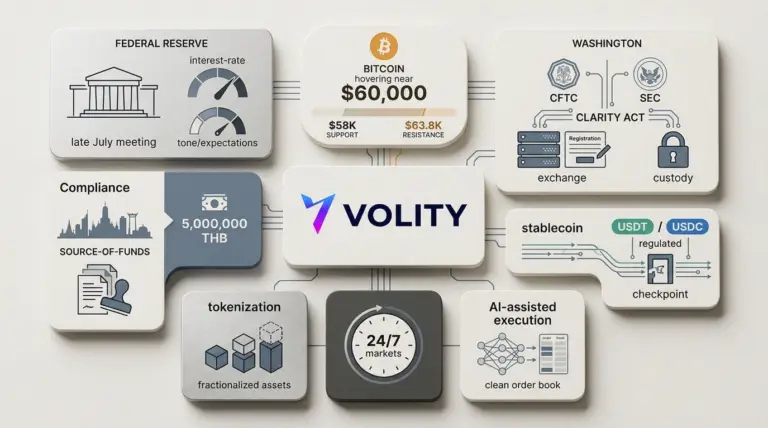
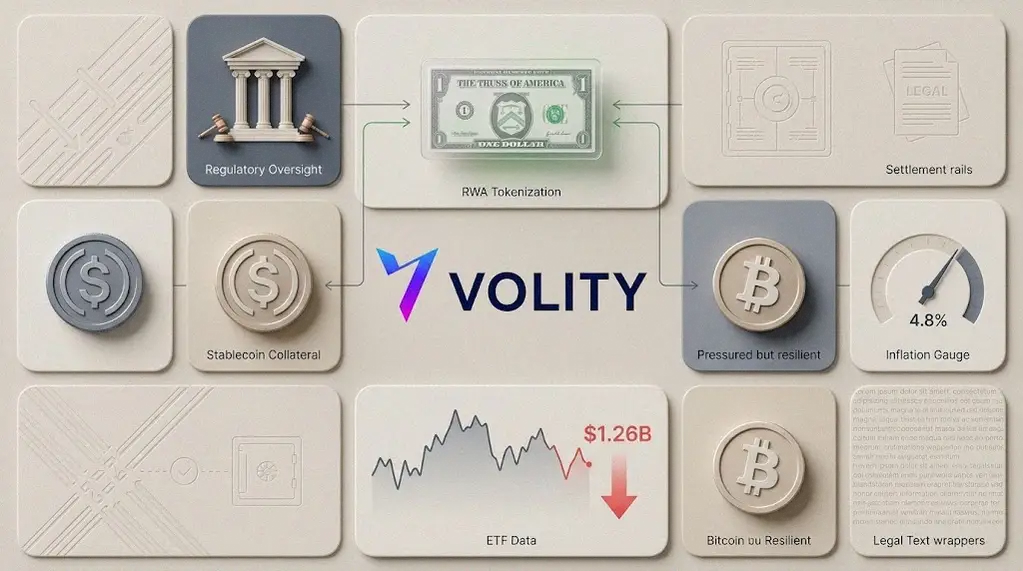
The main plot is tokenisation of real assets. Bonds, money-market funds, real estate and private credit are moving onto blockchain more often. The reason is simple. Investors want near-instant settlement, 24/7 access and fewer intermediaries.
Institutional players are already testing tokenised treasuries. For them this is not ideology; it is accounting. If capital turns over faster, after-cost yield goes up.
RWA is becoming a more important topic than most altcoin cycles. Bitcoin gives scarcity. Ethereum gives infrastructure. Tokenisation gives a bridge to trillions of dollars of traditional assets.
For an investor this changes the market map. The right places to watch are custodians, oracles, legal wrappers, payment networks and exchanges with access to real assets. That is where stickier liquidity may appear.
Regulators: CFTC Argues, Clarity Act Picks Up Weight
The US crypto market is once again stuck on the old question. Who is in charge, the CFTC or the ESMA investor protection?
Internal disputes around the CFTC crypto division show that digital-asset oversight remains unfinished. Yet the business still needs to launch products, list tokens and serve clients.
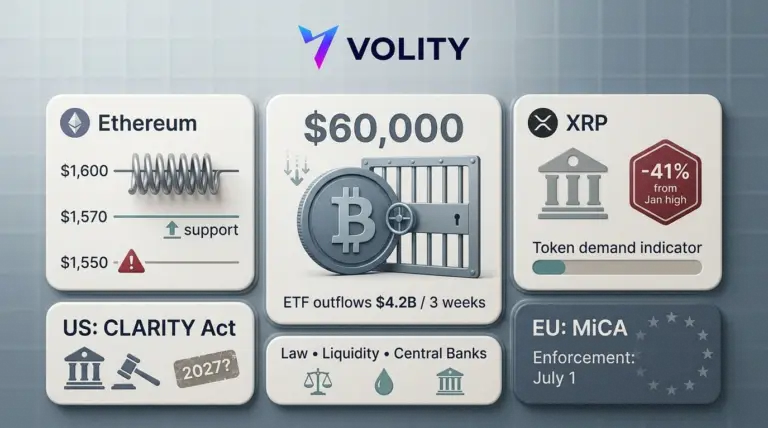
The Clarity Act is trying to close that gap. The bill promises to separate commodity tokens from securities and give the market clearer rules. Clarity rarely comes for free though. Some projects will get a legal corridor. Others will fall into a stricter regime.
Grayscale is already looking at likely winners among large alts. Senator Cynthia Lummis defends the idea of a clean framework. Congressman Tom Emmer brushes off part of the criticism.
The practical takeaway is simple. If the law passes, the top 20 altcoins may scatter across different trajectories. Regulatory risk now has to be counted almost like liquidity risk.
Australia: Binance Adds a Filter
From July 1, Binance Australia is rolling out extra checks on crypto transfers.
Formally this answers anti-money-laundering and counter-terrorism-financing requirements. In practice, clients may run into transfer delays, data requests and stricter counterparty checks.
For an ordinary investor this is uncomfortable but tolerable. For arbitrageurs and market makers though, every pause in withdrawals hits the strategy. The Australian jurisdiction is worth checking in advance for KYC, limits and liquidity reserves.
Bitcoin: ETF Outflows and the Digital Gold Debate
Bitcoin took a double hit again, from ETF flows and macro.
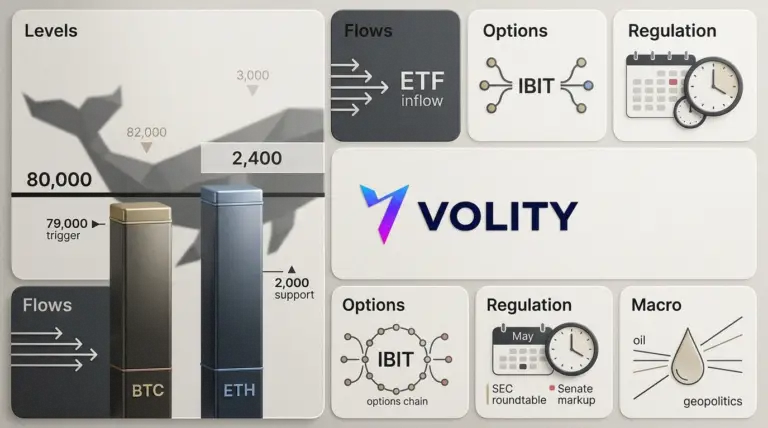
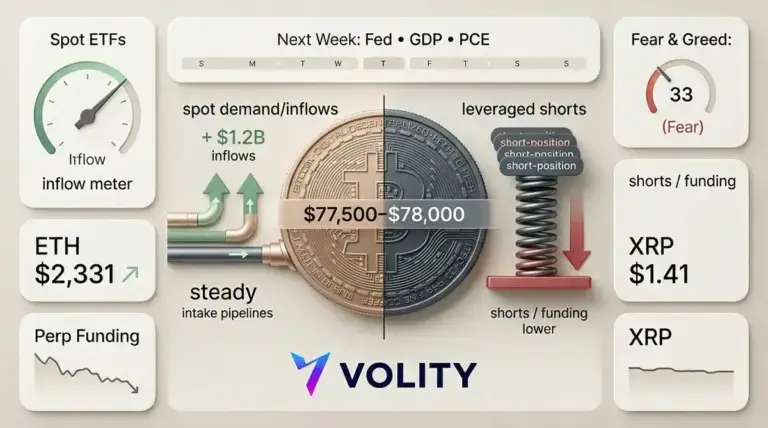
Outflows from spot bitcoin ETFs were estimated at around $1.26 billion. This is not a disaster, but the signal is notable. Institutional holders are taking profits, while some on-chain metrics show off-exchange accumulation.
Macro matters more than wallets right now though. Inflation expectations near 4.8% are testing bitcoin’s “digital gold” role. In the short horizon BTC behaves as a risk asset. It falls when the market expects tighter Fed policy.
The long-horizon picture is more complex. Limited issuance still attracts investors who do not trust government fiscal discipline. The argument is not closed. Bitcoin has just not yet replaced gold in a panic. It trades more like a high-beta insurance policy on the future.
Fed: Gold Gets Nervous, Crypto Listens to Rates
Comments around the Fed’s future path shook risk markets again.
Gold dipped below $4,500 an ounce after signals of possibly tighter rates. Equities and crypto saw volatility too. Traders were quick to remember the unpleasant truth: liquidity matters more than pretty narratives.
When yields rise, capital becomes more expensive. So altcoins take the first hit. Bitcoin holds up better, but it also does not live apart from the bond market.
Stablecoins: the Internet’s Quiet Money
Stablecoins remain the most underappreciated story of the cycle.
USDT, USDC and local digital-currency versions already work as a settlement layer for trading, peer-to-peer payments and cross-border commerce. Banks looked down on this for a long time. Now they are building integrations or buying time.
Regulators want to tame stablecoins without killing their speed. The balance is tricky. Rules that are too loose create depositor risk. Rules that are too strict will hand the market to offshore issuers.
For an investor it is not only stablecoin market cap that matters. What matters are issuers, payment gateways, custodians, fiat bridges and the networks that carry the real turnover.
Projects: Pi, HYPE, Ethereum and Cardano
Pi Network is marking its first open-mainnet year. The project spent years selling the “mine on a phone” idea and gathered a huge audience. Scale does not equal demand though.
Pi’s main problem is liquidity and a transparent token economy. So far, free float, real use cases and steady demand look weaker than the community expects. Traders may see price spikes. Investors though need solid metrics, not chat size.
HYPE, by contrast, is drawing attention through Hyperliquid buybacks. A steady buyback with limited supply can push price up. The market should understand the source of funds and the buyback rules though. Otherwise a buyback turns into a vote of trust in one team.
The Ethereum Foundation is again being criticised for grants and pace of work. But the foundation is not the ETH board. Its task is to support research, scaling, privacy and long infrastructure projects. For long-term holders, what matters is not budget noise but the speed of the next tech layer rollout.
In Cardano the argument has moved into governance. Charles Hoskinson initiated an audit of 11,000 DAOs. The market sees governance risk in this. Technical progress is useful, but internal politics can eat trust faster than code can ship.
Security: XRP Scams and Physical Risk
The XRP scam wave is back. Fake Xaman airdrop pages ask users to connect a wallet and sign a transaction. The scheme is then simple. The user thinks they are getting a bonus while actually handing over fund access.
Wrench attacks have also become more visible in France, where victims are physically forced to transfer crypto assets. This is no longer a bad-password problem. It is a personal-security, KYC-leak and wrong-storage problem.
Large sums should sit in cold wallets, multisig and structures where a fast transfer is physically impossible. In crypto, security has long been part of return.
Related coverage on Volity
- Bitcoin Price Jitters as ETF Outflows Hit Crypto
- Zoom (ZM) Earnings Gap in Focus
- Bitcoin Today: Germany Crypto Tax Break, Oil Trading
- Stock Watchlist: Nvidia (NVDA) AI vs Weak Cyclicals
- Crypto Daily: Ripple vs XRP, Fed Banking, FBI Sting
What the Trader Should Do
- Watch RWA: tokenisation can hand the market a longer trend than memecoins.
- Price in regulatory risk: the Clarity Act can split altcoins into winners and problem assets.
- Do not ignore the Fed: bitcoin and altcoins trade inside global liquidity.
- Check infrastructure: stablecoins, custodians and payment rails are becoming the market core.
- Protect keys: phishing and physical pressure are already hitting real portfolios.
Crypto is maturing not because it became calmer. It is maturing because law, macro and real money flows have arrived.