Crypto market digest: bitcoin steadies, ethereum rebounds, and washington keeps its grip
Crypto opened Thursday with its usual split screen. Prices looked steadier, yet Washington, wallet security and institutional plumbing still set the tone.
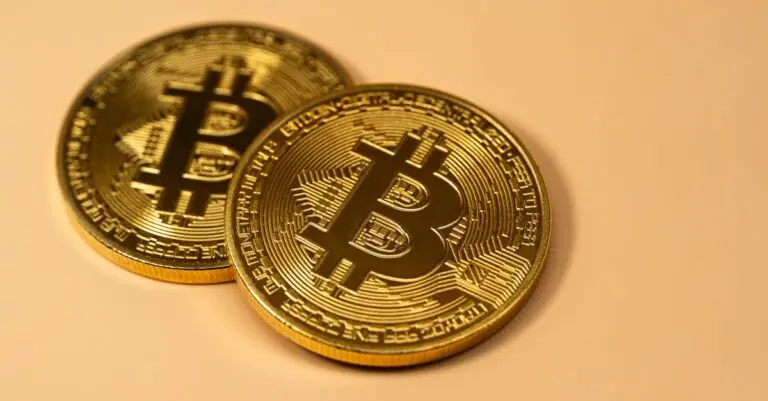
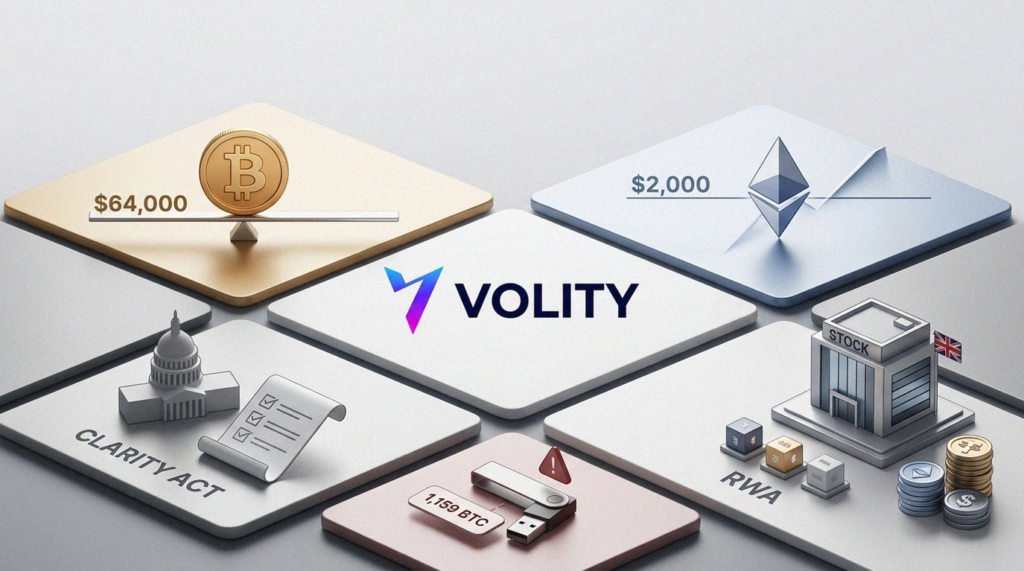
Bitcoin, or BTC, held near the mid-$64,000s in early trading. Meanwhile, Ether, or ETH, recovered the $1,900 area after a choppy week. The rebound was not dramatic. However, it gave traders a cleaner line to watch before the weekend.
For now, the market has stopped bleeding. Still, the mood remains more cautious than celebratory. Bitcoin’s market value sits close to $1.3 trillion, while Ether’s recovery puts $2,000 back in view. The next few sessions may decide whether this is a base, or just another pause.
Market snapshot
Bitcoin traded around $64,000 to $64,500 in one widely watched range. Another live print put it closer to $63,250. That gap is not unusual in crypto, where venue, timing and liquidity matter. Still, the broad picture looks simple enough: BTC is consolidating above a level bulls badly wanted to keep.
Ether has a slightly livelier set-up. It reclaimed $1,900, and traders are watching the path toward $2,000. However, buyers still need conviction, not just a soft bounce. A push through $2,000 would probably draw fresh systematic and options-linked interest.
Elsewhere, the board remains uneven. XRP is under pressure as enthusiasm around exchange-traded fund demand fades. BNB has drawn attention after becoming the largest holding in Grayscale’s Smart Contract Fund at 30.6 percent. Meanwhile, Solana, or SOL, remains heavy after spot selling stalled its advance below $75.
By the numbers
- Bitcoin: trading near $64,000 to $64,500, with market value close to $1.3 trillion.
- Ether: back around $1,900, with $2,000 the next clean psychological level.
- BNB: now 30.6 percent of Grayscale’s Smart Contract Fund.
- Solana: struggling below $75 after renewed spot selling.
- Coldcard-linked attacker: reportedly holding 1,159 BTC after the exploit.
Washington is still the swing factor
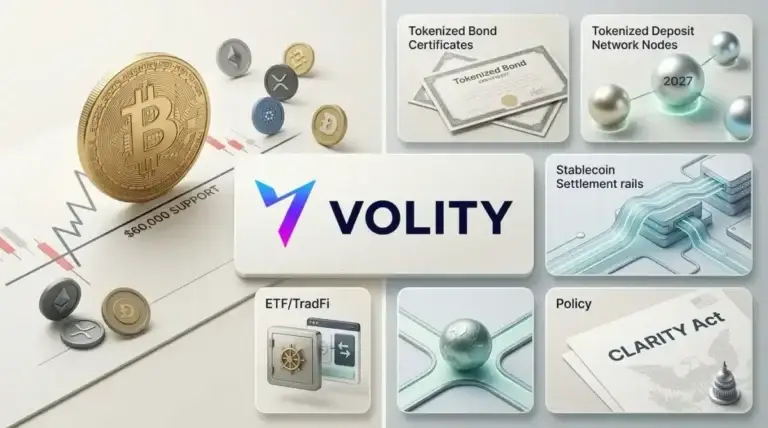
The biggest force remains regulation. The CLARITY Act, a proposed framework for U.S. digital asset markets, is entering a tense Senate phase. Senate Majority Leader John Thune has signalled a vote before the August recess. However, earlier procedural delays have made traders wary of another slip.
That matters because crypto is no longer trading only on liquidity and appetite for risk. Increasingly, investors price the legal wrapper around each token. A delayed vote would keep uncertainty elevated through late summer and into the autumn.
The bill matters most for exchanges, DeFi protocols and token issuers. It could shape how U.S. regulators divide oversight between securities and commodities rules. Meanwhile, the absence of clarity keeps lawyers busy and product teams cautious.
In practical market terms, delay probably helps Bitcoin and hurts smaller tokens. Bitcoin already has the cleanest regulatory profile. However, many altcoins still depend on future classification, exchange support and institutional access. That gap remains one of the market’s quiet but powerful trades.
Security returns to centre stage
The week’s most uncomfortable story came from self-custody. A flaw tied to an old Coldcard hardware-wallet build flag reportedly drained millions from Bitcoin users. The attacker now appears to control 1,159 BTC, while mixing activity has begun.
That detail matters. Once funds move through mixers, recovery becomes far harder. Meanwhile, the reputational damage spreads well beyond one device or one code path.
Self-custody is supposed to remove counterparty risk. However, it does not remove software risk, supply-chain risk or human operational risk. The Coldcard episode turned that lesson into a costly reminder.
Researchers reviewing Bitcoin-related projects reportedly found 4,962 issues after the incident. Not every issue is catastrophic. Still, the number gives the market a useful jolt. The ecosystem often talks about trust minimisation. Yet trust frequently returns through firmware, signing devices, updates and abandoned dependencies.
Another warning came from StrongBlock, which lost $72,000 after an attacker hijacked an abandoned governance system. That was smaller in dollar terms. However, it showed how dormant smart-contract infrastructure can become a live target after everyone stops watching.
Coinbase and rivals press ahead
Corporate expansion has not slowed. Coinbase is bringing nearly 4,000 U.S. stocks to users in Britain, pushing further into the blurred zone between crypto platforms and traditional brokerages. The move gives Coinbase a broader retail proposition, even as crypto volumes remain cyclical.
Meanwhile, Coinbase renewed its USDC agreement with Circle. Circle, however, ruled out dividends, keeping attention on growth rather than cash returns. For Coinbase, the key question remains whether stablecoin economics can smooth out its dependence on trading fees.
Other companies are also testing new ground. Bitget signed an agreement in Bhutan to pursue a crypto licence under the country’s GMC framework. Russia opened a path for regulated crypto trading through a new law. Meanwhile, European authorities warned that scammers are exploiting the transition to MiCA licensing.
Payments companies are watching too. Western Union is exploring a stablecoin play, which says plenty about the direction of travel. Old payment rails are not disappearing. However, they are being forced to compete with faster, cheaper settlement models.
Stablecoins and real-world assets grind higher
DeFi sentiment may be soft, but real-world asset activity keeps moving. RWA deposits have tripled to $7.4 billion, even as speculative corners of the market cool. That split is important. Investors appear less interested in pure leverage and more interested in tokenised cash flows.
Stablecoins remain the clearest bridge. JPYC raised $38 million with backing from AZ-COM Maruwa to expand in Japan. Meanwhile, BlackRock’s stablecoin reserve fund secured a top S&P rating, underlining how far the sector has moved from its fringe origins.
Traditional finance is not treating stablecoins as a novelty anymore. It sees collateral, settlement, treasury management and distribution. Stablecoin infrastructure may keep growing even when meme coins and thinly traded altcoins lose momentum.
That shift also changes how traders should read the market. In earlier cycles, almost everything moved together. Now the table is separating. Bitcoin trades like a macro asset. Stablecoins trade like infrastructure. RWA products trade like yield vehicles. Many smaller tokens still trade like lottery tickets.
What traders are watching
- Bitcoin’s floor: BTC needs to hold the $64,000 area to preserve short-term momentum.
- Ether’s ceiling: A clean move above $2,000 could change positioning quickly.
- XRP risk: Weak ETF appetite puts the $1 level back in focus.
- Senate timing: Any CLARITY Act slippage may hit altcoin sentiment first.
- Wallet fallout: The Coldcard exploit may lift demand for audited custody and insurance.
Trading implications
- Bitcoin remains the cleaner risk: regulatory uncertainty still favours BTC over many smaller tokens.
- Ether needs follow-through: reclaiming $1,900 helps, but $2,000 is the real test.
- Security is now a price input: custody failures can shift flows toward exchanges and professional custodians.
- Stablecoins keep gaining status: ratings, partnerships and payment trials support the long-term infrastructure trade.
- Altcoin dispersion should widen: token-specific news matters more when broad liquidity is not doing all the work.
For now, crypto is not delivering a single clean story. Bitcoin looks firmer. Ether is trying to catch up. However, Washington still holds the pen, and security headlines keep traders honest.
Related coverage on Volity
- How to Avoid Crypto Scams: A Beginner Safety Checklist
- How to Choose a Trading Platform: A 10-Point Checklist
- Demo vs Live Trading Account: A 7-Step Checklist Before You Go Live
- How to Size a Trade: Position Sizing and Risk Per Trade for Beginners
- Risk-Reward Ratio Explained: How to Set It and Why It Matters
- ETF vs Index Fund: The Difference and Which to Pick