Investing in financial products involves risk. Losses may exceed the value of your original investment.
Mexc crisis bitcoin is a core topic for traders in 2026. The complete guide follows.
A thunderclap of controversy broke over MEXC this week as the saga of the White Whale-a trader who became both adversary and would-be reformer of the embattled exchange-reached a dramatic turning point. At the same time, rattled crypto markets face mounting turbulence, with Bitcoin ETF outflows and shifting investor allegiances. With institutional giants, privacy coins, and DeFi experiments all vying for headlines, this week reminded traders: power, trust, and volatility are the only true constants.The showdown: $3.1 million freeze ignites public fury
The trouble started quietly in mid-2025, when MEXC froze over $3.1 million of White Whale’s funds without warning or clear explanation. The official rationale? Ambiguity on “too profitable” trading-White Whale’s outperformance, allegedly, put him in the crosshairs of risk teams and external market makers. MEXC demanded he complete a year-long review and, bizarrely, fly to Malaysia for in-person verification-demands not found in their own terms of service.Denied and stonewalled, White Whale fought back. His campaign-marked by detailed social media threads and legal threats-brought the dispute to global attention. Others shared similar horror stories; whispers of liquidity trouble and operational chaos at MEXC grew louder. The pressure worked: after months of standoff, MEXC executives, led by CSO Cecilia Hsueh, issued a blunt apology-“We messed up. … His money is already released.” The exchange, breathless with promises of reform, at last thawed White Whale’s fortune.From foe to (almost) friend: advisory offer, explosive exit
In a plot twist worthy of its crypto roots, White Whale publicly offered to advise MEXC for free-to help restore trust and transparency, turning personal vendetta into reformist mission. The exchange accepted. Hsueh called the public shaming a “catalyst” for change, vowing new standards for transparency and user protection. Community reaction was mixed: hopeful, but wary. Could public pressures actually force a major exchange to change its ways?Yet just as the hope for progress glimmered, White Whale abruptly withdrew his offer, citing MEXC’s refusal to provide honest transparency. He denounced their “Proof of Reserves” as meaningless without liability audits:Every user balance is a liability to the exchange, and publishing only the assets without an independently verified list of liabilities is 100% meaningless. It’s deceptive marketing pretending to be transparency.Worse, he revealed continued secret fund seizures and deleted transaction records, accusing MEXC of sidestepping law enforcement while stonewalling its own users. The saga cast doubt on the exchange’s commitment to true reform and reinforced lingering suspicions about industry self-policing.
Bankruptcy rumors swirl-MEXC fights for credibility
Whispers of MEXC bankruptcy flooded cryptosphere forums this week. The exchange issued urgent denials: “These claims are false and misleading,” stressing that assets remain fully backed and operational updates are underway. Whether this is damage control or genuine communication remains to be seen, but one thing is clear: after such rapid growth, the exchange’s risk and PR teams are scrambling to catch up with reality.The White Whale affair shines an unforgiving light on an industry still struggling with transparency. For users worldwide, it’s a case study in why counterparty risk, exchange governance, and public accountability matter more than ever.Bitcoin whiplash: ETF outflows, price crash warnings
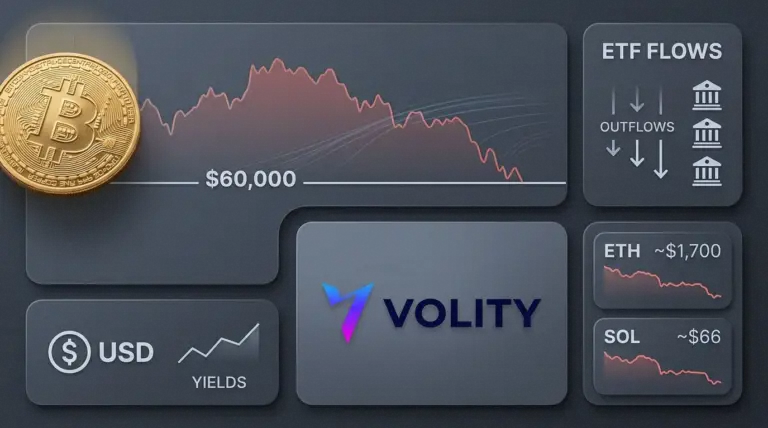
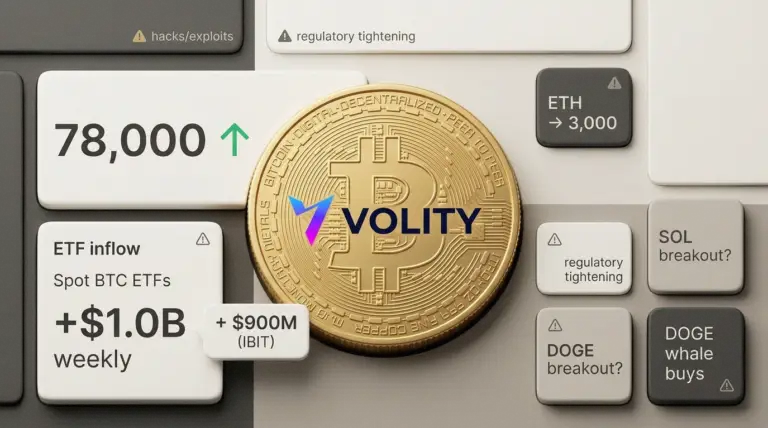
While MEXC’s drama unfolded, traditional and institutional investors added their own volatility to the crypto pot. This week, Bitcoin ETFs saw $558 million in net outflows-one of the biggest retreats since U.S. Bitcoin spot ETFs launched. BlackRock, Fidelity, Grayscale: even the highest-profile managers saw assets flee. What’s driving it?- Rising U.S. Treasury yields tempted money off riskier assets
- Bitcoin’s price breaking above $75,000 triggered profit-taking and tactical retreats
- Institutional investors signal caution-waiting for a steadier macro picture
The shifting landscape: privacy coin surge and reform fever
Turmoil breeds opportunity. Crypto’s contrarians, privacy advocates, and alt-asset champions are seizing their moment. Solana shone brightly, clocking a nine-day inflow streak even as Bitcoin bled, signalling traders’ hunger for yields and fresh narratives. Privacy coins, led by Zcash, quietly surged as uncertainty deepened and whispers of exchange risk rippled outwards.Meanwhile, the aftermath of White Whale’s battle could reshape industry standards:- Centralized exchanges are facing growing demands for real, independently-audited Proof of Reserves, not just wallet showcases
- Public campaigns and user advocacy have proven powerful-this episode may trigger copycat demands and possibly new regulation
- Transparency, once a buzzword, is now a survival mandate for any venue seeking long-term credibility
What traders (and exchanges) should watch now
- Follow lingering investigations and user accounts: MEXC’s next moves could signal a broader industry shift-or more reputational risk
- Watch for regulatory responses: Authorities are closely observing how self-policing stacks up against public pressure
- Track ETF flows and altcoin inflows: Rapid changes in institutional mood often foretell swings in market sentiment, liquidity, and volatility
- Re-examine exchange risk: Counterparty trust is being tested. Private custody, DeFi, and hybrid models are attracting new attention
For more on this topic see our deep-dives on Bitcoin Price Levels: Key Support, Fed Moves and DeFi/ETF Impact, Bitcoin Price and ETF Flows: How Spot ETFs Drive Crypto Rallies, and Crypto Market Rebound: Expert Bitcoin Forecasts After the Crash.
For more on this topic see our deep-dives on Binance Stablecoin Flows and FOMC: Reading the Crypto Setup, Bitcoin Options Expiry and Crypto Volatility: Trader Playbook, and Crypto Regulation and Bitcoin: How Policy Clarity Reshapes the Market.
What our analysts watch: We separate three forces inside any ETF flow print. Authorised participant baskets reveal whether the move is driven by genuine end-investor selling or short-cycle arbitrage. Borrow rates and basis between CME futures and spot tell us if the carry trade is unwinding. Counterparty stress at offshore venues, the kind exposed during the MEXC freeze controversy, often precedes flow reversals as institutional desks de-risk. When outflows persist after a week and basis stays compressed, the move is structural, not tactical.
Frequently asked questions
What causes Bitcoin ETF outflows?
Outflows reflect net redemptions when authorised participants return ETF shares to the issuer in exchange for the underlying Bitcoin. Common triggers include rising Treasury yields that lift the opportunity cost of holding non-yielding assets, profit-taking after sharp rallies, and risk-off moves driven by exchange or counterparty news. The U.S. SEC publishes the underlying issuer disclosures that aggregators use to compile daily flow tables.
Are Bitcoin spot ETFs safer than holding crypto on an exchange?
Spot ETFs hold Bitcoin with regulated custodians and trade on national exchanges with the same investor protections as any listed security. They eliminate the operational risk of self-custody and the counterparty risk of holding coins on a centralised exchange, which the MEXC fund-freeze episode underlined. They do not eliminate market risk: ETF prices track Bitcoin closely, including the full volatility.
What is Proof of Reserves and why does it matter?
Proof of Reserves is a public attestation that an exchange holds enough on-chain assets to cover user balances. The flaw highlighted by recent disputes is that publishing assets without independently verified liabilities is incomplete, because user balances are liabilities to the exchange. Investopedia explains what a credible Proof of Reserves audit needs to include.
How should retail traders adjust during an outflow phase?
Reduce leverage first, because liquidations cascade fastest in low-liquidity tape. Move long-term holdings off centralised exchanges to a hardware wallet. Avoid concentration in any single offshore venue, especially one with active reform or solvency disputes. The FATF Travel Rule guidance pushes the most compliant exchanges toward stronger transfer controls, which is a useful filter when picking a platform.
Related guides
- Bitcoin explained
- Cryptocurrency trading
- Crypto trading platforms
- Risk management
- Best crypto investments
Volity Editorial, Volity research: Counterparty risk is the trade most retail investors never consciously enter. Yet every funded balance on a non-domestic, non-segregated exchange is an implicit credit position on that exchange. The Volity desk treats the question of where balances sit as portfolio-level, not operational. Diversification across regulated venues, clean self-custody for long-duration positions, and right-sizing of trading float are the three behaviours that survive a crisis intact.
Volity analyst FAQ
What happens to my crypto if an exchange freezes withdrawals?
Frozen withdrawals during an exchange crisis indicate either regulatory action, internal liquidity stress, or both. Recovery outcomes vary widely: some venues unfreeze within days under regulator supervision, others enter administration with multi-year recovery timelines and partial customer payouts. The structural lesson is that custody risk on any single exchange is non-trivial. The FATF virtual-assets guidance frames the international supervisory framework that shapes recovery odds.
Why do Bitcoin ETF outflows accelerate during exchange crises?
ETF flow reversals often coincide with venue-level stress because the same institutional risk officers that approve ETF allocations also re-evaluate the broader crypto exposure ledger. A counterparty-risk headline does not directly affect ETF custody (held by qualified custodians), but it triggers a portfolio-level review that often results in tactical de-risking. The CoinDesk Bitcoin price reference tracks how aggregated flows transmit to the spot price within hours.
How do I evaluate exchange counterparty risk?
The institutional checklist runs through five questions: where is the venue domiciled and licensed, what is the proof-of-reserves frequency and quality, how is customer collateral segregated, what is the venue history under stress, and who are the disclosed banking relationships. A failing answer on any one of those questions is enough to right-size exposure downward. The Investopedia exchange-risk guide covers the retail-investor framing.
Should I move crypto off centralised exchanges entirely?
The answer depends on holding period and operational comfort. Long-duration holdings benefit from self-custody (cold storage, hardware wallets, multi-signature setups) because the cost of a single counterparty failure compounds. Active trading floats remain on exchanges by necessity, but the dollar value should match the loss tolerance, not the conviction. The discipline is unglamorous, but every survived exchange crisis confirms the principle.
External references
- FATF virtual assets guidance
- CoinDesk Bitcoin price
- Investopedia exchange-risk guide
Volity operates a trading platform and also publishes educational and analytical content about trading. The content on this page is for educational purposes only and should not be considered financial advice. Volity may benefit commercially when readers open trading accounts through links on this site.
Our content is produced and reviewed under documented editorial standards; see our comparison and review methodology.