Quick answer
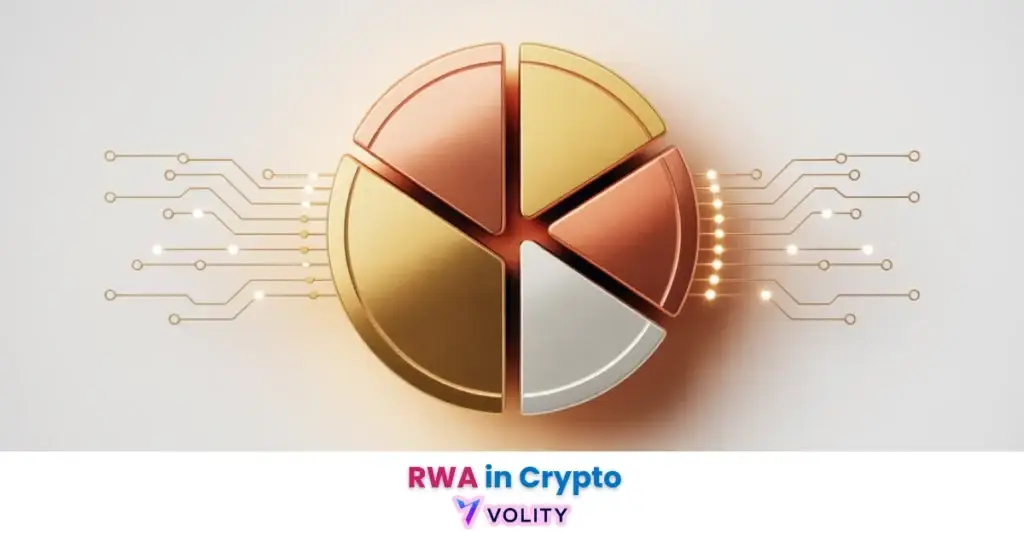
RWA, or real-world assets, in crypto means tokenizing tangible or traditional assets like US Treasuries, real estate, bonds or commodities, so they can be traded and used on a blockchain. RWAs aim to bring trillions in traditional value on-chain with more liquidity and access. It is a fast-growing sector, though it depends on regulation and trusted asset custody.
The Crypto Trading Starter Kit
A plain-English PDF: what to check before you trade, how orders and risk really work, and the mistakes to skip. Get it free.
Investing in financial products involves risk. Losses may exceed the value of your original investment.
RWA stands for Real World Assets in crypto. See, these are physical assets like real estate, commodities, or stocks, turned into digital tokens. In fact, tokenizing these assets makes it easier to trade them on the blockchain. Why does this matter? It opens up new opportunities for investors. You no longer need to buy an entire property or stock. You can own a fraction through tokenization. This way, you can diversify your portfolio without a huge upfront investment.
How does it work? The process involves creating digital tokens that represent a physical asset. These tokens can then be bought, sold, or traded just like cryptocurrencies. Blockchain technology ensures the transaction is transparent and secure. You might wonder why this is gaining traction. One reason is that it solves issues like liquidity and accessibility. You can invest in high-value assets without needing a lot of capital. Plus, blockchain’s security ensures all transactions are traceable.
What Does RWA Mean in Crypto?
For policy-engine infrastructure connecting AI to RWAs, see Newton Protocol (NEWT).
RWA in crypto refers to Real World Assets. These are tangible, physical assets like real estate, gold, or stocks. In crypto, they are tokenized to exist on a blockchain. You may ask, why tokenize real-world assets? Tokenization makes these assets more accessible. It allows people to invest in them without needing to buy the whole asset. Instead, you can buy fractional ownership.
So, how does this work? Blockchain technology records the transaction, which ensures transparency. Each token represents a share of the asset. This gives you a digital ownership claim to something real, like property or commodities.
Why is this important in crypto? It opens up new investment opportunities. Anyone can invest in assets they might not otherwise afford. Plus, it makes the asset more liquid. You can trade it quickly on blockchain platforms.
How Do RWAs Work on The Blockchain?
Collateralization tokens like AMP back digital-asset payments and merchant settlements.
RWAs on the blockchain work by turning physical assets into digital tokens. These tokens represent real-world items like real estate, art, or commodities. You can trade, sell, or use them as collateral just like any other digital asset.
Tokenization of Real-World Assets
Tokenization changes real-world assets into digital tokens. Moreover, each token is a piece of the asset. If you imagine owning part of a building or a painting through a small digital token. This opens up new ways to invest without buying the entire asset.
You can own a fraction and still benefit from the asset’s value.
Smart Contracts Enable Transactions
Smart contracts make transactions smooth and secure. These contracts automatically execute when conditions are met. You don’t need a middleman. If you buy or sell an RWA token, the smart contract handles everything.
It ensures both sides fulfill the agreement before the transfer happens.
Blockchain Provides Transparency and Security
Blockchain ensures every transaction is visible to everyone on the network. It creates a permanent record of each transaction. You can trace ownership and see how an asset has changed hands. The transparent nature of blockchain makes it hard to tamper with records.
Fractional Ownership and Liquidity
You can own a fraction of an asset thanks to tokenization. No need to buy the whole thing. This makes buying and selling easier, which increases liquidity. Investors now have a chance to own parts of high-value assets that were once out of reach.
Why Are RWAs Important in the Crypto Ecosystem?
RWAs typically tokenize on Ethereum and use smart contracts for settlement.
RWAs bring real-world value into the crypto world. They bridge the gap between traditional assets and digital currencies. These assets, like real estate and commodities, offer stability in a space known for its volatility. How does that benefit you? You can now invest in tangible assets through tokenization. Even small investors gain access to high-value assets, creating new opportunities.
RWAs also improve liquidity. They make traditionally illiquid assets easier to trade. Blockchain ensures these transactions are transparent and secure. But ownership is clear, and fraud risks are low. As more investors join the crypto ecosystem, RWAs will become even more important. They provide more options and increase confidence in crypto investments.
Benefits of Tokenizing Real-World Assets
- Increased Liquidity, Tokenizing assets makes trading easy. Investors can access markets quickly.
- Lower Barriers to Entry, You don’t need large sums of money. See, tokenization allows small-scale investors to join high-value markets.
- Transparency and Security, Blockchain provides clear ownership records. It reduces the risk of fraud and builds trust.
- Faster Transactions, Blockchain speeds up asset transfers. No more waiting for long settlement periods.
- Global Accessibility, Tokenized assets reach global markets. Investors from anywhere can trade.
- Fractional Ownership, Tokenization lets you own parts of expensive assets. This makes high-value investments more affordable.
- Improved Efficiency, The process becomes smoother. Fewer intermediaries and less paperwork.
- Potential for Increased Value, More access can lead to higher asset value. Tokenization helps unlock an asset’s potential.
What Are The Most Common RWA Use Cases?
Real estate tokenization makes investing easier. It allows smaller investments in large properties. You no longer need to spend millions to own a share of high-value real estate. Art and collectibles also work well with tokenization. It breaks down high-cost items into shares. You can own part of a famous painting or a rare collectible without spending a fortune.
Commodities like gold and oil are another use case. Tokenizing them makes trading more accessible. You can buy, sell, and trade these assets more efficiently. Stocks and bonds are entering the blockchain world too. Tokenized stocks bring liquidity and global access to traditional markets.
Luxury goods are being tokenized as well. High-end watches and designer items can now be owned in fractions. This adds a layer of transparency and security. Intellectual property also benefits from tokenization. Creators can trade patents and trademarks more easily, protecting their work. Finally, tokenizing private equity opens doors to smaller investors. It broadens access to opportunities that were once only available to large investors.
Which Are the Top RWA Crypto Projects?
Several projects are leading the RWA tokenization space. RealT stands out in real estate tokenization. It lets anyone invest in properties through tokenized shares. tZERO specializes in tokenizing securities. It gives access to private equity markets, which streamlines traditional processes.
- Securitize has made waves in asset tokenization. It offers a platform for diverse assets like real estate and stocks. It improves transparency and speed. Polymath focuses on simplifying digital securities. It’s a game-changer for businesses, easing regulatory hurdles.
- Chainlink plays a crucial role in connecting smart contracts to real-world data. It enhances reliability and security for tokenized assets. SolidBlock is another standout in real estate. It enables fractional property ownership through tokenization.
Would you consider investing in any of these projects? Which ones are you most excited about?
Challenges in Tokenizing Real-World Assets
| Challenge | Description |
| Regulatory Hurdles | Rules differ across countries. Compliance becomes hard. |
| Valuation Issues | Physical asset values vary. Converting to tokens creates more problems. |
| Lack of Standardization | No clear standards exist. Platforms fail to work together. |
| Technological Barriers | Blockchain tools fall short. Complex assets need better handling. |
| Market Liquidity | Token assets lack enough buyers. Investors pull back. |
| Security Risks | Hackers target platforms. Fraud cases raise alarms. |
| Legal Recognition | Some places don’t accept token assets. Owners face unclear rights. |
| High Costs | Legal setup drains funds. Compliance adds more fees. |
What’s the Future of RWAs in Crypto?
The future of RWAs in crypto looks strong. Investors want more assets linked to real-world value. That demand pushes builders to create new tools. Big institutions have already tested tokenized real estate, bonds, and metals. You may soon own a fraction of land, gold, or a car on the blockchain. No banks. No long delays.
Regulation will shape the speed of growth. Countries with clear rules could take the lead. That shift could open the gates for billions of new users. Curious about what’s next in crypto? RWAs may lead the next wave. You just need to watch closely and stay ready.
Conclusion
Real-world assets bring crypto closer to everyday life. You get access to stable, tangible value without leaving the blockchain. Tokenized assets open doors to more users. They help reduce risk, increase trust, and attract serious investors. You don’t need to wait weeks or pay high fees to access global assets.
Adoption may take time, but change has already started. Want to see where crypto heads next? Watch how RWAs grow. You might find your next opportunity there.
What our analysts watch: Three checks separate a real RWA product from a wrapper that simply rebrands an unsecured token. Custody and audit chain (a named regulated custodian, audited reserve attestations, and a clear redemption pathway from token holder to underlying asset). Issuer regulatory status (Reg D, Reg S, MiCA, or equivalent depending on jurisdiction, not vague offshore claims). On-chain transparency (proof of reserves visible at the contract level, not only in periodic PDFs). When all three pass, the asset behaves as expected during stress. When any are missing, the on-chain wrapper inherits the weakest layer of the stack.
Frequently asked questions
What types of real-world assets are being tokenised today?
The largest category is U.S. Treasury bills and money-market funds, followed by private credit pools, real estate equity, fine art and collectibles, carbon credits, and commodity-backed tokens. Each carries different liquidity profiles and regulatory regimes. The BIS research on tokenisation documents the institutional adoption curve across asset classes.
How is RWA different from a stablecoin?
A stablecoin is a payment instrument designed to hold a one-for-one peg; an RWA is a yield-bearing security that returns the economic performance of an underlying asset (interest, dividends, capital appreciation). Tokenised Treasuries pay yield to holders; USDC does not. The Investopedia reference on tokenization covers the structural distinction.
Who can buy RWA tokens?
Eligibility depends on the issuer’s regulatory carve-out. Many institutional RWA products restrict access to qualified investors or non-U.S. persons under Reg S; others operate under MiCA in Europe with broader eligibility. Retail-facing RWA products are growing but compliance gating remains the norm. The SEC investor education resources walk through the U.S. private-placement framework that governs many RWA offerings.
What is the main risk of holding tokenised real-world assets?
The combined risk surface includes traditional credit and market risk of the underlying asset, plus smart-contract risk on the token wrapper, plus custodian risk, plus the regulatory layer at the issuer. A flawless contract paired with a weak custodian still produces holder loss. Diligence focuses on the weakest link in the chain. The FATF guidance for virtual assets sets out the broader regulatory expectations now shaping the segment.
Volity operates a trading platform and also publishes educational and analytical content about trading. The content on this page is for educational purposes only and should not be considered financial advice. Volity may benefit commercially when readers open trading accounts through links on this site.
Our content is produced and reviewed under documented editorial standards; see our comparison and review methodology.