Mastering trade entry points is fundamental for any trader aiming to maximize profitability and effectively manage risk. This guide delves into the essential technical analysis tools, strategic approaches like breakouts and reversals, and critical risk management techniques including stop loss and position sizing. You will learn to navigate market psychology, avoid common traps, and adapt your entry strategies through practice and backtesting for consistent trading success.
While understanding Set An Entry Point For A Trade is important, applying that knowledge is where the real growth happens. Create Your Free Forex Trading Account to practice with a free demo account and put your strategy to the test.
Why Timing is Everything?
What is an entry point in trading?
An entry point in trading is the specific price level where a trader opens a new position, either buying (going long) or selling (going short) an asset. This decision is based on analyzing market conditions and identifying favorable opportunities.
Traders use various order types, such as market orders for immediate execution or limit orders to enter at a specified price.
Why is setting an entry point crucial for traders?
Setting an entry point is crucial because it directly influences a trade’s risk and reward potential. A well-timed entry can significantly reduce potential losses and maximize gains, while a poorly timed one can lead to immediate drawdowns or missed opportunities.
Successful trade entries often rely on a confluence of technical signals rather than a single indicator. This combined approach helps traders avoid the common pitfall of entering trades too late or too early, which frequently leads to suboptimal results.
Foundational Technical Analysis for Entry Points
How do support and resistance levels indicate entry points?
Support and resistance levels are fundamental concepts in technical analysis, acting as price barriers where a trend is likely to pause or reverse. A support level is a price point where buying interest is strong enough to prevent the price from falling further, while a resistance level is where selling pressure typically prevents prices from rising higher. These levels can indicate entry points when price approaches support (for long entries) or resistance (for short entries), or when a trend line breakout occurs, signaling a potential new direction. Traders often look for price action to confirm these levels hold before entering a trade.
How can candlestick patterns confirm trade entries?
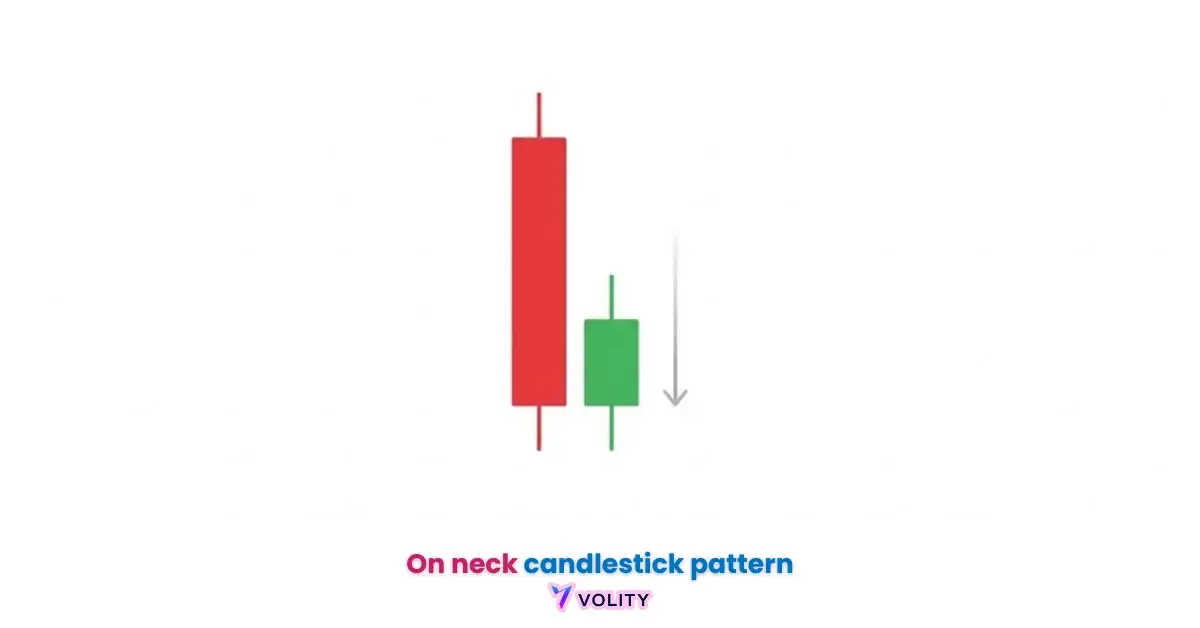
Candlestick patterns provide visual cues about price action and market sentiment, offering valuable confirmation for trade entries. Patterns like the Hammer or Engulfing Pattern can signal potential reversals. A bullish Engulfing Pattern, for instance, occurs when a large bullish candle completely engulfs the previous bearish candle, suggesting a shift in momentum to the upside. Recognizing these reversal patterns at key support or resistance levels can indicate a high-probability entry point, helping traders time their moves with greater precision.
What technical analysis tools help identify entry points?
Various trading indicators assist in identifying and validating entry points, helping traders avoid relying on a single signal. The Moving Average is a popular tool, with crossovers often signaling potential entry opportunities. For example, a moving average crossover where a shorter-term moving average crosses above a longer-term one can indicate a bullish entry.
The Relative Strength Index (RSI) helps identify overbought or oversold conditions, suggesting when a price might be due for a reversal. While many indicators exist, focusing on a few key ones prevents indicator overload, which can confuse traders and lead to missed opportunities.
Ready to Elevate Your Trading?
You have the information. Now, get the platform. Join thousands of successful traders who use Volity for its powerful tools, fast execution, and dedicated support.
Create Your Account in Under 3 MinutesBreakouts, Retests, and Reversals
How do breakout strategies work for entries?
Breakout strategies involve entering a trade when the price moves decisively beyond an established support and resistance level. Traders look for price to “break out” of a defined range, such as a consolidation pattern or a previous high/low. To avoid false breakouts, which are a common concern for traders who enter too early, confirmation is crucial. This confirmation can come from increased trading volume, a strong closing candle beyond the level, or a subsequent retest of the broken level before continuing the new trend.
What is a retest entry strategy?
A retest strategy is a lower-risk approach that involves waiting for the price to break a key support and resistance level and then return to “retest” that level before continuing in the breakout direction. For example, if price breaks above resistance, a retest entry would occur when price pulls back to that newly formed support level and shows signs of bouncing. This strategy provides confirmation that the broken level has indeed flipped its role and offers a second chance for entry, often with a tighter stop loss placement.
What are the most common trade entry strategies?
Reversal strategies focus on identifying and entering trades at the beginning of a new trend, following a significant price reversal. These strategies often use candlestick patterns like double tops or bottoms, or head and shoulders formations, in conjunction with Fibonacci retracement levels to pinpoint potential turning points. For instance, after a strong downtrend, a bullish reversal pattern at a key Fibonacci level could signal an opportune long entry, aiming to catch the full extent of a new trend.
The Optimal Trade Entry (OTE) Pattern
The Optimal Trade Entry (OTE) strategy is an advanced, high-precision approach that utilizes Fibonacci retracement levels to identify specific entry points within a trend. This strategy specifically targets the 62% and 79% Fibonacci retracement levels as high-probability zones for entering a trade. The OTE pattern helps traders pinpoint ideal reversal points within a larger move, offering a refined method for timing entries with exceptional accuracy. This method is particularly useful for experienced traders seeking precise entries.
Essential Risk Management for Every Entry Point
How to set a stop loss for a trade?
Setting a stop loss is a fundamental component of risk management, designed to protect capital from excessive losses. Implementing a stop-loss order is a critical step, automatically closing a position if the price moves against the trader beyond a predetermined point. This approach helps prevent being stopped out too quickly by minor price fluctuations while still limiting downside risk.
Locking in Gains
A take profit order is set to automatically close a trade once the price reaches a predetermined profit target. This helps traders lock in gains and avoid the emotional decision of holding a profitable trade for too long, potentially leading to a reversal.
Common methods for setting take-profit targets include identifying previous support and resistance levels, using Fibonacci extensions, or calculating a fixed risk-reward ratio. Some traders also use partial take profit strategies, where a portion of the position is closed at an initial target, and the remainder is allowed to run.
What is position sizing and why is it important for entries?
Position sizing is the process of determining the number of units (shares, contracts, lots) of an asset to trade, based on your account balance and risk tolerance. It is a critical aspect of risk management, directly addressing the question of “how much should I risk per trade?” For example, if a trader has a $10,000 account and decides to risk no more than 1% per trade, their maximum loss per trade would be $100. The position size is then calculated by dividing this maximum risk by the distance between the entry point and the stop loss. This prevents any single trade from causing significant damage to the overall portfolio.
What is the risk-reward ratio and how does it relate to entry points?
The risk-reward ratio (R:R) is a measure that compares the potential profit of a trade to its potential loss. It quantifies how much a trader stands to gain for every dollar they risk. For example, a 1:2 R:R means a trader aims to make $2 for every $1 risked.
This ratio is crucial for evaluating trade potential and determining the viability of an entry point. A favorable risk-reward ratio is essential for long-term profitability, even with a win rate below 50%. A trade with a 1:3 R:R, for instance, requires a lower winning percentage to break even compared to a 1:1 R:R.
| Risk-Reward Ratio | Potential Loss (Units) | Potential Gain (Units) | Required Win Rate for Break-Even |
| 1:1 | 1 | 1 | 50% |
| 1:2 | 1 | 2 | 33.3% |
| 1:3 | 1 | 3 | 25% |
| 1:4 | 1 | 4 | 20% |
This table illustrates that higher risk-reward ratios allow for a lower win rate while still maintaining profitability. Traders often seek a minimum R:R of 1:2 or higher.
Order Types and Platform Basics
Different Order Types for Trade Entry
When executing a trade, understanding order types is essential for controlling your entry price and speed of execution.
- A market order is an instruction to buy or sell an asset immediately at the best available current price. Market orders prioritize speed of execution over price certainty, making them suitable when entering a trade quickly is paramount, such as during fast-moving market conditions.
- In contrast, a limit order is an instruction to buy or sell an asset at a specified price or better. Limit orders prioritize price certainty over speed, ensuring the trade is executed only at the desired entry point or a more favorable one. If the market price never reaches the specified limit, the order will not be filled.
How to place an entry order on a trading platform?
Placing an entry order on a trading platform generally follows a similar sequence, regardless of the specific software. First, select the asset you wish to trade (e.g., EUR/USD, AAPL stock, Bitcoin).
Next, choose your desired order type – typically a market order for immediate execution or a limit order to enter at a specific price. Specify the quantity or volume of the asset you want to trade.
Critically, before executing the order, ensure to set a stop loss and take profit levels to manage your risk and define your potential reward. Always review all the order details thoroughly before clicking the “Buy” or “Sell” button to confirm your order execution.
Turn Knowledge into Profit
You've done the reading, now it's time to act. The best way to learn is by doing. Open a free, no-risk demo account and practice your strategy with virtual funds today.
Open a Free Demo AccountThe Psychology of Optimal Entry Points
Emotional discipline, often overlooked, significantly impacts a trader’s ability to execute entry points effectively. While technical analysis provides the “what” and “where” of an entry, psychology dictates the “when” and “if.” Unchecked emotions can lead to impulsive decisions, causing traders to deviate from their well-planned strategies and miss optimal entry points. Understanding and managing these internal factors is crucial for consistent success.
What are the psychological traps to avoid when setting entry points?
Several psychological biases can significantly impair a trader’s ability to set optimal entry points. Fear of missing out (FOMO) frequently causes traders to enter trades impulsively after a significant price move, leading to poor entries at extended prices. Conversely, hesitation can lead to missed opportunities, as traders overanalyze or fear pulling the trigger.
Overtrading, driven by a desire for constant action, often results in taking low-probability entries. Additionally, revenge trading, entering trades out of anger after a loss, pushes traders to make irrational decisions.
These biases often lead to either premature or delayed entries, resulting in suboptimal trading outcomes.
How can I improve my trading psychology for better entries?
Cultivating emotional discipline is paramount for improving trading psychology and executing better entries. Maintaining a trading journal is a highly effective tool for this. A journal helps in identifying emotional patterns linked to specific entry decisions, allowing traders to recognize when biases like FOMO or hesitation are influencing their actions.
By recording not only the technical details of a trade but also the emotional state and rationale behind each entry, traders can gain self-awareness. This practice fosters a structured approach to decision-making, helping to refine entry criteria and build consistency over time.
Practice, Backtesting, and Adapting Your Entry Strategy
How to practice setting entry points?
Consistent practice and backtesting are essential to validate entry strategies and adapt them to evolving market conditions. To practice setting entry points without risking real capital, traders should use demo accounts. These simulated trading environments allow for real-time application of strategies and order execution. For validating a strategy’s effectiveness, backtesting is crucial.
This involves applying a strategy to historical price data to see how it would have performed. Both manual and automated backtesting help traders build confidence and validate their strategy’s effectiveness.
How do market conditions affect entry points?
Market conditions significantly affect the effectiveness of various entry strategies, requiring traders to adapt their approaches dynamically. During periods of high market volatility, for instance, traditional breakout entries might lead to more false breakouts, necessitating wider stop losses or waiting for clearer retests. Conversely, low volatility might favor range-bound strategies or require patience for momentum to build. Factors like liquidity and major news events also influence price action and should be considered when adjusting entry criteria.
Bottom Line
Mastering trade entry points is a multifaceted skill that combines rigorous technical analysis with robust risk management and unwavering emotional discipline. Traders must understand how to identify support and resistance, interpret candlestick patterns, and leverage trading indicators to spot high-probability entries.
Implementing strategies like breakouts, retests, and advanced methods like Optimal Trade Entry (OTE) can refine timing. Crucially, safeguarding capital with stop loss placement, defining take profit targets, calculating position sizing, and evaluating risk-reward ratios are non-negotiable.
Finally, acknowledging and overcoming psychological biases through tools like a trading journal, coupled with continuous backtesting and adaptation to market conditions, forms the holistic approach necessary for consistent success in trading.
Key Takeaways
- Entry point timing is critical for managing risk and maximizing profit potential.
- Technical analysis tools like support and resistance and candlestick patterns help identify high-probability entries.
- Risk management, including stop loss and position sizing, is essential for protecting capital.
- Psychological biases can undermine even the best technical strategies; emotional discipline is key.
- Backtesting and adapting strategies to market conditions are vital for long-term success.