Quick answer
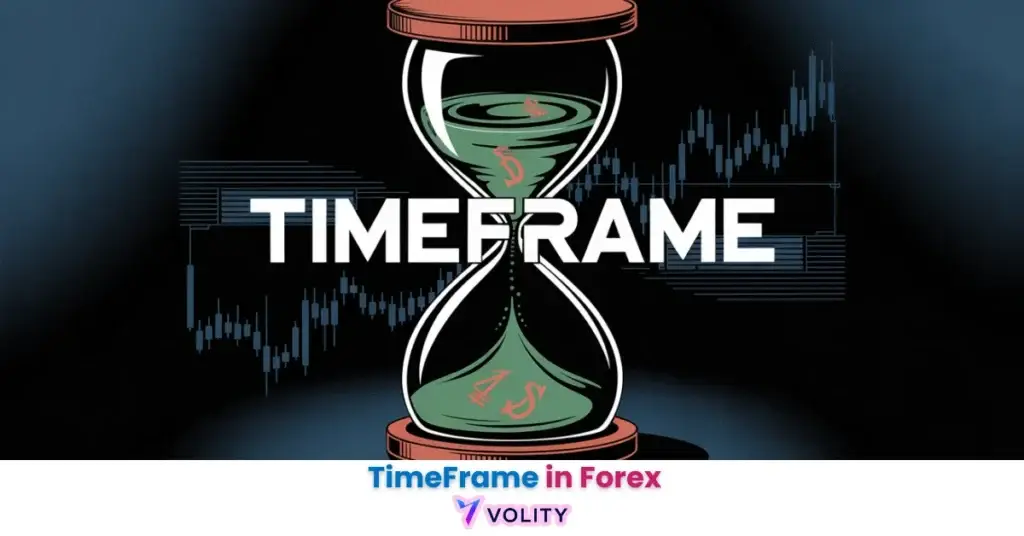
A time frame in forex is the period each candle or bar on your chart represents, from 1-minute to monthly. Shorter time frames suit scalping and day trading but carry more noise; longer ones suit swing and position trading with clearer trends. Many traders use multiple time frames together: a higher one for direction and a lower one for entries.
Lower timeframe trading amplifies slippage and spreads, M1/M5 signals often fail during low-liquidity sessions despite appearing textbook-perfect. Over-reliance on lower timeframes encourages overtrading, burning trading capital through accumulated commissions. The “Dead Zone” (21:00-23:00 UTC) creates algorithmic noise that triggers false breakouts, leading to stop-outs before genuine moves develop. Timeframe mismatch, using a 1:8 ratio instead of the professional 1:4 ratio, causes conflicting signals and analysis paralysis. Past performance is not indicative of future results. Capital at risk.
A time frame in trading represents the specific price interval each candlestick on a chart displays, ranging from 1-minute (M1) to 1-month (MN1). In 2026, professional traders utilize Multi-Timeframe Analysis (MTFA) to filter “noise” from institutional “intent,” using a 3-tier hierarchy: a higher time frame for directional bias, a medium time frame for level identification, and a lower time frame for execution triggers.
A time frame in trading functions as the primary lens through which investors interpret price action. Each candlestick on a chart summarizes the open, high, low, and close data for a specific period, allowing traders to categorize market behavior into actionable patterns. In the 2026 trading environment, mastering the interaction between different timeframes is the benchmark for high-probability execution.
The choice of a primary timeframe dictates a trader’s entire operational identity, from scalper to long-term position holder. Success in 2026 requires moving beyond single-chart analysis toward a multi-timeframe approach that aligns short-term triggers with long-term institutional bias.
While understanding Time Frame in Trading is important, applying that knowledge is where the real growth happens. Create Your Free Forex Trading Account to practice with a free demo account and put your strategy to the test.
What is a time frame in trading and why does it matter?
A time frame in trading is the specific duration represented by a single price bar or candlestick on a financial chart. Each bar encapsulates the open, high, low, and close for a defined period, whether 1 minute, 5 minutes, 1 hour, or 1 day. The timeframe selected determines the volume of data compressed into each candle and the speed at which trading decisions must be executed.
- Definition of M1, M5, M15 (Intraday) vs. H1, H4, D1 (Swing) vs. W1, MN1 (Position)
- How timeframe selection influences noise levels and signal reliability
- The psychological impact: Fast-paced decision-making vs. patient macro analysis
In 2026, the 4-hour (H4) timeframe is widely cited as the “sweet spot” for filtering out high-frequency algorithmic noise (TTT Markets: Professional Timeframe Reliability Report 2026). The H4 chart balances institutional structure visibility (present on daily charts) with acceptable entry timing for traders who cannot monitor markets full-time. Higher timeframes suffer from stale signals while lower timeframes drown in algorithmic noise, the H4 occupies the optimal middle ground.
Candlestick Condensation: How Data is Layered
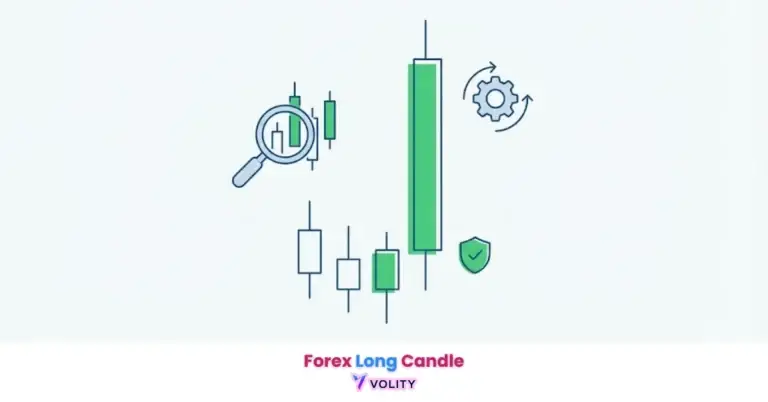
Timeframe condensation identifies the process of summarizing hundreds of micro-transactions into a single, actionable price bar. A single 1-hour candle on EUR/USD represents thousands of individual trades across all market participants. This compression filters out the random walk of individual transactions and exposes genuine institutional order flow patterns.
The OHLC (Open, High, Low, Close) structure carries distinct meaning. The Open reveals where traders chose to enter at the start of the period. The High and Low show the extreme prices both sides tested during the session. The Close represents the final institutional verdict, price level where the period ended. The Close carries the most institutional weight because it determines where traders will likely rest orders for the next period.
Ready to Elevate Your Trading?
You have the information. Now, get the platform. Join thousands of successful traders who use Volity for its powerful tools, fast execution, and dedicated support.
Create Your Account in Under 3 MinutesChoosing the Best Time Frame for Your Trading Style
Your personality and lifestyle determine the optimal time frame for your trading strategy and risk management. A trader working a day job cannot scalp the 1-minute chart; a hedge fund managing billions cannot afford the slippage inherent in using only daily charts. Matching trading style to timeframe determines the entire success of the strategy.
Scalping requires M1 and M5 charts to capture 5-10 pip profits with rapid exit discipline. Day trading uses M15 and H1 charts to close all positions within a single session. Swing trading operates on H4 and D1 charts, holding for 2-5 days while allowing time for macro events to develop. Position trading uses W1 and MN1 charts, ignoring intraday volatility entirely and focusing on multi-month directional allocations.
Experts recommend the Daily (D1) and 4-hour (H4) charts as the most profitable timeframes for beginners due to higher signal accuracy (FeneFX 2026 Retail Trading Success Statistics). Beginners lack the speed and discipline required for M1 scalping, where emotional reaction time often causes losses. Higher timeframes give traders time to think, analyze, and execute trades with emotional control.
Use a 1:4 or 1:6 ratio between your analysis and execution time frames; if your “Trigger” is on the 15-minute chart, your “Compass” should be the 1-hour or 4-hour chart to ensure alignment with the dominant trend.
The 2026 “3-Tier Model” for Multi-Timeframe Analysis (MTFA)
Multi-timeframe analysis (MTFA) identifies the professional methodology of aligning a higher-timeframe ‘Compass’ with a lower-timeframe ‘Trigger’. This structured approach eliminates the confusion of watching too many charts while maximizing the insights of using multiple timeframes.
Tier 1 defines the “Compass”, the higher timeframe (Daily or H4) that establishes the institutional bias and dominant trend direction. If the Daily shows a strong uptrend with price above the 200-day EMA, any entries must be bullish. Tier 2 identifies the “Map”, the medium timeframe (H1 or M15) where key levels, supply/demand zones, and chart patterns form. This timeframe shows the tactical structure without overwhelming detail. Tier 3 pinpoints the “Trigger”, the lower timeframe (M5 or M1) where the precise entry signal appears, typically a “Change of Character” (ChoCH) candle that shows buyers or sellers decisively taking control.
GBP/USD Daily chart showed a strong uptrend as the Compass. The H1 chart formed a bullish flag at a prior resistance level, the Map. The trader dropped to the M5 chart and entered on a bullish engulfing candle that broke the flag’s resistance, capturing a 60-pip move with a tight 15-pip stop. Past performance is not indicative of future results.
Comparing Time Frames: Noise and Holding Periods
Longer time frames filter out more of the short-term noise that high-frequency order flow creates, but each step up also means holding positions for longer. The table compares typical noise levels and holding periods.
| Time Frame | Relative Noise Level | Holding Period |
| M1 – M5 | Extremely High | 5 – 30 Minutes |
| M15 – H1 | Moderate | 2 – 8 Hours |
| H4 – D1 | Low | 2 – 5 Days |
| W1 – MN1 | Negligible | 3 – 12 Months |
| HFT (AI) | Dynamic | < 1 Second |
H4 and D1 charts are a common middle ground: they filter out most intraday noise while keeping holding periods to days rather than months. Weekly and monthly charts are cleaner still but demand months of patience, and high-frequency trading competes on execution speed rather than on reading charts.
WARNING: Avoid the “Dead Zone” (21:00 – 23:00 UTC) on lower time frames; during this window, liquidity drops and spreads widen, making intraday technical signals highly unreliable and increasing the risk of slippage-driven stop-outs.
The Importance of Trading Sessions and Volume Overlaps
Market liquidity windows determine the effectiveness of technical signals on intraday time frames. The London-New York Overlap (13:30 – 16:00 UTC) remains the most liquid window of the trading day, with the tightest spreads and the most reliable moves for intraday traders. During this window, both European and American institutions are simultaneously trading, creating massive order flow that validates technical breakouts and support levels.
Low-volume fakeouts plague the Asia session, a pattern that looks textbook bullish on the H1 chart often reverses when London opens and real liquidity returns. Scalpers and day traders using M15 or H1 charts must trade with awareness of session timing; a setup that looks perfect during the 03:00-08:00 UTC Asia session is less reliable than the same pattern during the London-NY overlap.
💡 KEY INSIGHT: The London-New York Overlap (13:30 – 16:00 UTC) remains the most liquid window of the trading day, with the tightest spreads and the most reliable moves for intraday traders.
Common Mistakes: The “Lower Timeframe Trap”
Lower timeframe dominance represents the primary technical error where a noisy 1-minute signal is allowed to overrule a higher-timeframe trend. Retail traders fixate on the M1 chart because constant action triggers the dopamine reward system, they feel they are “always trading.” But this illusion of activity hides how much of the M1 chart is noise rather than signal.
Overtrading on lower timeframes consumes trading capital through accumulated spreads and commissions faster than any profitable strategy can recover. Ignoring macro context causes textbook setups to fail, a bullish engulfing on the M5 means nothing if price is in a 200-bar downtrend on the Daily. Professional traders build a framework that prevents lower timeframe signals from overriding higher-timeframe bias, typically by refusing to take lower-timeframe signals that go against the Daily trend.
Turn Knowledge into Profit
You have done the reading, now it is time to act. The best way to learn is by doing. Open a free, no-risk demo account and practice your strategy with virtual funds today.
Open a Free Demo AccountKey Takeaways
- Time frame in trading is the fundamental unit of market analysis, determining the speed and reliability of all technical signals.
- Multi-timeframe analysis (MTFA) is the professional standard in 2026, using a 3-tier model to align short-term entries with long-term bias.
- Higher timeframes like the H4 and Daily charts filter out much of the “noise” of high-frequency algorithms.
- Lower timeframes like M1 and M5 are highly sensitive to “Dead Zone” spreads and session-driven volatility, requiring intense focus and automation.
- The 1:4 ratio rule ensures that your trigger timeframe is logically linked to your analysis timeframe (e.g., M15 trigger for an H1 setup).
- London-NY overlap remains the highest volume window in 2026, providing the most reliable liquidity for intraday timeframe execution.
Frequently Asked Questions
This article contains references to Time Frame in Trading, Multi-Timeframe Analysis, and Volity, a regulated CFD trading platform. This content is produced for educational purposes only and does not constitute financial advice or a recommendation to buy or sell any financial instrument. Always verify current regulatory status and platform details before using any trading service. Some links in this article may be affiliate links.