Quick answer
Commodity day trading is opening and closing positions in commodities like oil, gold or natural gas within the same day, profiting from intraday price moves. It relies on volatility, tight spreads and fast execution, and avoids overnight risk. Commodities can move sharply on news and inventory data, so day traders need strict risk control and a clear plan.
Commodity day trading closes positions intraday, avoiding swap fees and weekend gap risk. Volity supports day trading on 150+ commodity CFDs with sub-1-second execution. Most retail commodity day trading concentrates around predictable event windows: EIA oil/gas reports, WASDE crop reports, Fed announcements affecting gold.
Why day trade commodities specifically:
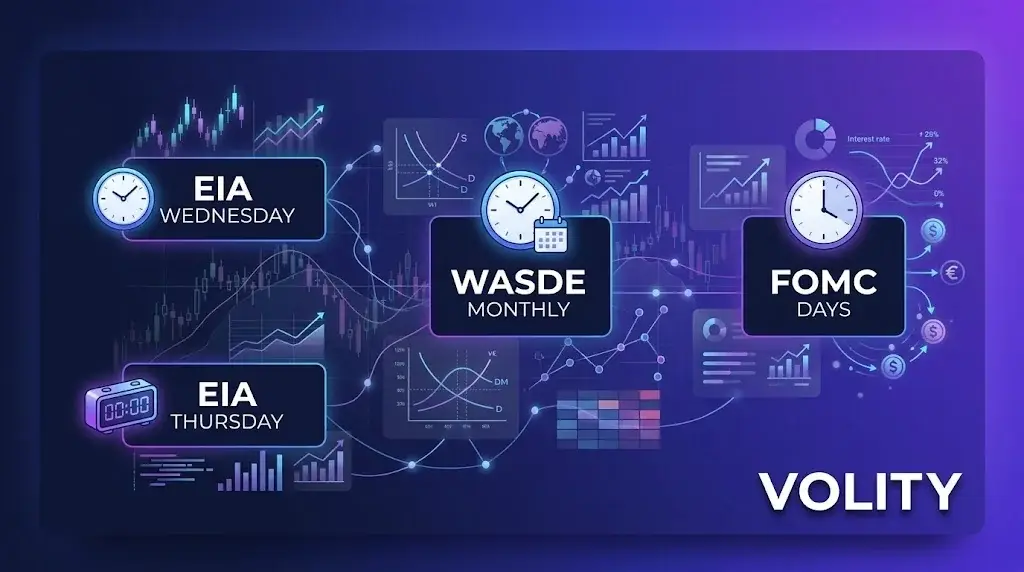
- Predictable event-driven volatility (EIA Wed 10:30 EST, WASDE monthly)
- No swap fee if positions close intraday
- Tight CFD spreads on major commodities (WTI, gold, natural gas)
- No expiry roll management
- Multi-asset margin pool on Volity supports cross-commodity day trading
The three retail day-trading commodity strategies:
1. EIA event trading (oil and gas). Wednesday 10:30 EST for oil. Thursday 10:30 EST for natural gas. Pre-position based on consensus expectation; profit if actual diverges meaningfully. Move closes within 60-120 minutes typically. Realistic risk-reward 1:1.5 to 1:2.5.
2. WASDE event trading (grains). Monthly USDA report. Pre-position on corn, wheat, or soybeans. Same mechanic as EIA but slower; closes can take 4-8 hours after release.
3. Macro-event trading (gold). Federal Reserve meetings (FOMC), CPI prints, NFP. Gold reacts to USD strength shifts. Position in the 30 minutes before release; close within 1-3 hours.
Cost economics:
A typical commodity day trade on WTI: – Position: 0.1 lot = 100 barrels = $7,000 notional at $70/barrel – Leverage 1:20: margin $350 – Spread on entry + exit: ~$5-10 round trip – Target move: 1% = $70 P&L – Stop: 0.5% = $35 loss – Win rate needed for breakeven (with 2:1 R/R): 33%
The math works at moderate win rates with disciplined risk management.
Volity execution on commodities:
- 99.6% sub-1s fills (matters during event spikes when liquidity briefly thins)
- No requotes
- Tight spreads on WTI, Brent, gold, silver, natural gas
- Stop-loss orders fill at market on trigger
- One-click trading available for fast entry
Risk specific to commodity day trading:
- Event gaps within seconds. EIA reports can move prices 1-2% in 30 seconds. Spreads briefly widen
- Stop-loss slippage during fast markets. Stops trigger at market; in fast moves, fills can be 5-10 cents past the level
- Position-size discipline. Strong directional convictions tempt oversizing; resist
- Multi-commodity overlap. Trading oil and natural gas simultaneously concentrates exposure to energy news
Swing trading commodities (related):
Swing trading holds commodity positions for days to weeks. Differences from day trading: – Swap fees apply on overnight positions – Weekend gap risk on futures-based markets – Multi-day setups (broader trends, larger profit targets) – More forgiving of intraday noise
Volity supports both styles on the same account. Day-trading capital and swing-trading capital can be segregated mentally with different position-sizing rules.
Recommended capital for commodity day trading:
Volity live minimum: $1. Practical minimum for sensible commodity day trading: $2,000-$5,000. Below this, 1% risk per trade ($20-$50) produces position sizes too small to capture meaningful event moves.
Key Takeaways
Commodity day trading on Volity closes positions intraday, avoiding swap fees and weekend gap risk. The most predictable commodity day trading opportunities sit around scheduled events: EIA Wednesday 10:30 EST for oil, EIA Thursday 10:30 EST for natural gas, monthly WASDE for grains, FOMC for gold.
Three foundations for commodity day trading on Volity:
- Tight spreads on WTI, gold, and natural gas make commodity day trading economically viable for retail
- Sub-1-second execution matters during commodity day trading event windows when liquidity briefly thins
- Position sizing discipline more important than leverage for sustainable commodity day trading results
Sources
Related Volity commodities pages
- Volity Commodities Platform: 150+ Markets, 1:500, 24/5
- Commodity Futures vs CFDs: Which Suits Retail?
- Commodity ETFs Explained vs CFD Trading on Volity
- Agricultural Commodities Trading: Grains, Softs, Livestock
- Silver Trading on Volity: XAG/USD CFDs, 1:500
- Crude Oil Trading: WTI CFDs on Volity with 1:500
- Commodities Trading Online: How CFDs Make Markets Accessible
- Risk Management in Commodity Trading: 8 Rules That Work
Frequently Asked Questions
Can I day-trade commodities on Volity?
Yes. 150+ commodity CFDs available on Volity MT with 99.6% sub-1s execution, no requotes, all standard order types. Day-trading closes positions intraday, avoiding swap fees.
What commodities are best for day trading?
Energy: WTI crude, Brent crude, natural gas (predictable EIA events). Metals: gold (Fed-policy reactive), silver (volatile). Agricultural: corn, soybeans, wheat (WASDE events). Each has its own event calendar and volatility profile.
What is the difference between commodity day trading and swing trading?
Day trading closes positions intraday (no swap, no overnight gap risk). Swing trading holds days to weeks (swap fees, larger profit targets, multi-day setups). Volity supports both styles on the same account.
When are the best times to day-trade commodities?
US session is most liquid for most commodities. Specific event windows: EIA oil report Wed 10:30 EST, EIA gas report Thu 10:30 EST, WASDE monthly, FOMC days for gold. Position size around these events with care.
How much capital do I need for commodity day trading?
Volity live minimum: $1. Practical minimum: $2,000-$5,000 for sensible position sizing. Below this, 1% risk per trade ($20-$50) is too small for meaningful event-trade outcomes after spread costs.
What leverage should I use for commodity day trading?
Volity supports up to 1:500. Most retail day-trading strategies work at 1:10 to 1:20 with 1% per-trade risk. Higher leverage is for proven strategies on small position sizes only.
Are commodity day trading profits taxable?
Yes in most jurisdictions. CFD profits taxed as derivatives gains or business income depending on activity level. Volity provides annual P&L statements; consult a local tax advisor.