Crypto’s stress test: hacked wallets, cautious buyers and a market waiting on inflation
Tuesday, October 13, 2026. Crypto markets found a little balance on Tuesday. Yet the day’s most unsettling development involved a hardware wallet, not a price chart.
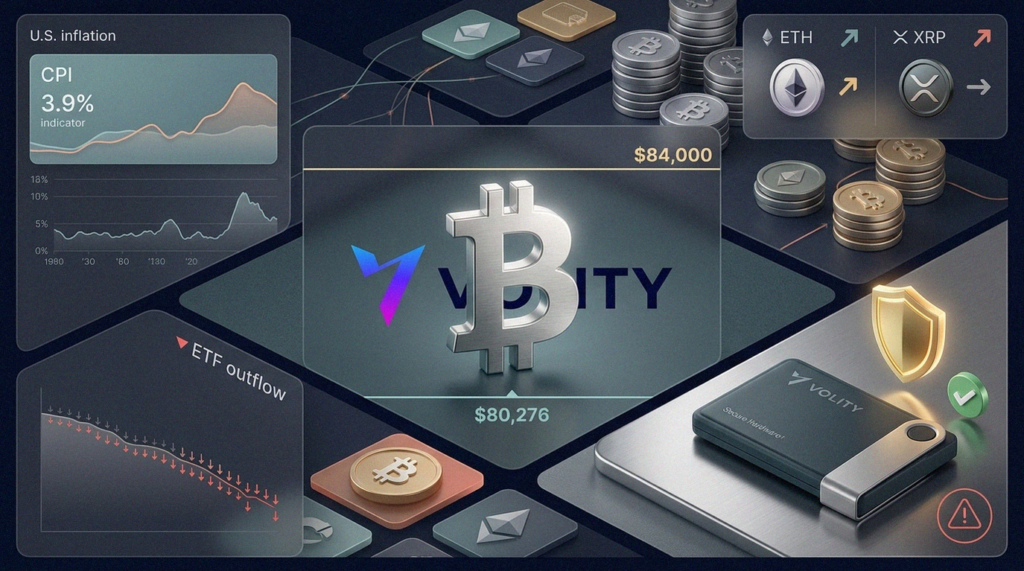
Bitcoin rose above $84,000 after Monday’s slide towards $81,700. Ether reclaimed $2,500, while XRP moved near $1.40. Still, buyers remain cautious before the latest United States inflation figures.
Ledger halts German retail sales
Ledger suspended retail sales in Germany during an investigation into a supply-chain attack. The affected devices were sold by Southeast Asian reseller CryptoBilis.
Ledger’s security team found an unauthorised chip inside at least one wallet. The component allegedly read recovery phrases during setup and transmitted them through LTE.
The implant reportedly used an embedded SIM card. It could capture the 24-word phrase shown on the device screen, then send it elsewhere.
Importantly, Ledger said the attack did not break its Secure Element. Nor did it alter the operating system or modify transactions.
That offers little comfort to affected customers. A recovery phrase is the master key to a wallet, regardless of how secure its main chip remains.
CryptoBilis stopped wallet sales and shipments across Malaysia, Indonesia and the Philippines. Ledger has not confirmed the number of compromised devices.
Investigators have linked suspected thefts to roughly 324 wallets. Estimated losses stand near $102 million, although that figure remains provisional.
The incident exposes an awkward weakness in self-custody. A factory seal cannot prove that no component was added before delivery.
Likewise, a software authenticity check may miss hardware that operates outside the wallet’s main system. The device can appear legitimate while quietly leaking its most sensitive information.
- Suspected losses: about $102 million
- Wallets under review: roughly 324
- Target: recovery phrases generated during setup
- Ledger action: German retail sales paused
Anyone suspecting tampering should stop using the device immediately. Any recovery phrase generated on that wallet should be treated as exposed.
Users should move funds using a separately verified device. They should also contact Ledger before importing an old phrase anywhere.
Bitcoin waits for the inflation print
Tuesday’s recovery did not erase the market’s defensive tone. Bitcoin exchange-traded funds saw about $65 million of outflows on Monday.
Ethereum funds lost roughly $85 million on the same day. Those withdrawals extended a ten-day run of net outflows.
Markets now await the US consumer price index report. A softer reading could ease rate concerns and support risk assets.
A hotter number would likely pressure technology shares and crypto alike. Highly leveraged traders would face the sharpest immediate risk.
Bitcoin’s first test sits around $84,000. Traders also watch the 50-day exponential moving average, near $80,276.
A decisive break below that average could revive selling pressure. In contrast, a sustained close above $84,000 may draw back short-term momentum buyers.
Ether faces resistance near $2,700. Its momentum remains subdued, despite the move above $2,500.
XRP presents a more complicated picture. Futures activity has reached an eight-month high, while spot demand looks less convincing.
That mismatch often creates violent price moves. Futures traders can push a rally further, but they can also accelerate a reversal.
Corporate buyers keep accumulating
Strive bought 3,311 Bitcoin, taking its holdings to 32,773 coins. The purchase underlines corporate appetite for digital assets during declines.
However, corporate treasury buying is no longer a simple bullish signal. Financing costs increasingly shape these strategies.
Metaplanet seeks about $340 million to repay Bitcoin-linked loans and repurchase shares. Strategy has also focused heavily on buying back preferred securities.
Those choices matter because capital structures can constrain future purchases. Debt maturities, dilution and refinancing may now influence corporate crypto demand.
A company can believe deeply in Bitcoin and still face a difficult funding calendar. Investors should separate asset conviction from balance-sheet capacity.
Tokenisation meets the plumbing problem
DeepSigma launched a demonstration covering perpetual contracts tied to 77 traditional markets. The products include tokenised exposure to currencies, commodities and equities.
The attraction is clear: crypto venues can trade around the clock. Yet tokenisation does not automatically create legal ownership or reliable settlement.
Collateral rules, price oracles and liquidation procedures remain central risks. So does the basic question of what rights each token actually grants.
Morgan Stanley estimates tokenised assets could reach $3 trillion to $10 trillion by 2030. Even so, the bank delayed its own tokenised-stock plans.
That gap says plenty. Technology can move in weeks, while legal frameworks tend to move at the speed of committee rooms.
Stablecoins face the same divide. They move globally within seconds, but reserve rules and enforcement still stop at national borders.
Regulators narrow the exits
The Commodity Futures Trading Commission opened rulemaking on crypto transactions under its leveraged retail commodity authority. The process could reshape US access to certain derivatives products.
South Korea blocked 27 unregistered overseas crypto websites, including KuCoin and MEXC. Officials want local users trading through registered platforms with domestic safeguards.
Russia took the opposite route in part. Authorities approved Sberbank for crypto-exchange services, while payment network A7 introduced a USDT-linked offering.
These policies show crypto becoming part of national financial strategy. It now touches payments, capital controls, sanctions and cross-border competition.
Security takes centre stage
Autheo’s THEO token fell 92% after a suspected bridge exploit. Meanwhile, large Cardano holders reportedly sold 110 million ADA.
Blur is preparing to close its NFT marketplace after a prolonged sector downturn. Binance also plans to close its mining pool on November 10.
Crypto faces several tests at once. Inflation sets the cost of capital, while regulation controls access and corporate finance affects liquidity.
Yet the Ledger episode delivers the sharpest lesson. A concealed chip can defeat a careful investor before the first trade occurs.
Key takeaways
- Bitcoin traders are watching $84,000 resistance and $80,276 support.
- CPI could determine whether the rebound attracts fresh institutional money.
- ETF outflows show that large investors have not fully embraced this bounce.
- Corporate Bitcoin buyers need financing flexibility, not only bullish conviction.
- Hardware-wallet owners should verify sellers and distrust any suspicious setup process.
Related coverage on Volity
- How to Avoid Crypto Scams: A Beginner Safety Checklist
- How to Choose a Trading Platform: A 10-Point Checklist
- Demo vs Live Trading Account: A 7-Step Checklist Before You Go Live
- How to Size a Trade: Position Sizing and Risk Per Trade for Beginners
- Risk-Reward Ratio Explained: How to Set It and Why It Matters
- ETF vs Index Fund: The Difference and Which to Pick