Investing in financial products involves risk. Losses may exceed the value of your original investment.
Bitcoin price iran is a core topic for traders in 2026. The complete guide follows.
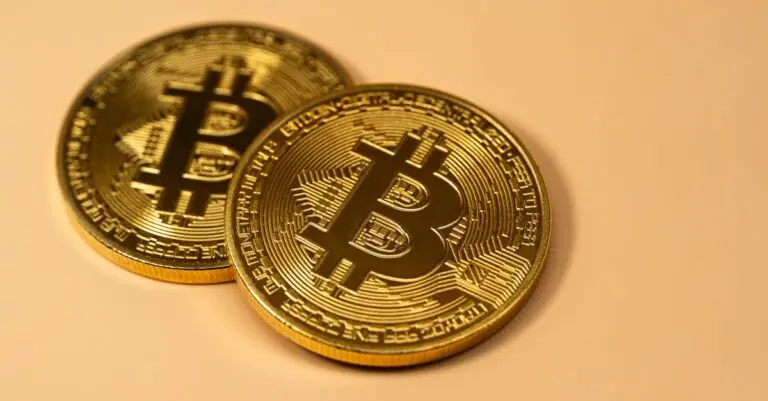
Bitcoin spent the session doing what it does best in a tense world: flinching first and asking questions later. Prices slipped towards $65,000 after President Trump warned of further strikes on Iran following a bridge attack. However, buyers returned in familiar fashion, with Bitcoin changing hands around $66,650 and Ether near $2,046.
Risk assets caught the same draught. Meanwhile, the mood music from big tech turned less forgiving, with AI names wobbling and the “AI themed” corners of crypto losing their bid. Asia was the notable exception, as Japan’s Nikkei and South Korea’s Kospi pushed higher. Yet crypto linked equities still lagged, as traders treated the sector like a high beta add on, not a shelter.
What made the dip feel heavier was supply. Miners have been feeding the market at awkward moments, and this week did not change that habit.
Riot Platforms disclosed it sold 3,778 Bitcoin in the first quarter. It also shifted another 500 coins recently, a move that traders read as a prelude to more selling.
Elsewhere, Genius Group took the blunt route, liquidating its entire Bitcoin treasury to pay down debt. The tape faced both macro fear and actual coins turning into cash.
Iran’s threats of retaliation did not need to be specific to push volatility higher. Instead, traders repriced the risk premium across markets, and crypto followed. On Polymarket, punters have started to assign chunky odds to structurally higher oil, with one contract implying a 65% chance of WTI hitting $120. That may be distant, but it speaks to the same thing: markets are paying for uncertainty up front.
Solana’s day in court, again
Solana’s DeFi scene had its own earthquake. Drift Protocol was hit by a social engineering exploit that, by circulating estimates, ran to $285 million. The number landed like a hammer because it was not an exotic smart contract bug. Instead, it was old fashioned manipulation, the sort that makes participants question process, not code.
Technically, Solana flashed a bearish crossover, which encouraged short term sellers. However, spot buyers defended the roughly $70 area and kept the chart from turning into a rout.
That matters, because a break and hold above resistance would let bulls argue for a falling wedge recovery. In the background, “whales” in Chainlink reportedly accumulated, while several smaller tokens ripped higher on thin air.
Cartesi jumped more than 100% after reaching a Stage 2 security milestone. Algorand popped about 20% with no clear catalyst, which is usually a warning label.
AI moves fast, and crypto tries to keep up
Meanwhile, the AI arms race kept spilling into crypto infrastructure. Microsoft pledged $10 billion for Japanese AI expansion, cyber defence and talent. Google introduced “Gemma 4”, its latest open model, and DeepMind warned about web attacks that hijack AI agents. Those warnings are no longer academic, because agents are already being wired into wallets, trading tools and customer support.
Vitalik Buterin pushed “local first” AI as a security counterweight, favouring models that run closer to users and away from central points of failure. At the plumbing layer, Google and Microsoft backed the x402 Foundation’s work on AI driven crypto payments standards, now housed under the Linux Foundation with Stripe and AWS. The industry is not just chasing token prices. It is also fighting about rails.
Corporate theatre continued. OpenAI bought a tech talk show, TBPN, in a bid to sharpen its communications. Anthropic also faced an awkward moment, after a Claude related code leak exposed internal details and invited uncomfortable questions about operational discipline.
Rules, lawsuits and a busy map of “yes, but”
Regulatory news arrived from several directions at once. The CFTC and the Justice Department sued three states over prediction market oversight. The US Treasury opened consultations tied to the GENIUS Act and stablecoin rules. Alabama legalised DAOs under its DUNA Act, a small state level signal that corporate forms are adjusting to on chain reality.
Several institutional plays also moved. Circle launched “cirBTC” to compete for wrapped Bitcoin market share.
Fundrise said its VCX fund will tokenise shares on Kraken’s xStocks. Another project, Lise, is aiming at what it bills as Europe’s first fully on chain IPO, starting with a French aerospace firm.
SoFi talked up a tighter fiat and crypto blend in “Big Business Banking”, while Telegram’s wallet added up to 50x perpetuals across metals, stocks, oil and crypto. Meanwhile, Bithumb pushed its IPO timetable beyond 2028 amid scrutiny.
Prediction markets grow up, and the scams follow
Polymarket rolled out stock and commodity contracts using Pyth price feeds, nudging prediction markets into territory that will attract louder legal attention. Yet the other side of the boom is uglier. New “automated” Ethereum swing trading products promised unrealistic daily yields, while cloud mining offers resurfaced with familiar marketing. The line between innovation and bait remains thin.
- Miner supply: Riot Platforms sold 3,778 BTC in Q1 and moved another 500 recently.
- Price check: BTC about $66,650, ETH about $2,046.
- Solana shock: Drift exploit estimates circulated near $285 million.
- Oil anxiety: Polymarket priced 65% odds of WTI at $120.
- Post quantum push: Coinbase framed a $150 million “Quantum Defense Fund”.
Coinbase bets on post quantum crypto
Finally, Coinbase tried to get ahead of a threat that sounds like science fiction until it doesn’t. Chief executive Brian Armstrong announced a $150 million Quantum Defense Fund aimed at post quantum upgrades, including Bitcoin proposals like BIP 360 and hash based Winternitz signatures. Plans discussed include dual signature migration and “quantum proof” custody targets by late 2026, with support flagged from Block and Bitcoin Core developers. However, Bitcoin changes slowly by design, so the funding is the easy part.
Key takeaways
- Watch miner flows: sustained selling often caps rallies near obvious resistance levels.
- Respect headline risk: Middle East escalation can hit crypto like leveraged equities.
- On Solana, demand proof: exploits shift liquidity to “safer” venues fast.
- Be wary of “AI yield” pitches: extreme daily return claims usually end one way.
- Track post quantum talk: it can become a real catalyst for custody and wallet vendors.
For more on this topic see our deep-dives on Bitcoin Steady, Nasdaq Rallies: Trading Iran De-escalation, Bitcoin and XRP ETF Flows: How Fed Policy Drives Crypto Allocations, and Bitcoin Price and Geopolitical Fear: How Iran Headlines Hit Crypto.
What our analysts watch: Three reads turn miner-flow analysis into a usable signal. The miner-position index (miner reserves divided by 30-day average outflow) tracks whether public miners are accumulating or distributing on a normalised basis; sustained MPI declines below the one-year median are structural sell-pressure regimes that cap rallies at obvious resistance.
The on-chain transfer signature out of public-miner addresses to exchange addresses is the second read, since the lag between treasury liquidation and spot-price reaction is typically 24 to 72 hours and produces a tradable window for short-side entries on overextended bounces. And the public-miner equity tape (RIOT, MARA, CLSK, HUT) is the third read; miner equities under-performing BTC by 10 percent or more on weekly basis is the leading indicator that the sector is balance-sheet-stressed and selling is structural rather than tactical.
The CoinDesk coverage of miner balance-sheet disclosures and on-chain flow tracks the supply pressure in real time, the International Monetary Fund analysis of crypto in cross-border capital flows frames the macro backdrop, and the Financial Conduct Authority retail leverage guidance is the regulatory context for sizing crypto positions through high-volatility windows. Volity offers BTC, ETH, SOL, and major altcoin CFD access under CySEC oversight via UBK Markets (licence 186/12).
Frequently asked questions
Why are miners structurally net sellers post-halving?
Halvings cut block-reward issuance in half overnight; operating costs (electricity, hosting, debt service) do not decline at the same rate. Public miners with leveraged balance sheets must monetise a larger fraction of mined BTC to cover fixed costs, which converts them from holders into recurring sellers. The structural pressure persists for 12 to 18 months post-halving until hash-price normalises through difficulty adjustments and mean-reversion in spot price.
How quickly does miner selling actually move spot price?
The mechanical impact is small per individual transfer but compounding through the 24 to 72 hours that follow. The behavioural impact is larger; published treasury sales create headline risk that incentivises other miners to sell into the same narrative window, which produces the cluster effect that flattens rallies. Quantitatively, weeks where public miners sell more than 5,000 BTC see Bitcoin underperform its trend by approximately 200 to 400 basis points.
Is the Coinbase Quantum Defense Fund a real catalyst or marketing?
Both. The $150 million is real and the technical roadmap (BIP 360, hash-based Winternitz signatures, dual-signature migration) is concrete enough to ship. The marketing layer is the late-2026 quantum-proof custody timeline, which is a target rather than a guarantee. Custody and wallet vendors that integrate post-quantum primitives early capture an institutional sales narrative that becomes a real fee opportunity as compliance requirements harden.
How should a retail trader respond to a session combining miner selling and geopolitics?
Cut size, widen stops, and avoid taking new directional positions until the miner-flow data confirms the sell pressure has cleared (typically two to four sessions after the headline window). The combination of forced selling from miners and headline-driven volatility produces a tape that whips harder around lower volume; positions taken into the chop are typically stopped out before the post-event trend establishes.
Volity operates a trading platform and also publishes educational and analytical content about trading. The content on this page is for educational purposes only and should not be considered financial advice. Volity may benefit commercially when readers open trading accounts through links on this site.
Our content is produced and reviewed under documented editorial standards; see our comparison and review methodology.