Investing in financial products involves risk. Losses may exceed the value of your original investment.
Crypto etf outflows is a core topic for traders in 2026. The complete guide follows.
Crypto Market Shakes Off ETF Blues as Ripple Eyes Saudi Gold
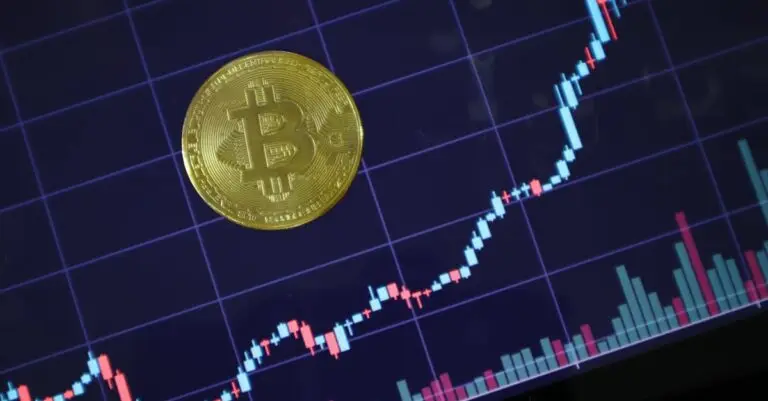
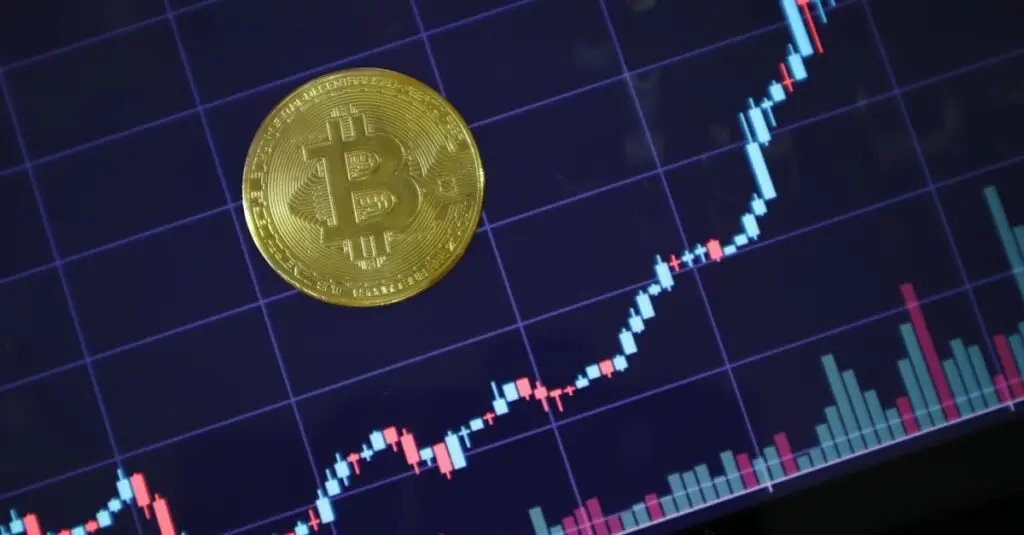
Bitcoin steadied near $88,000 on Monday. After a punishing week. For crypto exchange-traded funds. Investors pulled about $1.7 billion. From crypto ETFs. With Bitcoin products taking roughly $1.33 billion. Of that.Meanwhile, Ethereum funds saw about $611 million in exits. As risk appetite thinned. Additionally, macro nerves crept back in.Yet price action refused to turn into something. A rout. Bitcoin briefly probed the mid-$86,000s. Over the weekend. Then, crawled back towards $88,000. However, the market still looks bruised. With BTC down about 10.5%. From mid-January levels. Near $98,000.Traders talked up something. A possible “relief bounce.” As momentum gauges hinted at something. Seller fatigue.Bitcoin’s Wild Ride: Outflows Hit Historic Highs
ETF flow data did the damage. But derivatives finished the job. Liquidations rose. As leveraged longs tried to defend $88,000. And failed. Moreover, a CME futures gap of roughly $2,900 became something. A magnet for short-term positioning. With fast money leaning into the volatility.Technical Signals Emerge
Technicians, however, found something to like. Bullish RSI divergence showed up. On Bitcoin charts. Suggesting weakening downside momentum. Even as price tested support. Therefore, $87,957 has become a line in the sand. For dip buyers. While $89,878 sits nearby. And then $91,256. As upside markers. Into 28 January.Key Market Metrics
ETF stress: About $1.33BN left Bitcoin ETFs last week. And about $611M left Ethereum ETFs.Key levels: Support near $87,957. With resistance bands around $89,878. Additionally, $91,256.Drawdown check: BTC is about 10.5% below mid-January levels. Near $98,000.Macro noise: Prediction markets priced US shutdown odds around 78%. Weighing on broader risk.Elsewhere, the dollar’s dip helped counterbalance something. The fund outflows. The DXY index retested levels. Last seen in September. Which typically loosens financial conditions. At the margin.However, traders remained wary. Ahead of looming policy headlines. With “one bad print” still capable of something. Spiking correlations. Across equities. Additionally, rates. Furthermore, crypto.Ripple’s Gulf Gambit: RLUSD Tests Saudi Waters
While Bitcoin sulked, Ripple grabbed attention. With a Saudi move. The company signed something important. A memorandum of understanding. With Jeel. The innovation arm tied to Riyad Bank. To explore blockchain-based payment use cases. In the kingdom.No launch timetable came. With the announcement. And nothing is live yet. Still, the direction of travel matters. Why? Since Saudi Arabia’s Vision 2030 agenda has become something. A powerful umbrella. For fintech pilots.Ripple’s Strategic Positioning
Ripple’s pitch leans on regulated rails. Additionally, its RLUSD stablecoin. Gulf regulators have shown more enthusiasm. For controlled experimentation. Rather than for freewheeling retail speculation.Meanwhile, Ripple has already cultivated traction. In Dubai. Additionally, Abu Dhabi. So Saudi pilots read as the next stop. In a deliberate regional build-out.RLUSD matters. Which Ripple positions for institutional payments. Has been backed by a growing web. Of custody relationships. Additionally, reserve relationships. Therefore, each incremental regulator conversation can become something. A credibility trade. Even before volumes arrive.Tokenized Frontiers and Stablecoin Surges
Stablecoins stayed at the heart. Of the day’s narrative. Tokenized settlement keeps moving. From conference slide to implementation plan. With T+0 settlement increasingly treated as something. A near-term project. Rather than a distant experiment.Meanwhile, new euro stablecoin projects continued to queue up. Including efforts targeting 2H 2026. With multi-bank support.That matters for crypto prices. Why? Because stablecoins are the market’s plumbing. When their use expands? On-chain liquidity normally improves. However, tighter regulation can also reshape who issues. Who banks them. Additionally, which chains benefit.Altcoin Action and Oddballs
In majors, Ethereum faced renewed talk. Of a potential 20% slide. Towards the $2,780 to $3,020 area. If risk sentiment worsens.Meanwhile, reports of something caught attention. A dormant whale shifting 50,000 ETH. To Gemini. This revived a familiar fear. Watching big wallets for clues. That supply might hit the market.Solana slipped. Even as memecoin activity stayed noisy. And some traders pointed to fee spikes. Additionally, churn. As gasoline for leverage flushes.NFTs, for their part, showed signs of life. With weekly sales doubling. To about $122.5 million. And CryptoPunks rising about 25%.Key Takeaways
ETF outflows remain the near-term headwind. So rallies may struggle. Without flow stabilization.Bitcoin’s RSI divergence supports tactical bounce setups. But $87,957 is the risk line. To watch.Dollar softness can ease pressure. Although macro shocks may still dominate. Intraday moves.Ripple’s Saudi pilot work helps something. The “enterprise stablecoin” narrative. Yet catalysts depend on actual rollout.In alts, leverage clean-outs keep punishing crowded longs. So position sizing matters more. Than conviction.Volity: Unlocking Your Potential for Global Financial Achievement
In today’s challenging financial landscape, superior infrastructure creates measurable competitive edges. Consequently, Volity delivers one unified account for comprehensive international capabilities. Specifically, you can invest, hold, and pay across borders with strategic precision. In essence, it’s a next-generation financial platform designed for exceptional global success.Notably, Volity combines regulatory excellence with technological innovation. Therefore, these foundations enable professional execution in international markets. Moreover, Volity transforms complex cross-border transactions into seamless experiences. As a result, the platform provides comprehensive financial control with sophistication and security. Ultimately, with Volity, borderless finance becomes streamlined, powerful, and accessible for ambitious professionals worldwide.For more on this topic see our deep-dives on European Banks and Stablecoins: What MiCA-Era Crypto Means for BTC, Crypto Market Update: Investment Trends, ETFs and Memecoin Moves, and XRP ETF Decisions and Crypto Market Trends Investors Watch.
By Volity Editorial, Volity markets desk
What our analysts watch: Three filters convert outflow theatre into a defensible cross-product thesis. Cross-product flow correlation (Bitcoin and Ethereum products moving in opposite directions on the same day signals product-specific positioning rather than category-wide retreat, which is constructive; the same-direction prints concentrate the systemic-flow signal). Authorised-participant creation-redemption mechanics (a redemption-heavy week with shrinking primary-market spreads signals smooth absorption of the flow, which is structurally constructive; widening spreads during the same week signals capacity stress that compounds the price-formation impact). Trailing four-week net flow regime (a single billion-dollar week inside a positive trailing-four-week trend is statistically noise; three consecutive weeks of net outflow is a regime indicator that warrants tighter sizing across the full crypto allocation). The three filters together build the framework that distinguishes tactical from structural.
Frequently asked questions
How do spot Bitcoin and spot Ethereum ETF flows differ in interpretive weight?
The two cohorts respond to overlapping but distinct allocator pools. Spot Bitcoin attracts the broadest institutional and retail base, with the marginal flow dominated by macro and rate-cycle drivers. Spot Ethereum attracts a narrower allocator pool with higher sensitivity to network-activity drivers, including the staking-yield and the layer-two-fees backdrop. The interpretive discipline is to read the two flow series side by side: a Bitcoin-only outflow with Ethereum inflow signals macro repositioning by the broad institutional base; an Ethereum-only outflow signals network-thesis repricing that does not necessarily generalise. The CoinDesk flow analytics coverage publishes the cross-product daily prints.
What does the billion-dollar threshold mean historically?
The billion-dollar threshold sits in the upper decile of the historical weekly net-flow distribution since the spot Bitcoin ETF cohort launched in January 2024. Statistically, a billion-dollar week occurs roughly five to eight times per year in either direction, with the inflow-side weeks more frequent than the outflow-side weeks. The threshold is therefore a meaningful statistical anchor rather than a deterministic regime signal; the regime read requires the trailing-four-week and the cross-product filters to align with the threshold print. The SEC ETF rules archive covers the underlying disclosure framework that produces the daily prints.
Because the primary-market spread is the operational measurement of the friction that the cohort absorbs without price-impact-amplification. A redemption-heavy week with stable or compressing spreads signals smooth absorption, which is the constructive interpretation; a redemption-heavy week with widening spreads signals that the authorised-participant balance sheet capacity is approaching constraints, which compounds the price-formation impact and indicates that the flow is more difficult to clear than the headline number suggests. The BIS payment and settlement reference covers the underlying market-microstructure framework.
How should diversified allocators interpret a single billion-dollar outflow week?
The framing that matches the historical hit-rate is to treat a single billion-dollar outflow week as a sizing-review trigger rather than a thesis-revision event. The trigger asks the allocator to confirm that the position size is appropriate for the trailing volatility and the forward-event calendar; the thesis revision applies only when the trailing four-week regime confirms the structural shift. Acting on the single week alone produces the whipsaw cost that erodes long-duration crypto allocation returns; deferring action until the regime confirms produces the consistency that compounds the structural exposure. The structural framing is review on the print, revise on the regime.
Related guides
- Bitcoin explained
- Ethereum explained
- Cryptocurrency trading
- Best crypto investments
- Crypto trading platforms
Volity operates a trading platform and also publishes educational and analytical content about trading. The content on this page is for educational purposes only and should not be considered financial advice. Volity may benefit commercially when readers open trading accounts through links on this site.
Our content is produced and reviewed under documented editorial standards; see our comparison and review methodology.