Investing in financial products involves risk. Losses may exceed the value of your original investment.
Crypto market selloff is a core topic for traders in 2026. The complete guide follows.
Crypto market today: selloff deepens, stablecoins break records, and new tech disrupts expectations
The cryptocurrency world rarely does things quietly, and today is no exception. While Bitcoin finds itself battered by volatile price swings, the stablecoin sector is powering to new heights, and a fresh wave of innovation – and controversy – sweeps across the digital asset landscape. Let’s break down the must-know market trends, newest dramas, and what’s next for investors and watchdogs alike.1. Blood on the markets: Bitcoin, altcoins tumble
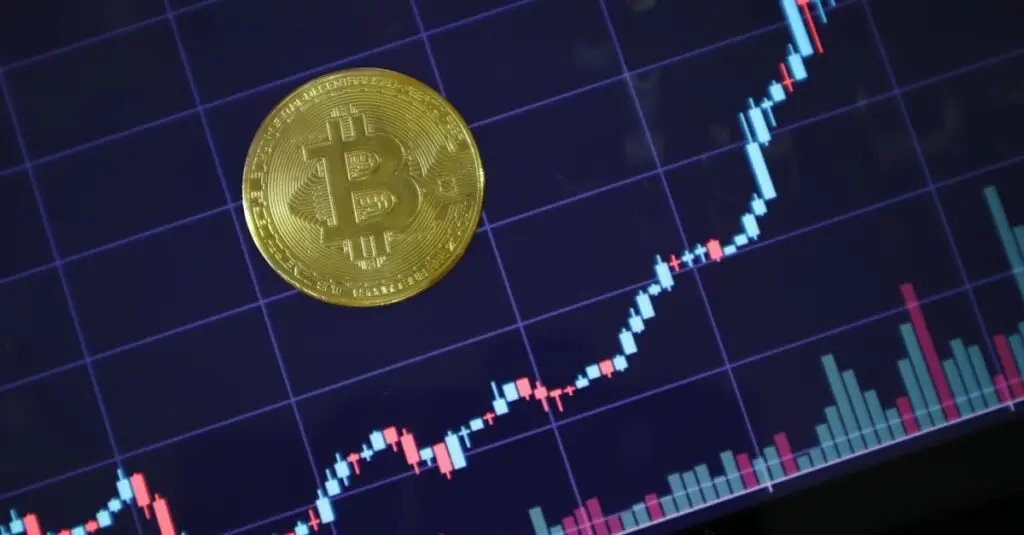
If you thought crypto was calming down, think again. Bitcoin has slipped dramatically from its all-time high in August, with prices dipping as low as $112,000 in the past 24 hours, reportedly finding some support around that level. The selloff isn’t confined to Bitcoin alone – key altcoins like Ethereum have also suffered, with ETH dropping to about $4,100, partly driven by substantial outflows from Ethereum ETFs. Market data reflects a notable shift in sentiment; Bitcoin ETF outflows have surpassed $465 million, signalling a clear tilt toward caution among institutional holders.- Market volatility is running high, making this September one of the most turbulent periods in years.
- Despite the pullback, September 2025 remains Bitcoin’s best since 2012, up about 8% against the usual seasonal pattern.
- Future projections span a wide range: models forecast BTC could average around $119,480 in September, potentially reaching toward $126,000 – with some bold predictions suggesting a finish above $173,000 by New Year’s Eve.
2. Stablecoins reach record highs as regulation fuels adoption
Stablecoins have seized the limelight as a safe harbour for traders. The entire stablecoin market cap has surged to an unprecedented $294.6 billion, a move attributed squarely to supportive regulatory trends and growing institutional demand. With regulatory clarity improving across the G7 and major Asian economies, stablecoin products are now finding their way into traditional financial portfolios and payment rails.- New launches are booming: Coinbase is moving to release the first Singapore Dollar-backed stablecoin in partnership with StraitsX, while Kazakhstan unveiled the Evo stablecoin on Solana paired with Mastercard integration.
- USDT issuer Tether is reportedly seeking to raise as much as $20 billion at a $500 billion valuation, underscoring how central stablecoins have become to the digital asset ecosystem.
3. Hacks, audits, and security: the double-edged sword of DeFi
Security is again at the centre of crypto’s attention. The UXLINK hack is still making waves, as the perpetrator managed to move and offload over $6.8 million in stolen ETH. Yet, not all headlines are negative: UXLINK also completed a major smart contract audit just before its planned token migration, underscoring how protocol resilience and vulnerabilities go hand in hand.- Innovators are racing to secure credibility – from GOAT Foundation’s detailed tokenomics to Find Mining’s push into regulated, cloud-based mining platforms.
4. Tokens, rallies, and hype: the altcoin soap opera
- Aster rocketed up by 32% as its native chain nears launch – and exited competitor Hyperliquid’s shadow by surpassing its 24-hour perpetuals trading volume.
- Cardano (ADA) is eyeing a potential breakout, spurred by the unveiling of a new roadmap and bullish technical signals following a significant correction.
- HYPE finds itself in the danger zone as technicals turn decisively bearish and whales exit positions, casting doubt on the project’s near-term prospects.
- Ripple is making institutional moves, integrating stablecoin off-ramps for major asset managers like BlackRock and VanEck, pushing the cross-border payments narrative further with products like Digitap (“XRP 2.0”).
- The memecoin mania endures: FTT spiked 30% on little more than enigmatic tweets from Sam Bankman-Fried’s camp.
5. Big traditional moves: Wall Street inches closer to crypto
Perhaps the boldest sign of crypto’s mainstream creep: Morgan Stanley has announced it will offer crypto trading on E-Trade in 2026, targeting US retail and institutional customers. Meanwhile, crypto treasury firm ReserveOne has formally filed with the SEC to list on Nasdaq, seeking a $1 billion valuation. This bridges the gap between the wild west of digital assets and the regulatory fortress of the capital markets.6. Ai and web3: from buzzwords to building blocks
Artificial intelligence is fast becoming a practical tool in fixing what’s broken across Web3. Industry opinion pieces and new product launches rally around AI’s potential to revolutionise everything from crypto user experience to payments infrastructure. Coinbase and Cloudflare’s joint launch of the x402 Foundation – with a focus on AI-powered payments – signals a significant bet that the next leap for blockchain isn’t more coins, but a smarter, simpler, and more automated financial web.7. What’s next? Trends to watch
- Volatility isn’t over: Analysts expect bigger price swings for Bitcoin and Ethereum as ETF flows, regulatory headlines, and macro volatility feed market uncertainty.
- DeFi’s security race: As billions continue to move through protocols, every new hack and successful audit will reshape trust and adoption.
- Stablecoins keep rising: Expect more launches, bigger institutional backing, and regulatory milestones as stablecoins weave deeper into global finance.
- TradFi and crypto converge: With Wall Street giants and listed treasuries stepping in, expect fresh products at the intersection of digital assets and the regulated public markets.
- AI-driven infrastructure: The fusion of AI and web3 tech is shifting from slide decks to real-world deployments, paving the way for a more accessible and resilient crypto economy.
Final word
The crypto rollercoaster isn’t slowing: fortunes are made and lost on price swings, but behind the noise, tectonic shifts are building a more mature – and unpredictable – financial world. For investors, traders, and the merely curious, vigilance and curiosity remain the two best survival tools.For more on this topic see our deep-dives on Algorand Price Prediction: Will ALGO Reach $1? Analysis and Outlook, Dogecoin ETF: How It Works and What It Means for Crypto, and How ETFs and Stablecoins Are Reshaping the Crypto Market.
For more on this topic see our deep-dives on Crypto Market Shakeup: Bitcoin, Altcoin Surges, XRP ETFs & Mining, Bitcoin Options Expiry and Crypto Volatility: Trader Playbook, and XRP, Bitcoin and Blockchain in Healthcare: Crypto Investment Trends.
What Volity Editorial watches: Three rotation reads frame disciplined positioning through a selloff. Stablecoin float on major exchanges (USDC, USDT, the regulated dollar-rail set) on a 20-day rolling basis, since rising float during price weakness is the dry-powder accumulation signal. Tokenised-Treasury and real-world-asset segment growth, which captures whether capital rotating out of crypto-native exposure is parking inside the ecosystem (in tokenised-yield products) or exiting entirely. And the BTC-dominance ratio: rising dominance during a selloff is the classic flight-to-quality rotation, while falling dominance during a selloff alongside stablecoin growth is the rotation-out-of-risk signal that requires a different positioning response. The rotation map reads the selloff differently from the price chart, and both reads are necessary.
Related coverage on Volity
- How to Avoid Crypto Scams: A Beginner Safety Checklist
- How to Choose a Trading Platform: A 10-Point Checklist
- Demo vs Live Trading Account: A 7-Step Checklist Before You Go Live
- How to Size a Trade: Position Sizing and Risk Per Trade for Beginners
- Risk-Reward Ratio Explained: How to Set It and Why It Matters
- ETF vs Index Fund: The Difference and Which to Pick
Frequently asked questions
What does rising stablecoin market cap during a crypto selloff signal?
Rising stablecoin market cap during price weakness signals capital staying inside the ecosystem in dollar-denominated form rather than exiting to traditional finance. The CoinMarketCap stablecoin-sector data tracks the rolling float. The dry-powder signal is structurally constructive; the alternative read (stablecoin redemption flows accelerating) is the structurally bearish case worth distinguishing.
How do tokenised real-world assets fit the rotation framework?
Tokenised Treasuries, tokenised money-market funds, and broader RWA products give crypto-native capital a yield-bearing dollar-rail destination inside the ecosystem during risk-off windows. The Investopedia real-assets reference covers the broader framework. Segment growth during a selloff signals capital parking rather than exiting.
How does BTC dominance behave through different selloff types?
BTC dominance typically rises during flight-to-quality selloffs (capital rotating from altcoins into BTC) and falls during broader risk-off selloffs (capital rotating from all crypto into stablecoins or off-ramping). The CoinDesk learning library tracks the dominance-ratio framework. The signal is most informative when read alongside stablecoin float behaviour rather than in isolation.
How does the IMF frame stablecoin growth and financial stability?
The IMF Global Financial Stability Reports cover stablecoin segment growth as a financial-stability transmission channel, with particular attention to redemption mechanics and reserve-asset composition. The IMF Global Financial Stability Report covers the framework. The policy direction has been toward more rigorous reserve-disclosure and liquidity-management standards.
Related guides
- Cryptocurrency trading
- Bitcoin explained
- Best crypto investments
- Risk management
- Crypto trading platforms
Volity operates a trading platform and also publishes educational and analytical content about trading. The content on this page is for educational purposes only and should not be considered financial advice. Volity may benefit commercially when readers open trading accounts through links on this site.
Our content is produced and reviewed under documented editorial standards; see our comparison and review methodology.