Crypto markets face asia’s rulebook moment
Crypto markets are having one of those sessions when the plumbing matters more than the candles. Japan is leaning harder into Solana. South Korea is turning stablecoins and exchange-traded funds into formal policy. Meanwhile, Bitcoin is wrestling with oil, inflation and a less forgiving rates backdrop.
For traders, that mix changes the job. Price action still matters, of course. However, the rules around settlement, custody and token issuance now look just as important. Capital usually notices the wiring before the crowd notices the flow.
Japan picks solana for a bigger job
SBI Holdings, the Japanese financial group listed as 8473.T, has moved Solana closer to regulated finance. The group is working with the Solana Foundation on an on-chain financial market in Japan. Its planned venture, SBI Solana Global, points at a bigger target than another token listing.
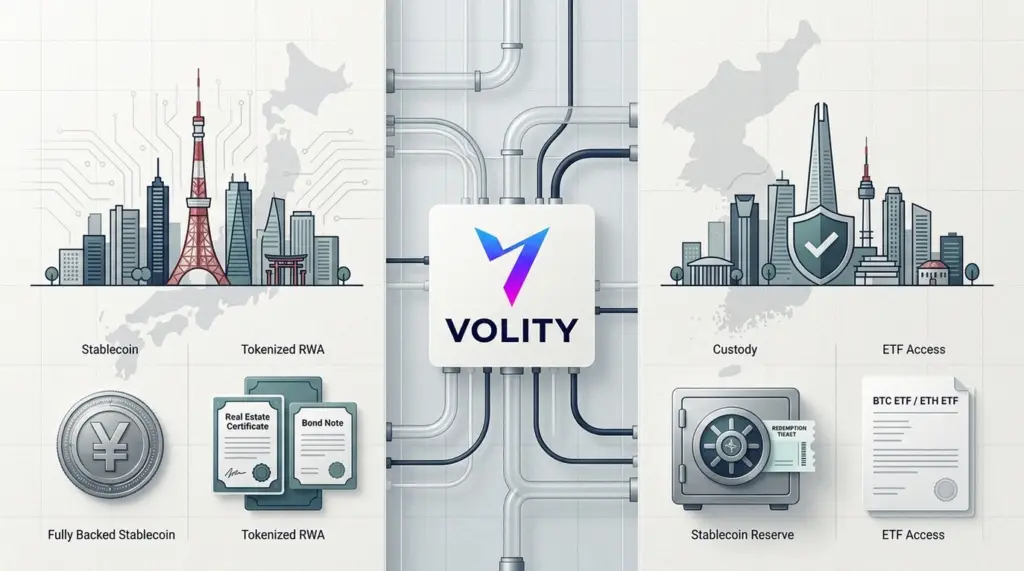
The project centres on yen-backed stablecoins, tokenised real-world assets and institutional payment services. Securities sit near the front of that queue. Real estate could follow, if regulators and clients grow comfortable with the rails.
That matters for SOL because the demand story changes. Solana has often traded as a high-beta expression of retail risk, memecoins and fast settlement. However, a yen stablecoin backed by a domestic financial heavyweight would create a different type of usage.
Japan has also shown more comfort with regulated tokenisation than many larger markets. SBI’s move could give Solana a rare institutional foothold in Asia. It may not move the chart in one neat line. Still, it gives bulls something sturdier than weekend liquidity and social-media heat.
For portfolio managers, the question is blunt. Is SOL still only an altcoin with speed? Or is it becoming a call option on Asian settlement infrastructure? That distinction can change position size, risk limits and the patience investors allow the trade.
South korea turns rules into market structure
South Korea remains one of crypto’s busiest retail markets. Yet it now wants a system that looks less improvised. The country’s Act on the Protection of Virtual Asset Users, in force since July 2024, already tightened exchange conduct and custody standards.
Under that framework, virtual asset providers must register with the Korea Financial Intelligence Unit. They must also keep at least 80% of customer assets in cold storage. In addition, they need real-name bank accounts and face bans on manipulation and insider trading.
Now the proposed Digital Asset Basic Act aims to build a deeper regime. It would define digital assets, license service providers and separate ordinary tokens from asset-linked tokens. Stablecoins sit at the sharp end of that split.
For traders, this means Korean liquidity may become cleaner but less wild. Exchanges will still attract active retail flow. However, the easy days for loosely supervised products are fading. Korea wants crypto markets that feel more like securities markets, with custody rules and legal penalties attached.
Stablecoins get a harder edge
Korea’s stablecoin shift deserves close attention. Until recently, stablecoin issuance sat in a difficult corner of the rulebook. Supervisors treated the assets broadly as virtual assets, while local issuance remained heavily constrained.
New proposals would classify stablecoins as asset-linked digital assets. Issuers could face capital requirements ranging from KRW500 million to KRW5 billion, depending on the bill. They would also need reserves and clear redemption channels.
Some drafts give holders explicit redemption rights within fixed periods, including windows as short as 10 days. Meanwhile, newer policy language points towards full backing by fiat or high-quality liquid assets. The desired product looks less like a crypto casino chip and more like a tightly run money-market instrument.
That will pinch some offshore coins. However, it could also create a serious opening for won-backed settlement tokens. Domestic exchanges, brokers and corporate treasurers may prefer a compliant coin with clear recourse. Liquidity usually follows legal comfort, even if it complains along the way.
Etfs open the institutional door
Korea’s ETF debate may prove just as important for BTC and ETH. Authorities have been laying the groundwork for spot Bitcoin funds, and possibly Ethereum products. The work covers custody, pricing, disclosure and investor protection.
That is not exciting in the usual crypto sense. There is no mascot, no mint countdown and no midnight drama. However, it is the paperwork that lets pension money, advisers and cautious institutions enter without touching a private key.
Separately, Korean officials have floated rules allowing listed companies and professional investors to allocate up to 5% of equity capital to leading cryptocurrencies. Bitcoin and Ether sit comfortably inside that basket. Major dollar stablecoins, including USDT and USDC, face a colder reception.
The message is fairly clear. Korea is saying yes to blue-chip crypto exposure, yes to tightly backed domestic stablecoins and not yet to foreign stablecoins as unchecked payment rails. Future Korean flow could favour BTC, ETH and regulated local settlement products over thinner altcoin stories.
Bitcoin meets the macro wall
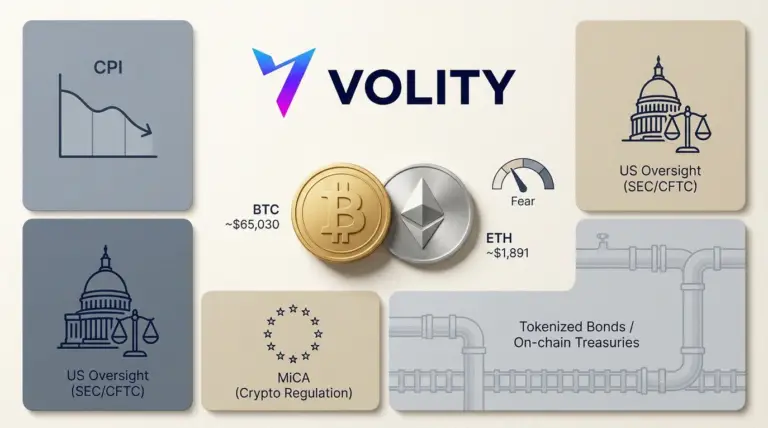
While Asia works on the rulebook, the tape looks tired. Bitcoin has struggled below $63,000, with oil and inflation doing little to help. Higher energy prices raise pressure on miners. Meanwhile, sticky consumer prices keep the bond market focused on real yields.
That mix weakens Bitcoin’s short-term “digital gold” pitch. Investors may like the long-run scarcity argument. However, cash still competes when Treasury yields look respectable and risk budgets tighten.
Ethereum has its own test near $1,850. Technicians see that area as a meaningful support zone. A clean hold could reopen the path towards $2,200. However, a decisive break would show that ETF hopes and DeFi activity are not yet pulling enough fresh capital.
For active traders, the setup is narrow but useful. Above support, ETH can still act as a catch-up trade. Below it, capital may rotate back into BTC or into lower-volatility stablecoin strategies. The chart is not telling a grand story. It is asking for discipline.
United states policy still moves the tape
The United States remains messier. Stablecoin bills and market-structure proposals keep moving through Washington, including the CLARITY debate. Banks want lawmakers to close yield loopholes that let non-banks offer deposit-like products without similar oversight.
Law-enforcement groups also want stronger rules around reserves, redemption and monitoring. That gives the issue political durability. Stablecoins are no longer just a market convenience. They now sit inside debates over payments, sanctions, fraud and deposit flight.
For investors, the trade-off is simple. Stablecoin yields built on regulatory gaps look less durable. Over time, returns should converge towards short-duration credit. That means lower headline yields, but better legal footing.
Meanwhile, speculative capital will search elsewhere for upside. Some of it will return to the majors. Some will chase infrastructure tokens. Solana’s Japan angle matters because it offers a growth narrative tied to regulated activity, not only animal spirits.
By the numbers
- $63,000 – Bitcoin’s nearby resistance area in the current setup.
- $1,850 – Ethereum support watched by short-term technicians.
- 80% – Minimum customer assets Korean providers must keep in cold storage.
- 5% – Proposed cap for some Korean corporate crypto allocations.
- KRW500 million to KRW5 billion – Proposed stablecoin issuer capital range.
Key takeaways for traders
- Reprice SOL carefully: Japan’s SBI link gives Solana an institutional story beyond retail speculation.
- Watch Korean legislation: ETF approval and stablecoin rules could reshape Asian BTC and ETH demand.
- Separate stablecoins: Fully backed local coins may gain share, while loose offshore structures face pressure.
- Respect macro: Oil, CPI and yields still shape crypto risk appetite, especially for BTC and ETH.
- Trade the plumbing: Regulation can look dull, but it often arrives before the liquidity does.
Related coverage on Volity
- How to Avoid Crypto Scams: A Beginner Safety Checklist
- How to Choose a Trading Platform: A 10-Point Checklist
- Demo vs Live Trading Account: A 7-Step Checklist Before You Go Live
- How to Size a Trade: Position Sizing and Risk Per Trade for Beginners
- Risk-Reward Ratio Explained: How to Set It and Why It Matters
- ETF vs Index Fund: The Difference and Which to Pick