Bid and ask prices function as the essential mechanics of all financial transactions, but wide spreads can expose traders to significant slippage and hidden costs. Market liquidity can evaporate rapidly during high-volatility sessions, causing quoted spreads to widen dramatically between the time an order is placed and executed. Level 2 order book data can be spoofed by algorithms placing large orders with no intention to fill them, creating false market depth. Past performance is not indicative of future results. Capital at risk.
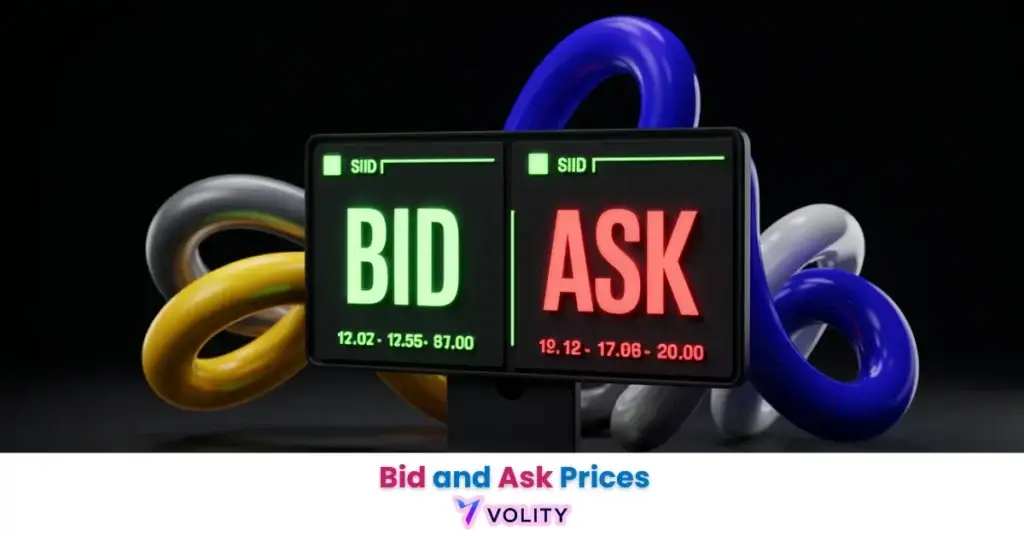
Bid and ask price are the dual quotations that facilitate liquidity within the global financial markets. The difference between the two is the bid-ask spread. The bid represents immediate demand, while the ask reflects immediate supply. On the most heavily traded shares the spread can be as narrow as a single cent, which is the smallest increment most equity venues quote in.
The bid-ask spread is the gap between the bid price, the most a buyer will pay, and the ask price, the least a seller will accept. It is the immediate cost of entering a trade: the narrower the spread, the more liquid the market and the cheaper your execution.
Bid and ask price function as the foundational mechanism for price discovery in every electronic exchange. These quotes identify the exact boundaries of the current market consensus for a security’s value. They serve as the starting point for every buy and sell decision made by investors in 2026.
The 2026 trading environment relies on real-time data feeds that update these prices hundreds of times per second. By analyzing the relationship between the bid and ask, traders can gauge the depth of the market and the likely direction of short-term price momentum.
While understanding Bid and Ask Price is important, applying that knowledge is where the real growth happens. Create Your Free Forex Trading Account to practice with a free demo account and put your strategy to the test.
What are bid and ask prices and how do they differ?
The bid price represents the maximum amount a buyer is willing to pay for a security, while the ask price identifies the minimum amount a seller is willing to accept.
The bid price reflects where buyers congregate, the highest price any market participant currently offers to purchase the security right now. The ask price represents the opposite side: the lowest price at which sellers are willing to part with the security immediately. These two prices form what’s called the “inside quote,” the most competitive pricing available on an exchange at any given moment.
Only one scenario allows you to buy at the bid price: when you place a limit order and a seller descends to match your specified price. Market orders, by contrast, always execute at the prevailing ask (for buys) or bid (for sells). In an orderly market the ask sits above the bid, and the gap between them is what compensates the participants who quote both sides. A market maker is the counterparty that holds that two-sided quote.
The Role of the Market Maker
A market maker is a regulated financial institution that provides liquidity by constantly quoting both a bid and an ask price for specific securities. Market makers profit from the spread, they buy at the bid and sell at the ask, capturing the difference as compensation for the inventory risk they carry. They ensure that continuous markets persist even during low-volume periods, preventing prices from becoming untradeable.
Ready to Elevate Your Trading?
You have the information. Now, get the platform. Join thousands of successful traders who use Volity for its powerful tools, fast execution, and dedicated support.
Create Your Account in Under 3 MinutesUnderstanding the Bid-Ask Spread as a Transaction Cost
The bid-ask spread represents the difference between the buy and sell prices and functions as a direct cost of market participation for investors. Calculating the spread is straightforward: Ask Price minus Bid Price equals the absolute spread. To measure the spread as a percentage, divide the spread by the ask price and multiply by 100: (Spread / Ask Price) × 100.
Wide spreads signal red flags for low-liquidity or “penny” stocks where execution risk escalates dramatically. The most liquid large-cap shares typically quote a spread that is a small fraction of one percent, while thinly traded small caps can quote spreads an order of magnitude wider, especially in quiet sessions. Understanding spread width helps traders prioritize which securities offer acceptable execution friction for their capital allocation strategy.
When you use Stocks Investing for Beginners resources, you learn that spread costs compound over time, a spread paid on entry and again on exit compounds with turnover, so an active strategy pays it many times a year.
How market liquidity influences the bid-ask spread
Market liquidity represents the ease with which an asset can be converted to cash without significantly impacting its bid and ask prices. High-liquidity securities like Apple or Microsoft show narrow spreads, high volume, and minimal slippage as hundreds of market makers compete to fill orders. Low-liquidity securities suffer wide spreads, low volume, and high risk of “Price Gaps” where the next available order sits far from the last executed price.
Impact of 2026 algorithmic trading reveals “flash” liquidity events where spreads compress to near-zero for milliseconds, then vanish entirely. Traders competing for these windows require specialized technology, most retail platforms cannot react fast enough to capture the improvement.
Market Volatility creates dynamic spread behavior: during earnings announcements or major economic releases, liquidity providers immediately widen spreads to protect themselves against adverse price moves.
Worked illustration of the mechanism: two market orders of the same size, one in a heavily traded large cap and one in a thinly traded name under a burst of retail interest. The first fills within a cent of the quote because many participants compete to fill it; the second walks up several price levels of the book before it is complete, and the difference between the quote and the average fill is the slippage. This is an illustration of how depth translates into cost, not a record of a specific trade. Past performance is not indicative of future results.
Order Types: Interaction with Bid and Ask Prices
Order type selection identifies how an investor interacts with the prevailing bid and ask prices to control execution quality.
| Order Type | Interaction with Bid/Ask | Primary Advantage | Risk Involved |
| Market Buy | Executes at current Ask | Immediate Fill | Price Slippage |
| Market Sell | Executes at current Bid | Immediate Exit | Lower Fill Price |
| Limit Buy | Placed at or below Bid | Price Control | May not execute |
| Limit Sell | Placed at or above Ask | Price control on exit | Missed opportunity |
| Stop Loss | Triggered at Bid/Ask threshold | Risk Mitigation | Gap-down execution |
Order-type behaviour above follows the standard definitions of a bid-ask spread and the exchange order types. These are mechanical consequences of the order types, not measured execution statistics.
How to read the “Level 2” Order Book
The Level 2 order book represents a real-time visualization of all pending bid and ask orders at multiple price levels beyond the inside quote. Level 2 data shows you the full depth of the market: how many shares are waiting to be bought or sold at each price above and below the current bid-ask. Identifying “Walls”, large blocks of orders that act as support or resistance, helps professionals spot potential Market Manipulation before it affects price.
Professionals use depth data to identify pending market moves: a sudden withdrawal of the largest bid order might signal a seller planning to execute a large position. Conversely, a new “Wall” appearing on the bid side might indicate institutional accumulation.
gold trading." class="internal-link" href="https://volity.io/stocks/direct-market-access/">Direct Market Access platforms provide the most transparent Level 2 visibility, giving traders a true picture of supply and demand dynamics without data latency.
Turn Knowledge into Profit
You have done the reading, now it is time to act. The best way to learn is by doing. Open a free, no-risk demo account and practice your strategy with virtual funds today.
Open a Free Demo AccountMinimizing Bid-Ask Spread Costs in 2026
Strategic execution represents the most effective way for traders to minimize the impact of the bid-ask spread on their long-term returns. Trading during high-volume sessions (Market Open/Close) ensures tighter spreads and deeper liquidity. Avoiding “Illiquid Hours” (Pre-market/After-hours) where spreads are widest, a constant hazard when trading after-hours movers, reduces slippage costs substantially.
Stop-Loss Order placement benefits from tight spreads: place stops during liquid hours to ensure execution near your target price. How to Read Stock Charts teaches you to identify price levels where volume clusters, signaling where tight spreads will persist.
Key Takeaways
- Bid and ask prices are the essential price points that determine where immediate market transactions occur for any financial security.
- The bid price is the highest price a buyer is currently offering, while the ask price is the lowest price a seller will accept.
- Bid-ask spreads act as a hidden transaction cost, with wider spreads indicating lower liquidity and higher execution risk for the trader.
- Market orders guarantee execution speed by accepting the current bid or ask, but they expose the trader to potential price slippage.
- Limit orders provide precise price control by allowing traders to specify the exact bid or ask they are willing to accept for a trade.
- Liquidity analysis through the Level 2 order book allows investors to see the depth of supply and demand beyond the top-level quote.
Frequently Asked Questions
This article contains references to bid and ask price and Volity, a regulated CFD trading platform. This content is produced for educational purposes only and does not constitute financial advice or a recommendation to buy or sell any financial instrument. Always verify current regulatory status and platform details before using any trading service. Some links in this article may be affiliate links.