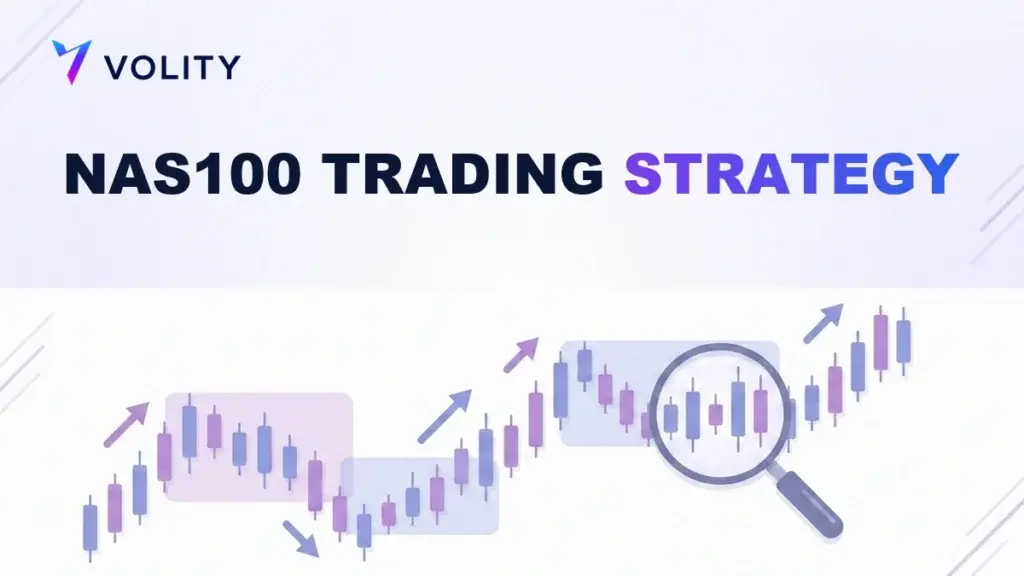
A NAS100 strategy has to start from one fact about the index: the Nasdaq 100 moves fast, leans heavily on a handful of technology names, and tends to trend hard before it turns. Three approaches suit that character. You can follow the trend on the higher timeframe, trade the opening range once the US cash session gets going, or trade breakouts around the levels that matter. Whichever one you run, the size of your position and where you place your stop decide the result far more than the exact entry, because this index can travel a long way before you have had time to think.

Why the NAS100 needs its own strategy
The Nasdaq 100 tracks 100 of the largest non-financial companies on the Nasdaq, and its weighting leans heavily toward technology, as the published index methodology lays out. That concentration is what makes it livelier than a broad market gauge. A few mega-cap names can drag the whole index around, and it reacts sharply to interest-rate expectations, big tech earnings and swings in risk appetite. Drop a slow mean-reversion system onto it and you get run over. What works here is an approach that respects momentum and pins down the risk on every trade before you take it. If you want the wider picture first, our NAS100 explainer covers what the index actually holds and how it is built.
What are the best NAS100 strategies?
There is no single best NAS100 strategy that suits everyone, but four approaches earn their place on this index. Pick the one that fits your screen time and temperament, then trade it consistently.
- Trend-following works because the index trends cleanly. Read the direction on the higher timeframe, the 4-hour or the daily, then take your entries in that direction on a lower timeframe. Trading with the dominant trend is the highest-probability way to trade a market that moves the way this one does.
- The opening-range breakout leans on the burst of volatility at the start of the session. Mark the high and low of the first 15 to 30 minutes after the US cash open, then trade the break of that opening range in the direction of the higher-timeframe trend.
- Key-level breakouts trade the reaction at prior-day highs and lows and round numbers. Wait for a clean break and then a retest, and enter on the retest rather than chasing the first candle through the level.
- Scalping the open takes small, fast trades while volume is at its peak. A NAS100 scalping strategy needs tight spreads, quick execution and no hesitation, so it really suits experienced traders rather than anyone starting out.
These are not the only options. If you want to see how the same ideas apply across the Dow, DAX and FTSE as well, our guide to index trading strategies sets them side by side.
What are the best NAS100 trading hours?
The index comes alive around the US cash session open, when volume and volatility both peak. The window around major economic releases and big technology earnings brings sharp moves too. Quiet overnight sessions are the opposite: thin, choppy and best left to range trading if you touch them at all. In practice, most NAS100 strategies do their work in the first two to three hours after the open, then again into the close.
The same rhythm shows up on other benchmarks, which is why session timing is a recurring theme in our notes on day trading indices. Match your strategy to the hours it was built for and you avoid the slow patches where spreads widen and clean setups dry up.
How do you manage risk on the NAS100?
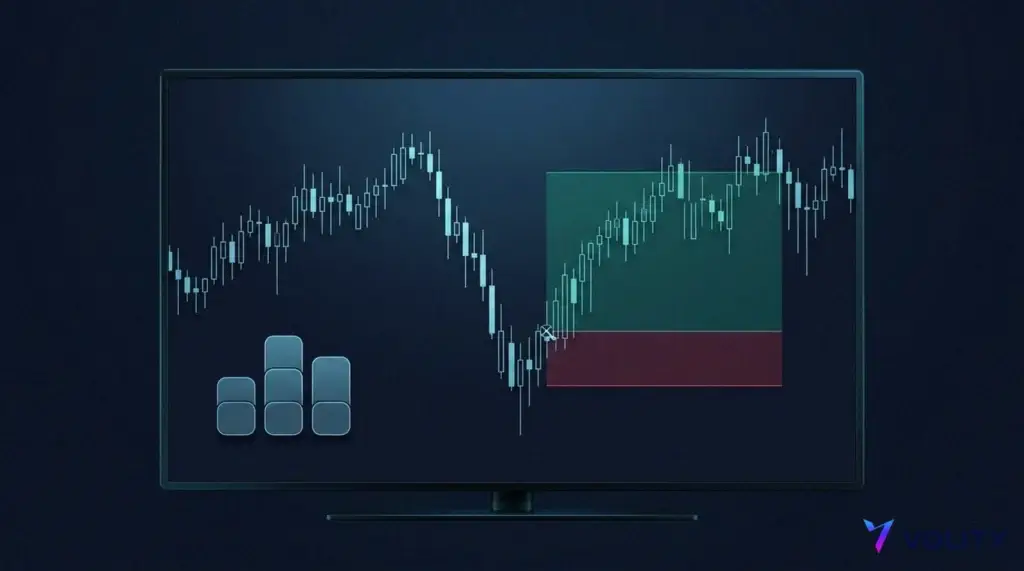
On an index this quick, risk control is the strategy. Get the entry slightly wrong with tight risk and you survive to trade again; get the size wrong on a good entry and one candle can undo a month. A few rules keep you on the right side of that.
- Fix your risk per trade first. Risk a small, fixed percentage of your account on each position, and work the size out from your stop distance using position sizing, never from the maximum leverage on offer.
- Always set a stop before you enter. The NAS100 can shed hundreds of points in minutes, and a hard stop placed in advance is the only protection you can rely on.
- Respect the leverage. A CFD gives you leverage of up to 1:500 (product-dependent), and it deepens a loss exactly as fast as it lifts a gain, so trade well inside the maximum.
- Aim for trades where the reward justifies the risk. A sensible risk-reward ratio means your winners can cover several losers, which matters on an index that hands you plenty of both.
- Skip the news you cannot read. Holding a leveraged position through a rate decision or a mega-cap earnings report is a gamble, not a plan.
None of this is optional caution. Because leverage cuts both ways, regulators such as the FCA and ESMA limit how CFDs can be offered to retail clients. Read that as a signal to size every NAS100 position deliberately and to cap the risk you carry on each trade.
How to trade a NAS100 strategy on Volity
- Open a Volity account for free, or start on a demo so you can test your strategy without risking money.
- Fund your wallet by card, SEPA or crypto. You can invest from $1 and start trading from $1.
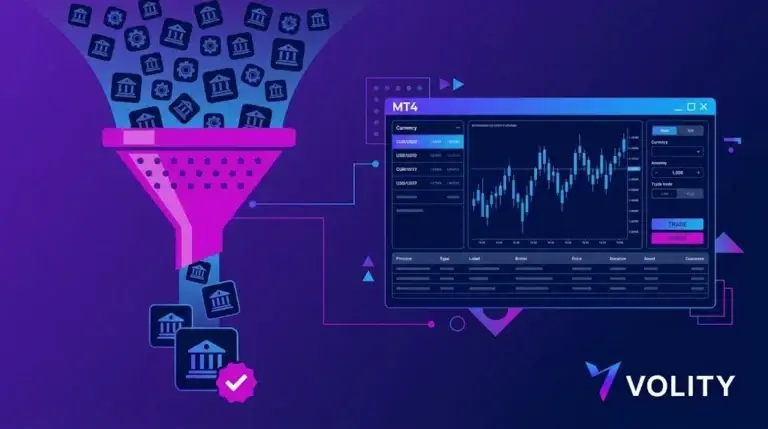
- Open the NAS100 instrument in Volity MT and mark your levels with the built-in TradingView charting.
- Wait for your setup, set your size from the margin shown on the order ticket, and attach a stop-loss and take-profit before you enter.
- Manage the trade to your plan, then review each result so the next setup is a little sharper.
The Nasdaq 100 trades as a CFD on Volity MT, with product-dependent leverage and execution through UBK Markets, regulated by CySEC under licence 186/12. Leverage magnifies gains and losses, so check the published charges and fees and rehearse on a free demo before you commit real money. For how index CFDs work across the major benchmarks in one account, see the indices trading platform.
Related guides
Frequently asked questions
What is the best NAS100 strategy for beginners?
Trend-following on the higher timeframe is the most forgiving place to start. Read the daily trend, take entries in that direction, use a fixed stop, and stay out of trades that fight strong momentum. It moves slower than scalping, and that is exactly what makes it easier to manage while you are still learning the index.
Is a NAS100 scalping strategy worth it?
Scalping the NAS100 can pay during the high-volume open, but it asks for tight spreads, fast execution and hard discipline. It suits experienced traders. Most beginners give back their edge to spread and slippage before they ever build one, so it is rarely the right first strategy.
When is the best time to trade the NAS100?
The first two to three hours after the US cash open carry the most volume and the cleanest moves, along with the window around major data and technology earnings. Overnight sessions are thin and choppy, so they suit patient range trading at best.
How much money do you need to trade the NAS100?
On Volity you can open an account for free, practise on a demo, invest from $1, and start trading from $1. On a fast index, sensible position sizing usually means starting with more than the bare minimum, so the risk on each trade stays small enough to sit through the swings.