Quick answer
Forex sentiment analysis gauges whether traders are mostly long or short a currency pair, to judge crowd positioning and potential reversals. Tools include broker client-sentiment data and the Commitment of Traders report. When the crowd is heavily one-sided, contrarians watch for a turn. Sentiment is a supporting signal, not a standalone strategy.
Forex sentiment analysis is a directional tool, not a trade signal. Extreme positioning can remain “extended” for weeks before reversing, causing contrarian traders to be whipsawed repeatedly. The COT report carries a 3-day reporting lag, making it unsuitable for tactical entry timing. Sentiment from a single retail broker does not represent global market flows, relying on incomplete data can lead to catastrophic position sizing errors. Capital at risk in all leveraged trading.
Forex sentiment analysis is the quantitative study of market psychology used to identify whether the “crowd” is lopsided toward a bullish or bearish bias. It serves as the third pillar of analysis alongside technicals and fundamentals, providing critical context for trend exhaustion. Language models now read the tone of unstructured news and policy statements, which turns narrative shifts into something a systematic strategy can act on.
Forex sentiment analysis functions as a real-time barometer of the market’s collective mood and risk appetite. This analytical framework allows traders to identify when a trend has become overextended by tracking the ratio of long-to-short positions among diverse participants. It serves as the primary gateway to mastering contrarian trading in the 2026 environment.
The 2026 investment landscape requires a move beyond simple “bull/bear” meters toward deep narrative quantification. Modern systems utilize Large Language Models (LLMs) to process unstructured news and social media data, providing a nuanced view of institutional “Smart Money” versus retail “Dumb Money” flows.
While understanding Forex Sentiment Analysis is important, applying that knowledge is where the real growth happens. Create Your Free Forex Trading Account to practice with a free demo account and put your strategy to the test.
What is forex sentiment analysis and how does it function?
Forex sentiment analysis is the measurement of the aggregate psychological positioning of traders to identify whether the market is in a state of euphoria, panic, or indecision. Every trader holding a position represents a psychological bias, a belief that price will move in a specific direction. When 85% of retail traders are long the same currency pair, their collective long bias becomes quantifiable data that seasoned traders can exploit.
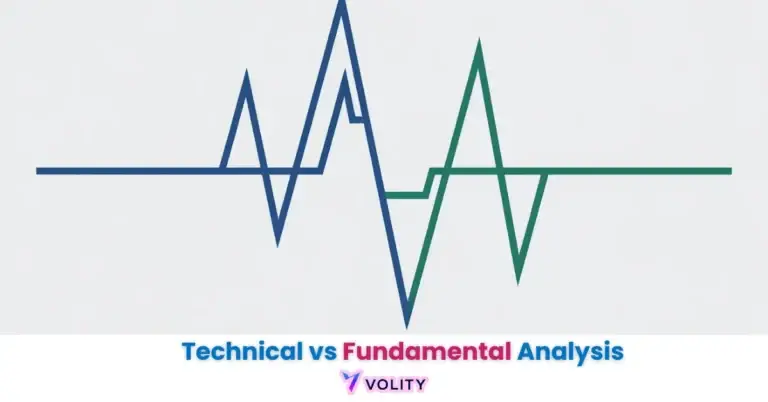
Sentiment serves as the “Third Pillar” of analysis alongside Technical Analysis and Fundamental Analysis. Technical analysis identifies price patterns and moving averages; Fundamental Analysis tracks interest rates and economic data; Sentiment Analysis measures collective positioning. A trader using only technicals might identify a breakout above resistance and buy, without recognizing that 80% of retail traders are already long that same breakout, meaning there’s minimal fresh buying power to sustain the move.
Data sources for sentiment aggregation include futures positioning (the CFTC Commitments of Traders reports), the client-sentiment indices published by large retail brokers, and social sentiment platforms. Each source provides a different perspective: institutional COT data shows what “Smart Money” is doing over weeks, while retail SSI data shows what retail crowds are doing right now. Comparing these sources with macro data like interest rates reveals divergences that often precede major reversals. Comparing these two sources reveals divergences that often precede major reversals.
Using sentiment as a regime filter rather than an entry trigger is what makes it useful in a systematic strategy. A filter that stands the trade down when positioning is overwhelmingly one-sided avoids the most obvious traps, where the crowd is stacked on one side and price reverses to hunt the stops behind it.
The Anatomy of Market Mood
Positioning quantification identifies the exact percentage of capital committed to one side of a currency pair at any given moment. A Net Long ratio of 70% means 70% of positions tracked are long while 30% are short. This ratio becomes actionable when it reaches statistical extremes, 85%+ positions are “flush zones” where institutional algorithms deliberately move price against the crowd to trigger stops.
Open Interest measures the total number of open contracts (long and short combined). Rising open interest during a price move confirms that new buyers and sellers are entering, validating the trend. Falling open interest during a price move suggests that existing positions are closing, which often precedes reversal as trend-followers exit.
Ready to Elevate Your Trading?
You have the information. Now, get the platform. Join thousands of successful traders who use Volity for its powerful tools, fast execution, and dedicated support.
Create Your Account in Under 3 MinutesRetail vs. Institutional Sentiment: Spotting the ‘Smart Money’
Positioning divergence identifies the critical conflict between retail “herd” behavior and institutional portfolio rebalancing. Retail traders congregate on obvious technical signals, a breakout above a round number like 1.1000, a golden cross of moving averages, or a news event. Institutions take the opposite side, betting that retail positioning will overextend, then they reverse price against the crowd.
Retail Sentiment (Contrarian) reaches extremes when herd psychology takes over. When unemployment data causes panic selling, retail SSI data might show 85% short positions. Seasoned traders recognize this as a potential capitulation bottom because panicked selling is unsustainable. After stops are hit below support, institutional buying forces price back up, profiting retail sellers who panic-closed at the worst possible level.
Institutional Sentiment, tracked via the COT report, reveals what commercial banks and large hedge funds are doing weeks in advance. A COT report showing record long positions by large speculators indicates that institutions are bullish and building positions. When the COT reaches a 52-week high in long positioning, trend exhaustion becomes likely because institutions rarely hold extreme positions for extended periods.
Sentiment readings can also look internally contradictory, and that is often the most informative state of all. Risk appetite can be strong in equities while the same institutions accumulate defensive positions in gold, which says they are hedging a currency or geopolitical outcome that no retail sentiment meter is measuring. A single-number “bullish or bearish” gauge cannot represent that, which is why positioning is read across several sources rather than one.
Combining sentiment analysis with macroeconomic data (interest rates, inflation, GDP) reveals how fundamental shifts create the narrative that ultimately moves positioning. Recognizing when momentum diverges from price, price reaching new highs while internal indicators weaken, provides an additional layer for identifying trend exhaustion before reversal.
Top Sentiment Indicators for the 2026 Market
Indicator triangulation identifies the most reliable sentiment signals by combining delayed institutional data with real-time retail flow. The COT Report represents the definitive tool for identifying 52-week positioning extremes among commodity traders, large speculators, and commercial hedgers. When the report shows that large speculators hold record net long positions in the Euro, it signals bullish institutional bias, but the data is 3 days old, requiring traders to predict where the next shift will occur.
Broker client-sentiment indices provide real-time retail positioning ratios, derived from live customer orders on that broker’s own book. When such an index shows the overwhelming majority of retail traders long EUR/USD, contrarian traders recognise a potential “flush zone” where institutional algorithms might sweep retail stops below key support levels, forcing the crowd to capitulate. Read them as one broker’s book rather than the whole market, because that is what they are.
The CBOE VIX measures global fear and risk aversion by tracking options implied volatility. A rising VIX indicates that institutions are buying protection against downside moves, signaling increased uncertainty. A VIX above 30 typically triggers bullish sentiment for safe-haven currencies (US Dollar, Swiss Franc) while causing bearish sentiment for higher-yielding carry-trade currencies (Australian Dollar, New Zealand Dollar).
Crowd-sourced positioning trackers aggregate live long-versus-short ratios across many retail accounts rather than one broker’s book, which makes them a useful cross-check on any single client-sentiment index. They are read the same way: as a contrarian gauge of when consensus has become lopsided.
How the setup reads in practice: retail positioning on a broker index pushes into the “flush zone” while the CFTC Commitments of Traders reports show large speculators cutting long exposure week after week. The two are pointing in opposite directions, which is the divergence itself. When it resolves, it usually resolves through the retail side: price runs far enough past the boundary to trigger the massed stops, then turns. The value of the signal is in the warning, not in the timing. Past performance is not indicative of future results.
Benchmarking Positioning Extremes in 2026
Market positioning benchmarks identifies the specific thresholds where sentiment shifts from “Neutral” to “Extreme Reversal” zones. Understanding these thresholds allows traders to mechanically recognize when a market has become dangerously crowded on one side.
| Indicator | Neutral Range | Extreme (Warning) | Ultra-Extreme (Flush) |
| Retail Sentiment | 40% – 60% | > 75% | > 85% |
| COT Index | 30 – 70 | > 80 or < 20 | 100 or 0 (52-Wk High/Low) |
| VIX Index | 12 – 18 | 20 – 25 | 30+ (Extreme Panic) |
| Put/Call Ratio | 0.60 – 0.80 | > 1.00 | > 1.20 |
Positioning thresholds are conventions used to read the indicators above, not measured results. The institutional half of the picture comes from the CFTC Commitments of Traders reports, which are compiled from Tuesday positions and published the following Friday.
A Neutral range for retail sentiment (40%-60%) means positioning is balanced and not exploitable. An Extreme Warning zone (75%+) means one side is dominant but may persist briefly. An Ultra-Extreme zone (85%+) represents the “Flush Zone” where institutional algorithms reliably trigger reversals by sweeping retail stops. The COT Index reaching 100 (maximum bullish) means every single large speculator is long, a statistical impossibility that historically precedes major reversals.
Why do sentiment-based strategies fail?
Sentiment persistence indicates that extreme positioning can remain “overextended” for weeks before a catalyst triggers a reversal. A trader seeing 85% retail longs might sell immediately, expecting a reversal. Instead, price rallies another 200 pips over the next three weeks before finally reversing. The trader exits the short trade at a loss, only to see the reversal occur days after abandoning the position.
The Timing Gap problem explains why sentiment signals are most useful as regime filters rather than precise entry triggers. An 85% long reading means “reversal is likely soon, but not necessarily today.” Traders must combine sentiment extremes with technical triggers (support/resistance breaks, RSI divergence, moving average crosses) to time entries precisely. Sentiment tells you “when the market is dangerous,” but technicals tell you “when the danger becomes actual.”
COT Reporting Lag creates a 3-day delay between actual institutional positioning changes and publication. An institution might dump long positions on Tuesday, but that data doesn’t appear in the COT report until Friday’s release. By Friday, the market may have already repriced the information, making the report a historical record rather than a forward-looking indicator.
Retail Skew occurs because one broker’s SSI data may not represent the entire global market. A 75% long reading from IG might conflict with a 60% long reading from another broker, creating ambiguity about true global positioning. Smart traders triangulate multiple sources to identify consensus positioning.
Proper position sizing and stop-loss discipline ensure that traders using sentiment don’t oversize just because positioning has reached an extreme. Extremes can persist far longer than traders expect, requiring strict risk management protocols to survive the timing gap between signal and actual reversal.
The Future of Sentiment: AI Narrative Synthesis
Large Language Models represents the next frontier in sentiment analysis, allowing for the real-time quantification of complex market narratives. Traditional sentiment tools count keywords: if a news article mentions “interest rate hike,” it’s bullish for the currency. But context matters, “the Fed is considering a rate hike but delayed action due to recession fears” has entirely different implications than “the Fed is aggressively hiking rates to fight inflation.”
Contextual Synthesis using advanced LLMs (DeBERTa, FinBERT) now understands semantic meaning beyond keywords. The model reads the full article, identifies the narrative tension (inflation vs. recession), and outputs a directional score. A score of +0.8 hawkish means institutional tightening is likely; a score of -0.6 dovish means policy pivot is expected.
Edge Computing Sentiment places LLM agents on servers co-located with exchange infrastructure, providing sub-millisecond warnings of liquidity sweeps. When a news release triggers a narrative shift, the LLM detects the shift instantaneously and alerts scalpers before the market reprices the information, a technological advantage that will eventually make traditional sentiment indicators obsolete.
Multi-Source Ensemble models combine RoBERTa, FinBERT, and DeBERTa in parallel, each evaluating the same text and voting on sentiment direction. Voting across several models is more stable than trusting any one of them, because the disagreements themselves flag the statements whose tone is genuinely ambiguous. That is the practical value: not a score, but a shortlist of what to read yourself. Market sentiment sets out the wider concept these models are trying to quantify.
Understanding the pip as the smallest price unit helps traders calculate how sentiment-driven moves translate to actual profit and loss in real-time. Central bank announcements and economic data releases trigger narrative shifts that cause sentiment recalibration across the entire market. Technical analysis provides secondary confirmation that prevents sentiment traders from entering prematurely before established support and resistance levels break. Professional portfolio managers combine sentiment with other analytical frameworks to achieve more consistent results than sentiment signals used in isolation.
Key Takeaways
- Forex Sentiment Analysis is a critical diagnostic tool used to measure crowd psychology and identify trend exhaustion points.
- Retail sentiment extremes exceeding 75% are primarily used as contrarian indicators, signaling that a market flush may be near.
- Institutional sentiment, tracked via the COT report, provides the “macro bias” and is used to confirm long-term trend alignment.
- Sentiment divergence occurs when retail and institutional players are positioned on opposite sides, creating high-conviction trade setups.
- Large Language Models are now used to quantify unstructured news data, turning central bank language into a hawkish or dovish reading.
- The COT report works as a regime filter rather than an entry trigger, because its positions are three days old by the time they are published.
Frequently Asked Questions
This article contains references to forex sentiment analysis, positioning data, and Volity, a regulated CFD trading platform. This content is produced for educational purposes only and does not constitute financial advice or a recommendation to execute trades based on sentiment indicators alone. Sentiment data is delayed and incomplete by nature; always confirm signals with independent technical and fundamental analysis. Some links in this article may be affiliate links.