Trade Triangle signals can lag during highly volatile market dislocations, causing traders to enter winning signals late and capture only partial move gains. Monthly Triangle breakouts are prone to false signals when volume is thin during session overlaps, generating whipsaws that trigger stops before confirming uptrends. The “Chart Analysis Score” can overweight recent price action during sentiment-driven rallies, leading traders to assume maximum conviction at local peaks. Crypto charts are harder for the system, because 24/7 volatility and thinner institutional participation produce more false signals than equities do. Relying exclusively on the Trade Triangle system without fundamental context or risk management causes over-leverage and account blowouts during extended consolidation periods. Past performance is not indicative of future results. Capital at risk.
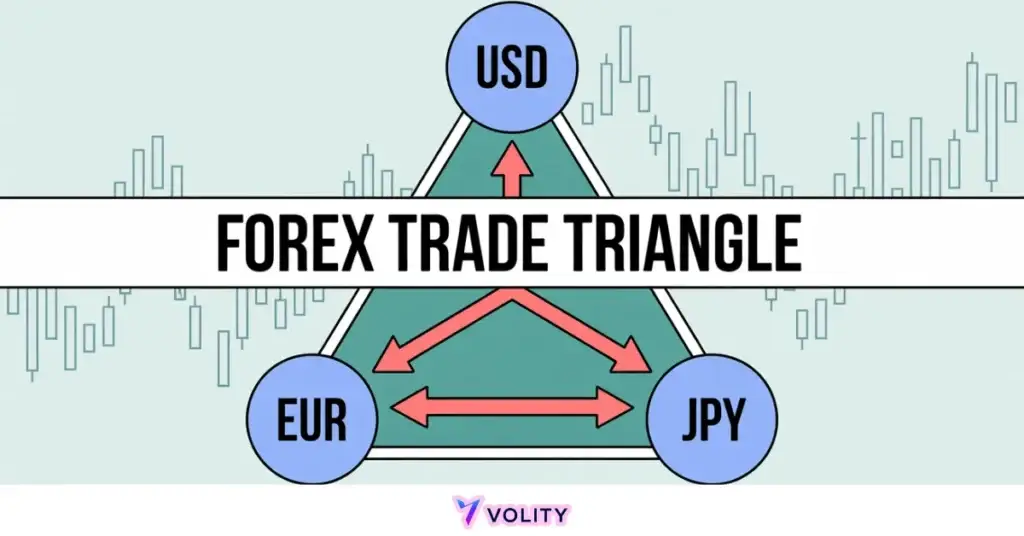
Trade Triangle methodology is a proprietary technical system that identifies market trends across three distinct timeframes. The claim behind it is that requiring a long-term and an intermediate signal to agree filters out counter-trend entries. Traders utilize the system’s Chart Analysis Score to filter out sideways noise and confirm institutional participation in stocks and commodities.
The Trade Triangle methodology functions as a comprehensive trend-following framework for modern financial markets. This system utilizes a proprietary algorithm based on price action and momentum to generate green (bullish) and red (bearish) signals across multiple timeframes. In the 2026 trading environment, it serves as a critical tool for swing traders seeking to avoid whipsaws in volatile sectors.
Success with the Trade Triangle depends on the strict alignment of long-term bias with intermediate timing. By filtering out short-term fluctuations, the system allows traders to focus on the most persistent market trends in the forex, crypto, and equity spaces.
While understanding Trade Triangle Methodology is important, applying that knowledge is where the real growth happens. Create Your Free Forex Trading Account to practice with a free demo account and put your strategy to the test.
What are Trade Triangles and how do they function?
Trade Triangles are proprietary technical indicators that categorize market trends into long-term, intermediate, and short-term signals based on price action and momentum. The system identifies three distinct hierarchical layers, each serving a specific purpose in the decision-making framework.
- Monthly Triangles determine the macro trend and establish the “Go/No-Go” zone, a trader should never initiate long positions when the Monthly Triangle shows red
- Weekly Triangles provide the “Timing” signal for entries and re-entries, triggering the actual execution within the monthly directional bias
- Daily Triangles manage short-term volatility and intraday exit points, allowing traders to optimize their position management while respecting the larger trend
The Trade Triangle technology is designed to capture the middle of a swing move, over holding periods measured in weeks to months rather than minutes. That timeframe contrasts sharply with scalping strategies that chase intraday noise.
The Algorithm Behind the Signal
The Trade Triangle algorithm identifies trend shifts by analyzing the relationship between price breakthroughs and historical volatility regimes. The system measures whether price closes above or below prior swing highs and lows, determining whether momentum continues or exhausts. Price breakthroughs from 3-month highs signal that institutional buyers are committing capital, while breakdowns through 3-month lows indicate seller dominance. In the 2026 algorithmic market, this filtering approach separates genuine institutional intent from the high-frequency noise that dominates shorter timeframes.
Moving averages and other traditional indicators often generate conflicting signals across timeframes, creating analysis paralysis. Trade Triangles eliminate this confusion by providing a single, unified signal that automatically aligns multiple timeframes into one directional recommendation, this is why the system remains a foundational tool for Moving Average Crossovers evaluation.
Ready to Elevate Your Trading?
You have the information. Now, get the platform. Join thousands of successful traders who use Volity for its powerful tools, fast execution, and dedicated support.
Create Your Account in Under 3 MinutesThe 2026 Trade Triangle Strategy: The Monthly-Weekly Alignment
The most effective Trade Triangle strategy in 2026 requires entering long positions only when both Monthly and Weekly signals are green. This two-signal requirement dramatically improves win rates by filtering out false breakouts that trigger on temporary Daily price spikes without genuine institutional participation.
Step 1 involves filtering by the Monthly Triangle to establish directional bias. A trader confirms that the Monthly Triangle shows green before considering any entry, this is the non-negotiable directional foundation. Step 2 executes on the Weekly Triangle, which serves as the primary entry trigger. Once the Monthly confirms the direction, traders wait for the Weekly Triangle to turn green and only then initiate positions at the market open following the signal. Step 3 requires managing the trade by exiting when the Weekly Triangle turns red, regardless of price levels, this discipline prevents riders from holding losers too long or capturing only partial move gains.
The system is at its strongest when the technical signal and the fundamental picture agree. A company raising guidance while its long-term triangle is green is a different proposition from one whose signal turned on price alone. Take the fundamental half from the company’s own filings, not from a chart provider.
technical indicators for trading frameworks are optimized for identifying these multi-timeframe alignments, allowing traders to automate signal detection rather than manually checking charts across dozens of instruments.
Never trade against the Monthly Triangle. The setups that fail most reliably are the ones where a trader tries to “time the bottom” on a Daily or Weekly signal that contradicts the Monthly trend.
Understanding the Chart Analysis Score in 2026
The Chart Analysis Score identifies the strength and persistence of a market trend on a scale from -100 to +100. This single numerical metric compresses all three timeframe signals into one conviction indicator, allowing traders to quantify the probability that a move will sustain momentum rather than quickly reverse.
A Chart Analysis Score of +100 represents the strongest bullish regime where Monthly, Weekly, and Daily signals are all green, indicating that short-term traders, intermediate players, and long-term institutional money are all aligned in the same direction. A score of -100 reveals the opposite, all three timeframes showing red, signaling unanimous bearish conviction. The “Sidelines Zone” between -50 and +50 indicates conflicting signals across timeframes, where whipsaw probability spikes because traders operating on different timeframes have contradictory market views.
An illustration of how the hierarchy is meant to be used, not a record of a trade. A Green Monthly Triangle on gold with a high Chart Analysis Score sets the direction, the Weekly Triangle times the entry, and the position is held until the Weekly turns red rather than until a price target is reached. Past performance is not indicative of future results. The exit rule, not the entry, is what turns a signal into a multi-week trend capture instead of a whipsawed one.
Performance Metrics: Trade Triangle Success Rates
Historical backtesting of the Trade Triangle system identifies a clear hierarchy of win rates across different asset classes in the 2026 market. The data reveals that institutional participation and trend persistence vary significantly by instrument, requiring traders to adjust position sizing and holding expectations based on historical probabilities.
| Asset Class | Why the system behaves differently | Signal pair to use | Holding Period |
| Blue-Chip Stocks | Deep institutional participation, so trends persist | Monthly + Weekly | 4 – 12 Weeks |
| Gold (Commodities) | Macro-driven, with long directional runs | Monthly + Weekly | 3 – 8 Weeks |
| Forex (Majors) | Range-bound for long stretches, so turns come faster | Weekly + Daily | 3 – 10 Days |
| Crypto (BTC/ETH) | Trends hard but reverses violently, and never closes | Monthly + Weekly | 2 – 6 Weeks |
| Small-Cap Growth | Thin liquidity produces sideways chop and gaps | Monthly Only | 1 – 4 Weeks |
Trade Triangles are a proprietary MarketClub indicator and the signal logic is not published. The rows above describe how trend following behaves in each asset class; they are not measured results for this system.
Blue-chip trends persist because institutional flow is slow and directional, which is the environment any trend-following filter is built for. Small-cap growth stocks behave the other way: thin liquidity produces long sideways stretches punctuated by gaps, and that is exactly what generates whipsaws. Small-cap signals need additional confirmation from a fundamental catalyst before execution.
WARNING: Trend-following signals decay. The longer a position sits open without progress, the more of the original edge has already been paid out, which is the argument for taking partial profits or tightening stops rather than waiting indefinitely.
The “Two-Week Rule” and Signal Decay in 2026
Signal decay identifies the 14-day window where the predictive power of a Trade Triangle breakout is at its maximum before volatility increases. Most swing trading profits occur within the first two weeks of a breakout signal, as this is when momentum compounds fastest. After day 14, institutional traders who initiated positions at the breakout begin taking partial profits, and retail traders’ stops cluster near resistance levels, creating whipsaw conditions.
Why does 2026 algorithmic efficiency accelerate signal decay? High-frequency algorithms scan Trade Triangle signals in real time and front-run retail entries within milliseconds of the signal appearing. That compresses the early part of the move into the first sessions after the signal, leaving slower traders with less of it. Tightening stops after 10 trading days locks in “meat” profits and protects against reversion to the mean after an extended Triangle run. The risk of mean reversion is highest at the 14-day inflection point, when momentum exhaustion combines with profit-taking from multiple institutional players.
Advanced Technical Analysis frameworks teach that signal decay is a universal law applicable to all trend-following systems, not unique to Trade Triangles.
💡 KEY INSIGHT: The Chart Analysis Score (+100 to -100) is the system’s own conviction filter. The nearer the score sits to zero, the more the three timeframes disagree, and that is the regime in which a trend-following signal is least worth taking.
Turn Knowledge into Profit
You have done the reading, now it is time to act. The best way to learn is by doing. Open a free, no-risk demo account and practice your strategy with virtual funds today.
Open a Free Demo AccountLimitations: When the Trade Triangle Methodology Fails
Whipsaw regimes represent the primary failure mode for the Trade Triangle system during periods of low-volume consolidation. When an asset enters sideways price action with conflicting monthly/weekly signals, the system generates conflicting recommendations that drain account equity through repeated false entries. These choppy environments occur most frequently during central bank announcement periods or during the transition from bull to bear regimes.
The lagging nature of the Trade Triangle system represents its core weakness: it misses the start of a move, because the algorithm waits for confirmed momentum rather than predicting tops or bottoms. Traders must accept that they will never catch the exact low of a reversal, instead, they capture the “confirmed” portion of the move where institutional participation is undeniable. Sideways markets create the highest operational risk because the system generates close calls where the Monthly signal remains green but price fails to advance, causing traders to hold losers beyond their intended holding period.
Risk Management in Trading discipline becomes essential during these failure periods, allowing traders to exit losing positions before they cascade into account-destroying drawdowns. Market Volatility directly correlates with Trade Triangle failure frequency, high-volatility environments produce more false signals and faster drawdowns.
Key Takeaways
- Trade Triangle methodology is a proprietary multi-timeframe system that uses Monthly, Weekly, and Daily signals to track market trends.
- Monthly Triangles are the non-negotiable trend filters used to define the long-term directional bias for any trade in 2026.
- Weekly Triangles serve as the primary execution trigger for entering and exiting swing trades within the established monthly trend.
- Chart Analysis Scores ranging from +100 to -100 identify the strength of a trend and help traders avoid choppy, sideways markets.
- Timeframe alignment matters most in high-liquidity assets like gold and blue-chip stocks, where trends persist long enough for a slow filter to pay.
- Signal decay means the most productive part of a triangle-based move tends to come early, which argues for managing the position rather than holding on hope.
Frequently Asked Questions
This article contains references to Trade Triangle Methodology, MarketClub, and Volity, a regulated CFD trading platform. This content is produced for educational purposes only and does not constitute financial advice or a recommendation to buy or sell any financial instrument. Always verify current regulatory status and platform details before using any trading service. Some links in this article may be affiliate links.