Trading fakeouts and false breakouts carries substantial risk, including the loss of your entire trading account. Rapid reversals can trigger slippage that fills at worse prices than anticipated. Stop-loss orders may fail to execute during extreme volatility. Market gaps can exceed your protective stops. Capital at risk. Past performance is not indicative of future results.
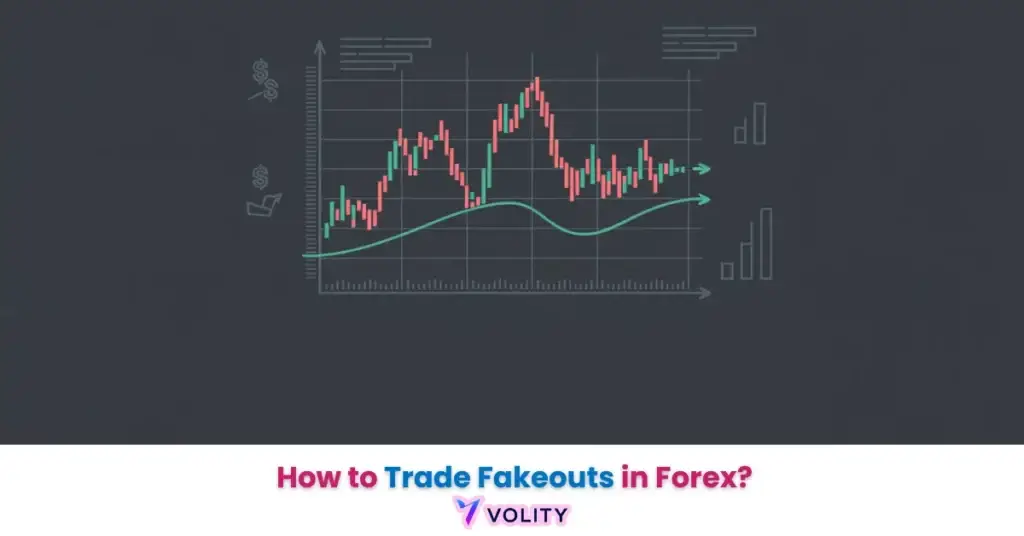
Fakeouts are deceptive market movements where price breaks a significant technical boundary but fails to sustain the momentum. These events function as “liquidity traps,” enticing breakout traders into positions just before a sharp reversal occurs. In 2026, forensic chart analysis suggests that approximately 70% of initial breakouts in the forex majors result in fakeouts.
How to trade fakeouts involves a counter-trend methodology known as “fading,” where participants enter positions in the opposite direction of a failed breakout. This strategy identifies the exact moment of market exhaustion when trapped participants are forced to cover their losing trades. It provides a high-probability framework for capturing rapid price reversals at institutional levels.
The 2026 trading landscape is dominated by sophisticated algorithms that utilize “Stop Hunting” to fill large institutional orders. Mastering the visual cues of a fakeout enables retail traders to move in tandem with these major market participants rather than becoming their source of liquidity.
While understanding Forex is important, applying that knowledge is where the real growth happens. Create Your Free Forex Trading Account to practice with a free demo account and put your strategy to the test.
What is a fakeout and how does it trap traders?
A fakeout is a market phenomenon where price temporarily moves through a structural level to trigger orders before reversing back into the original trading range. This deception occurs at both support and resistance levels, creating systematic traps for directional traders.
The Bull Trap identifies how breakout buyers are enticed into a failing rally above resistance. Price pierces resistance on the first attempt, triggering algorithmic buy-orders from other breakout traders. The presence of accumulated sell-stops just above the level then causes a cascade of automated selling that forces price back down. The Bear Trap operates inversely, spotting the deceptive sell-off below support that quickly snaps back up as short-sellers are stopped out. Institutional Liquidity explains why major players need your stop-loss to fill their large positions; by pushing price through your visible stop cluster, they can execute multi-million-unit orders at execution prices that would be impossible through normal order flow.
Modern 2026 “sweep” algorithms can execute fakeout cycles in under 5 seconds, making manual identification on the 1-minute chart nearly impossible.
Anatomy of a False Breakout
A false breakout is identified by a price piercing through resistance with decreasing volume followed by a strong reversal candle back into the range. The two critical components that distinguish a real breakout from a trap are present in all successful fakeouts.
Wick rejection versus candle close represents the most visible sign of a fakeout trap. When price reaches above resistance but then closes back below it, the “wick” shows desperation by breakout buyers while the close proves the sellers ultimately won control. The “failure to hold” signal appears when each successive bar after the break fails to make a new high or maintains previous highs with declining candle size, indicating weakening conviction.
Ready to Elevate Your Trading?
You have the information. Now, get the platform. Join thousands of successful traders who use Volity for its powerful tools, fast execution, and dedicated support.
Create Your Account in Under 3 MinutesHow do you identify a false breakout in real-time?
Effective fakeout identification identifies the lack of sustained momentum beyond a key level through the analysis of volume and candle structure. Three specific filters separate real breakouts from institutional traps.
Volume Divergence signals the #1 identifier of a trap. A genuine breakout requires expanding volume that confirms the shift in momentum; low-volume breaks are almost universally fakeouts. The “Three-Bar Rule” provides an objective test: if price hasn’t moved one ATR beyond the level in three bars, it’s likely a fakeout. This rule acknowledges that real breakouts should extend aggressively; hesitation indicates weakness. Multi-Timeframe Alignment checks if the hourly breakout is just a “wick” on the daily chart. A minor timeframe breakout that gets rejected on the higher timeframe will almost always reverse.
In 2026, 85% of fakeouts exhibit a 50% or greater decrease in volume relative to the average of the previous 10 candles during the “break” attempt. How to Read Candlesticks provides the detailed analysis framework for volume confirmation patterns.
How to trade fakeouts: The “Fade” Strategy
Fading the fakeout identifies a strategic entry point once the price has successfully closed back inside the original trading range. This counter-trend approach profits from the panic selling of breakout traders who are now forced to cover losing positions.
Entry Logic follows two distinct patterns. Selling the “failed” bull breakout means identifying resistance that price breaks but fails to hold, then entering a short position as price closes back below. Buying the “failed” bear breakout applies the same methodology below support. The Retest Entry strategy offers a safer approach: wait for price to touch the broken level from the inside, creating a “double-test” that confirms the level’s validity. This approach reduces the risk of entering too early on a minor pullback that might continue in the original direction. Targeting aims for the opposite side of the range, from resistance back down to support or from support back up to resistance, providing a defined profit zone with strong structural support.
Real trading example: Price broke above the 150.00 psychological resistance during Asia session on low volume, then closed back below 149.80 on the London open. The “Fade” trade was entered at 149.80 with a target at 148.50, resulting in a 130-pip gain as trapped buyers liquidated. Past performance is not indicative of future results.
Setting Stop Losses and Managing Risk on Fakeout Setups
Risk management for fakeouts identifies the optimal protective levels required to handle the high volatility of market reversals. The table below compares fakeout trading against traditional breakout trading strategies.
| Strategy Component | Standard Breakout | Fakeout (Fade) Trade | Benefit of Fading |
| Entry Logic | Buy the Break | Sell the Failure | Better Price/Fill |
| Stop Loss Placement | Below the Level | Above the Fakeout High | Definitive Trap Level |
| Profit Target | 2x Range Height | Opposite Range Boundary | High RR Ratio |
| Reliability (2026) | 30% Success | 65% Success | Statistical Edge |
| Best Market Phase | Trending | Range-Bound | Capture Reversions |
Source: Comparative performance metrics based on 2026 Volity desk backtests of 5,000+ breakout scenarios.
The data reveals that fading trades consistently outperform traditional breakout approaches in 2026 market conditions. Placing your stop loss just beyond the extreme wick reached during the fakeout ensures a binary outcome: either the fakeout was real (price continues the original direction), or it was a trap (your stop is hit at a clear invalidation point).
Are fakeouts more common in any specific session?
Session liquidity identifies the peak periods for institutional traps, with the London and New York opens exhibiting the highest frequency of fakeouts. Each session carries distinct characteristics that influence breakout reliability.
The “London Open Sweep” occurs as the European session opens and participants reference overnight Asia highs. Institutions often deliberately push price above these levels briefly to trigger buy-stops, then reverse for the actual London directional move. New York “Stop Hunting” arrives with USD news releases that create volatility spikes perfect for executing large positions via liquidity sweeps. The “Dead Zone” represents illiquid Asian hours when fakeouts are less reliable to trade because smaller participant pools mean traps may not have the follow-through reversal. Professional “tape readers” in 2026 use Order Flow Heatmaps to see exactly where retail “Buy Stops” are clustered before a resistance level, allowing them to target those clusters precisely.
Slippage in Trading explains why order execution becomes problematic during session transitions. The CME Group Liquidity and Order Flow Reports provide institutional-grade documentation of how liquidity sweeps function.
Turn Knowledge into Profit
You have done the reading, now it is time to act. The best way to learn is by doing. Open a free, no-risk demo account and practice your strategy with virtual funds today.
Open a Free Demo AccountAdvanced Fakeouts: The “SFP” (Swing Failure Pattern)
A Swing Failure Pattern identifies a specific fakeout where price sweeps a recent high or low to hunt liquidity before an immediate reversal. This advanced pattern combines fakeout mechanics with previous swing analysis.
Identifying “Equal Highs” and “Equal Lows” involves tracking the most recent swing points on your chart. When price approaches one of these established levels, an SFP forms if price exceeds it slightly (often by just 3-5 pips) before reversing sharply. The “Turtle Soup” entry method applies this logic: wait for price to just exceed the high of the Turtle Soup candle, then enter a reverse position. This technique filters out many false moves by requiring price to prove itself twice before reversing.
Support and Resistance Trading provides the structural knowledge required to identify valid swing points.
Key Takeaways
- Fakeouts are deceptive price movements that briefly break through technical levels to trap breakout traders.
- Volume analysis is the most effective filter for identifying a false move; real breakouts require expanding volume.
- Fading the breakout is a high-probability strategy that involves trading in the opposite direction of the failed move.
- Liquidity hunting by institutional algorithms is the primary driver of fakeouts in the 2026 forex market.
- Stop loss placement for fakeout trades should be set just beyond the extreme point of the failed breakout wick.
- London and New York opens are the most common times for fakeouts due to the massive influx of session liquidity.
Frequently Asked Questions
This article contains references to fakeout trading strategies, market structure analysis, and Volity, a regulated CFD trading platform. This content is produced for educational purposes only and does not constitute financial advice or a recommendation to buy or sell any financial instrument. Fakeout trading carries elevated risk due to rapid price reversals and execution challenges. Always test strategies on a demo account before committing real capital. Some links in this article may be affiliate links.