Crypto week digest: options pressure, quantum fears and cows on-chain
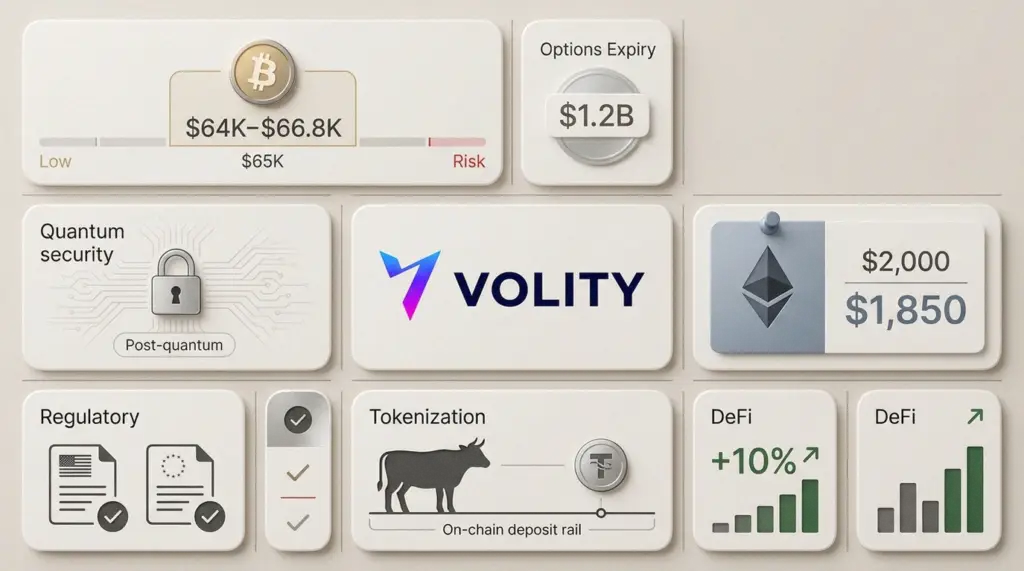
Crypto limps into the weekend with Bitcoin pinned near $65,000 and traders staring at a $1.2 billion options expiry. Meanwhile, Ethereum is struggling below $2,000, regulators are tightening their grip, and quantum security has left the conference hall for the boardroom.
Still, the tape tells only half the story. Away from the red candles, tokenisation keeps pushing into old finance. This week brought cattle collateral in Brazil, a tokenised Gulf fund, bank-deposit rails on-chain and fresh digital yuan traffic into Singapore.
Market overview
Bitcoin has traded mostly between $64,000 and $66,800, after losing momentum from July’s rebound. Short-term support sits around $64,000 to $65,000. However, sellers keep appearing near $66,500 to $67,000, where momentum traders want proof, not promises.
A clean move above that band could reopen $68,000 to $70,000. By contrast, a break below $60,000 would change the week’s argument fast. Then, traders would stop debating consolidation and start pricing a deeper correction.
Sentiment has cooled as well. The total crypto market value sits near $2.3 trillion, down roughly 1 to 1.5 per cent on the day. Meanwhile, fear-and-greed gauges have slid into the high 20s, which suggests caution rather than full retreat.
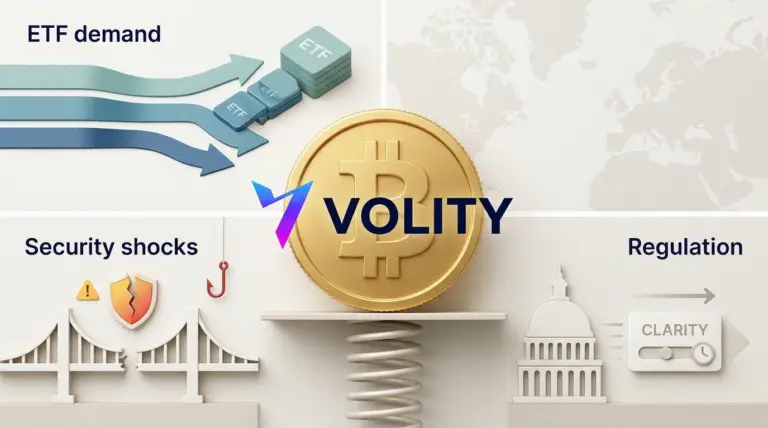
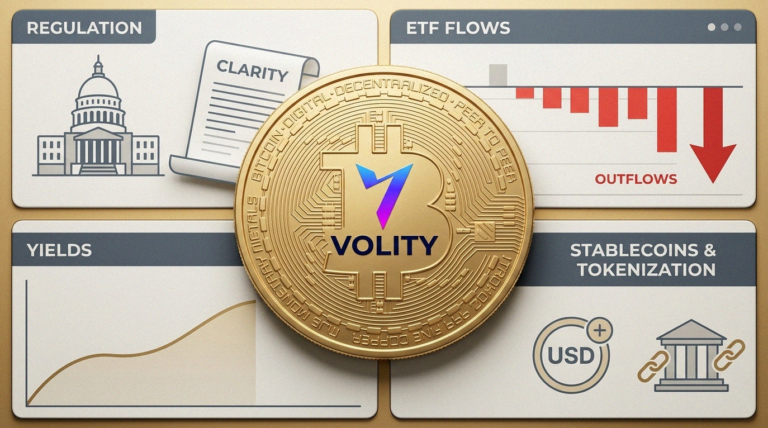
U.S. spot Bitcoin ETFs still show modest net inflows. However, those flows no longer bulldoze macro noise or derivatives positioning. With a Federal Reserve meeting ahead, plus tariff noise and Middle East risk, traders are treating levels with unusual respect.
By the numbers
- $1.2 billion – estimated Bitcoin options expiry pressuring short-term positioning.
- $64,000-$66,800 – Bitcoin’s main weekend trading corridor.
- $2.3 trillion – approximate global crypto market value.
- $1,850 – key Ethereum support zone under watch.
- $15 million – new Bitcoin quantum-security initiative.
Ethereum and majors
Ethereum has failed to reclaim $2,000 and is now leaning on support near $1,850. That weakness tracks the broader pressure on high-beta assets, especially as tech stocks have lost some spring in their step.
Yet the split beneath the surface is striking. While BTC and ETH grind lower, DeFi tokens have rallied close to 10 per cent on stronger volumes. Traders are still paying for on-chain trading infrastructure, even while they cut exposure to the largest coins.
Elsewhere, large-cap tokens mostly softened. In smaller names, however, the bigger problem is not always the chart. Binance’s warning on several potential delistings reminded traders that liquidity now sits heavily at the top. Long-tail tokens carry sharper event risk than they did in easier markets.
Policy front
Regulation remains the week’s slow burn. In Washington, lawmakers are still split over the CLARITY Act, a bill meant to separate digital commodities, securities and payment tokens. The market wants clean lines. Politics, naturally, prefers a maze.
The Commodity Futures Trading Commission has also extended comments on experimental 24/7 futures and perpetual-style energy contracts. Feedback now runs into late August, as regulators test demand against risk controls. That matters because crypto’s always-open model is leaking into traditional markets.
Europe, meanwhile, is using crypto rules as a sanctions tool. Under MiCA, Belarusian nationals are being barred from owning regulated crypto firms. The move targets corporate structures rather than ordinary retail wallets.
Separately, the European Union has targeted 14 crypto operators and almost 100 banks tied to Russia. As a result, institutions can no longer treat jurisdiction as paperwork. Ownership, counterparties and passport rights now affect trading strategy directly.
Quantum risk
Quantum risk used to sound like dinner-party science fiction. This week, it looked more like a treasury item. Major Bitcoin stakeholders announced a $15 million push to harden the network against future quantum attacks on its signature scheme.
The concern centres on ECDSA, Bitcoin’s elliptic-curve signature system. Recent research points to a machine with about 500,000 physical qubits as enough to crack exposed signatures in minutes. Today’s prototypes remain far smaller, near 1,500 qubits, but the gap no longer feels comfortably infinite.
Mining itself is a different matter. Bitcoin’s SHA-256 proof-of-work remains far harder to attack, with estimates running into absurd qubit counts. So the urgent issue is not mining collapse. Instead, it is safe migration before old signatures become attractive targets.
Draft proposals BIP-360 and BIP-361 sketch a move towards post-quantum signatures, including NIST-approved ML-DSA. The likely path is gradual. First, wallets and custodians upgrade. Later, the network could restrict vulnerable address types.
- Do not reuse Bitcoin addresses unless necessary.
- Expect hardware wallets to need meaningful upgrades next cycle.
- Treat quantum risk as a five-to-ten-year migration, not a weekend trade.
Tokenisation boom
While price traders watched Bitcoin’s range, tokenisation kept advancing in stranger places. In Brazil, tokenised cattle were used as collateral through domestic exchange B3. It sounds rustic, yet the structure is familiar: assets, liens, records and credit.
In the Gulf, Abu Dhabi’s Mubadala moved to tokenise a $75 million private fund, with Coinbase taking a stake in the project. That signals a shift from laboratory trials to products that wealthy clients may actually buy.
Meanwhile, LayerZero and Keeta are building rails for tokenised bank deposits on major blockchains. These instruments sit between stablecoins and traditional deposits. If they scale, treasurers could move bank IOUs globally with programmable settlement attached.
Central banks are also inching forward. China completed its first digital yuan cross-border payment to Singapore. At the same time, the Philippines’ BPI is testing stablecoin-based remittance rails, aiming to cut costs for workers sending money home.
CeFi and defi
Not every platform is expanding. Odos, a DeFi aggregator, plans to shut all services by July 30. The app will move into read-only mode beforehand, and users have been told to withdraw funds or export keys.
On the centralised side, older derivatives venues face tougher maths. Compliance costs keep rising, while regulated rivals win institutional flow. Meanwhile, CME’s wider crypto derivatives push shows where serious money increasingly wants to trade: familiar plumbing, clearer margin rules and less operational drama.
Its weekend crypto futures and options activity has already drawn about $50 million in early volume and more than 7,200 contracts. The concept of “market hours” is fading. Spot ETFs, offshore exchanges and regulated futures now keep the screens alive almost constantly.
Corporate politics
Corporate Bitcoin adoption continues to spread beyond the usual U.S. technology names. Nasdaq-listed Chinese insurance technology firm Zhibao is exploring a plan for a 3,500-BTC treasury position through a structured PIPE deal.
In the United States, crypto’s political spending grew louder. Gemini directed $10 million in Bitcoin to a Trump-aligned political action committee while still under regulatory review. Crypto companies no longer merely lobby from the corridor. They are helping fund the electoral weather.
There was also a sharper retail warning. Robinhood’s chief executive had his X account hijacked to promote a bogus memecoin. Some users still chased it. The lesson is plain enough: on-chain tools can improve, while social-layer security remains painfully brittle.
Stablecoins in your pocket
Samsung is preparing to add stablecoin support to its Wallet product, placing dollar-linked tokens within reach of millions of phone users. If executed well, that could make stablecoins feel less like crypto theatre and more like payment plumbing.
For remitters in the Philippines, and for savers in dollar-starved economies, that distinction matters. Stablecoins are not risk-free. However, they can be faster and cheaper than legacy transfer rails, especially when banks move slowly and currencies wobble.
Key takeaways
- Bitcoin needs a break above $67,000 to shift momentum back towards bulls.
- Ethereum below $2,000 keeps attention fixed on the $1,850 support area.
- DeFi strength suggests selective risk appetite, not broad crypto optimism.
- Quantum upgrades matter for custodians before they matter for daily price action.
- Tokenised deposits and stablecoins remain the week’s most important infrastructure story.
For now, crypto is both stuck and moving quickly. Prices are trapped in a narrow lane. Yet underneath, the rails are changing – from fund shares and bank deposits to cattle, remittances and the security model of Bitcoin itself.
Related coverage on Volity
- How to Avoid Crypto Scams: A Beginner Safety Checklist
- How to Choose a Trading Platform: A 10-Point Checklist
- Demo vs Live Trading Account: A 7-Step Checklist Before You Go Live
- How to Size a Trade: Position Sizing and Risk Per Trade for Beginners
- Risk-Reward Ratio Explained: How to Set It and Why It Matters
- ETF vs Index Fund: The Difference and Which to Pick