AI shares found buyers before the November 6 opening bell, after a bruising semiconductor rout.
Nvidia rose more than 4% in premarket trading. Micron climbed over 9%, while SanDisk gained nearly 12%.
Those moves looked forceful, yet they followed extraordinary losses from the previous session.
Nvidia had dropped about 9.3%. Micron fell 17.5%, while SanDisk lost more than 22%.
A double-digit bounce after a double-digit collapse is not automatically a recovery. It is often the market checking whether sellers have exhausted themselves.
The Philadelphia Semiconductor Index fell roughly 12% during the rout. Meanwhile, the Nasdaq suffered its steepest decline in months.
Investors focused on data-centre financing, rising memory prices and the uncertain timing of AI returns.
Those questions travelled quickly through the chip trade. They also exposed how much optimism sat inside stretched valuations.
The opening will matter more than the premarket
Micron, AMD and SanDisk deserve close attention because they absorbed some of the heaviest selling.
Still, a large premarket gain does not provide a clean entry point. The first half-hour may tell a very different story.
Traders should watch whether shares hold above their opening ranges. They should also watch for higher intraday highs and broad sector participation.
Volume will matter as much as price. A rally without volume can quickly turn into an exit ramp for trapped holders.
If Micron gaps higher and fades below its opening price, the rebound loses much of its meaning.
By contrast, sustained gains across Nvidia, AMD, Micron and memory suppliers would suggest genuine risk appetite.
The recent declines also demand smaller positions. A stock that falls 17% in one session can move violently in either direction.
- Nvidia: down about 9.3%, then up more than 4% before the bell.
- Micron: down 17.5%, then up over 9% in premarket trading.
- SanDisk: down more than 22%, then up nearly 12% before trading began.
- Philadelphia Semiconductor Index: fell roughly 12% in the prior session.
Nvidia remains the market’s weather vane
Nvidia remains the clearest sentiment gauge for the AI complex. Its move can shape trading far beyond its own ticker.
A 4% premarket rise offers relief, but it does not establish a new uptrend.
The cleaner signal would involve firm volume and a higher intraday high. Confirmation from other semiconductor shares would strengthen that case.
If Nvidia cannot hold its opening gap, smaller AI names may struggle to sustain their own rallies.
That pattern would suggest distribution rather than accumulation. Sellers often use sharp rebounds to reduce exposure after a violent break.
AMD matters here too. Its reaction can reveal whether investors still want secondary AI exposure or only Nvidia’s relative safety.
Nasdaq traders need breadth, not just green futures
Nasdaq futures pointed higher after the index fell about 5.5%. Yet futures can flatter sentiment before cash trading begins.
QQQ needs support from semiconductors, software and large-cap growth shares. One strong chip group cannot carry the whole index for long.
Broad participation would make the bounce more credible. A failed QQQ rebound would argue for restraint in individual AI names.
Traders chasing the first green candle face poor risk control. Waiting for an opening range can provide a clearer invalidation level.
The phrase “buy the dip” sounds simple during a rally. It becomes expensive when the market has not found a floor.
Yield and property screens need harder evidence
Real-estate shorts require more than high debt or a weak chart. Refinancing risk must connect with a visible catalyst.
A stronger bearish case combines leverage, falling funds from operations and broken technical support. Weak occupancy or reduced guidance can add pressure.
Without named companies and confirmed catalysts, property remains a research theme rather than a trade list.
High-yield financial shares deserve equal scepticism. A 10% dividend yield can signal value, but it can also forecast a cut.
Investors should examine dividend coverage, credit losses, leverage and portfolio marks. A rising yield caused by a falling share price offers little comfort.
Gold and bitcoin offer no easy read
Gold’s reported 1.56% decline does not prove that money has rotated into risk assets.
A single weak session can reflect dollar strength, profit-taking or forced liquidation. GLD traders should compare price action with real yields and Treasury moves.
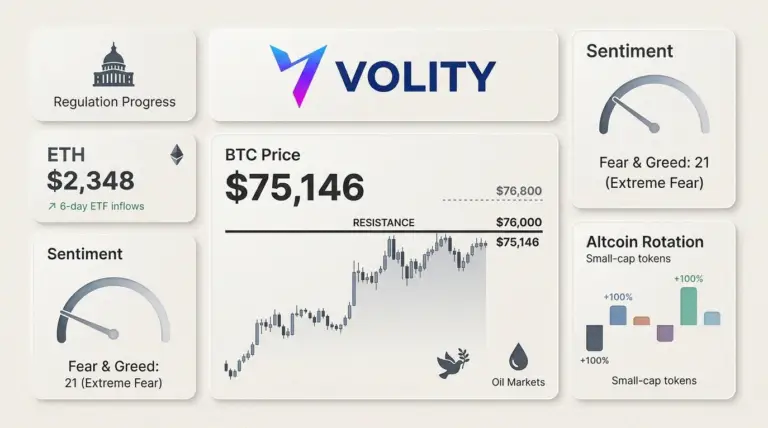
Bitcoin, near $75,326 and down 0.84% in the latest snapshot, faces a similar test.
BTC needs to hold its recent low and reclaim its breakdown area. Until then, each bounce remains a trade rather than a confirmed continuation.
Earnings labels need precision
Calumet reported third-quarter net income of $273.3 million and adjusted EBITDA of $322 million on November 6.
ELAN and CLMT also appeared on earnings calendars around that date. Calendar listings, though, do not confirm released results.
Traders should separate reported figures from scheduled events. That distinction matters when a stock can move sharply on a single release.
The AI trade has bounced, but the burden of proof remains with buyers. A durable recovery needs volume, breadth and follow-through after the opening bell.
Related coverage on Volity
- What Is a P/E Ratio and How to Use It
- Fundamental Analysis in Stock Trading: A Working Definition
- Growth Investing vs Value Investing: Which Style Fits You?
- Fractional Shares Explained: How to Start Investing With $50
- How to Start Stock Trading: A 2026 Beginner Guide
- Dividend Investing for Beginners: How to Start