Is day trading gambling? By the World Health Organization’s definition, it shares the core of a bet: money at risk on an uncertain outcome, in hope of a bigger return. Dated studies and regulator figures show most short-term traders lose. Yet a market has no house edge written into its rules, and a very small group of traders do earn reliably. This guide sets out the evidence so you can test your own plan and set loss limits before real money is at stake.
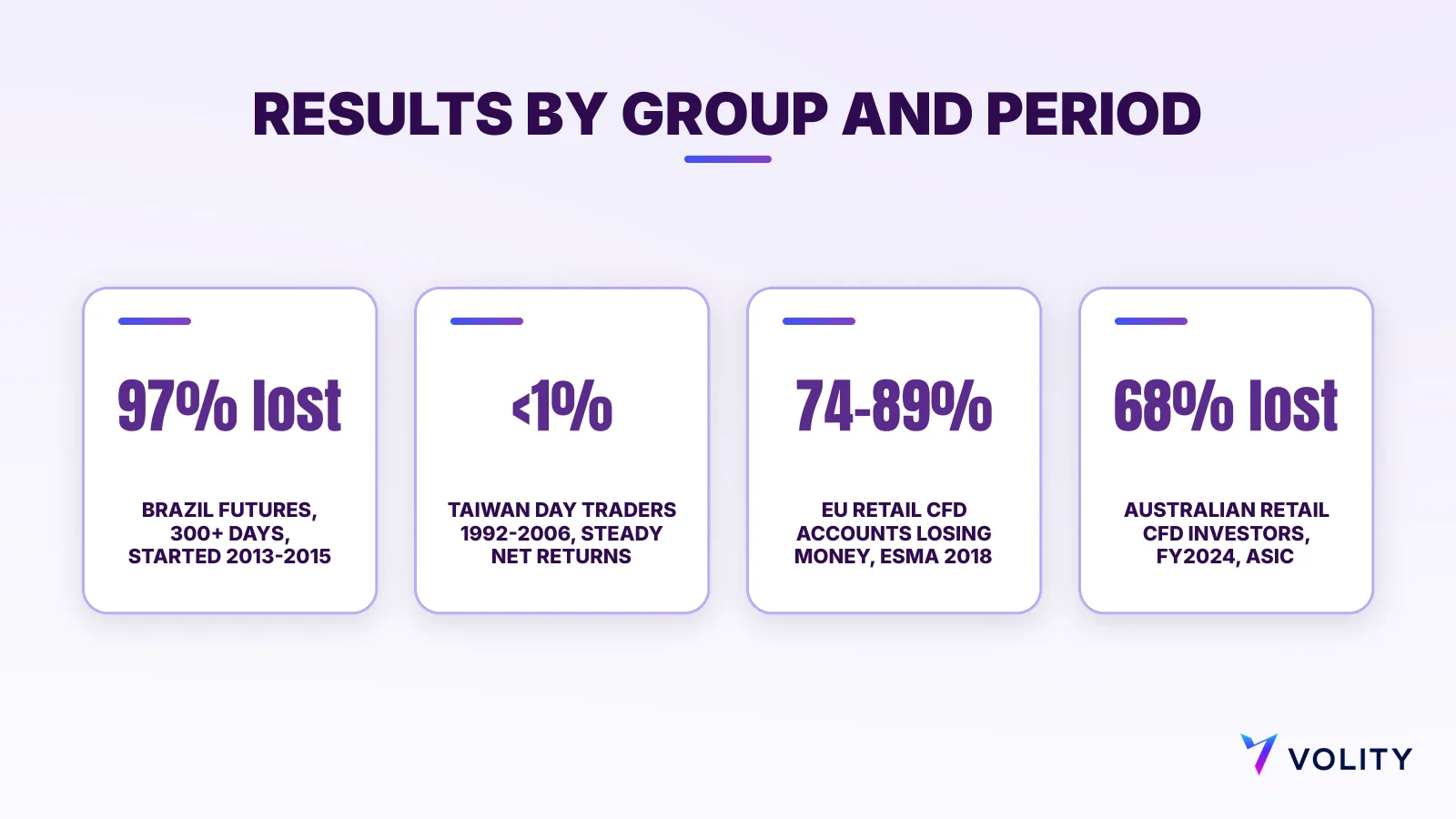
TL;DR: Day trading fits the WHO’s definition of gambling, and the record is poor. In Brazilian equity futures, 97% of day traders who started in 2013-2015 and kept going for 300+ days lost money. In Taiwan (1992-2006), less than 1% of day traders earned reliable returns after fees. A market has no built-in house edge, yet costs and leverage still work against you.
Each figure below keeps its own market, group and period, and none is averaged. A study of one exchange’s day traders says nothing direct about forex or about any one broker’s clients.
What people mean by gambling
The World Health Organization’s fact sheet on gambling (2 December 2024) defines it plainly: “Gambling is risking money (or another item of value) on an event of uncertain outcome, with the possibility of gaining an increased return.”
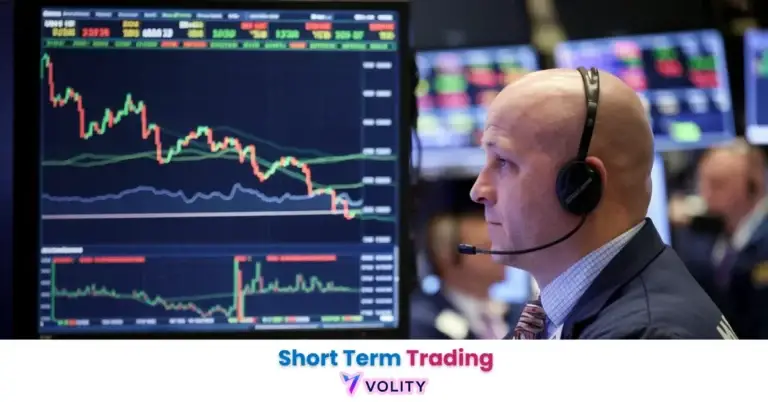
Day trading means opening and closing positions within the same day to profit from small price moves. The day trading guide for beginners covers the mechanics. Each trade puts money at risk on an uncertain price move, in hope of getting back more. The WHO definition says nothing about skill. It describes the structure of a bet, and a day trade has that structure.
UK law draws its lines differently. Section 6 of the Gambling Act 2005 says “gaming means playing a game of chance for a prize”. A game of chance includes “a game that involves both an element of chance and an element of skill”. So skill alone does not take a game out of chance. Section 9 defines betting to include a bet on “the likelihood of anything occurring or not occurring”.
Section 10 sets a boundary. For section 9, a bet does not include “a bet the making or accepting of which is a regulated activity within the meaning of section 22 of the Financial Services and Markets Act 2000”. The Gambling Commission’s About us page adds: “We do not regulate spread betting.” Spread betting means staking an amount per point of price movement. These rules decide which regulator applies. They say nothing about how risky trading is, or how it feels.
What the research says about day traders’ results
Two studies followed day traders on real exchanges, and two regulators counted losses on retail CFD accounts. A CFD (contract for difference) pays the change in an asset’s price, so you trade the move without owning the asset. See what a CFD is.
| Group studied | Period | Finding | Source |
|---|---|---|---|
| Day traders in Taiwan | 1992-2006 | Less than 1% earned reliable returns above a benchmark after fees | Barber, Lee, Liu and Odean, 2014 |
| Day traders in Brazilian equity futures who kept going 300+ days | Started 2013-2015 | 97% lost money; 0.4% earned more than a bank teller | Chague, De-Losso and Giovannetti, 2020 |
| Retail CFD accounts in EU countries | National analyses reported in 2018 | 74-89% typically lose money | ESMA, March 2018 |
| Retail CFD investors in Australia | 2024 financial year | 68% lost money | ASIC, January 2026 |
The Taiwan study by Barber, Lee, Liu and Odean appeared in the Journal of Financial Markets in 2014. The authors report: “Less than 1% of the day trader population is able to predictably and reliably earn positive abnormal returns net of fees.” An abnormal return is a return above what a market benchmark would have paid.
The Brazilian working paper by Chague, De-Losso and Giovannetti (FGV EESP, 2020) followed everyone who began day trading Brazilian equity futures in 2013-2015 and kept at it for at least 300 days. Of that group, “97% of them lost money, only 0.4% earned more than a bank teller (US$54 per day)”. The authors add: “We find no evidence of learning by day trading.”
Regulators count differently. In March 2018 the European Securities and Markets Authority (ESMA) said national regulators’ analyses showed “74-89% of retail accounts typically lose money on their investments” in CFD trading. Australia’s regulator, ASIC, wrote on 20 January 2026: “In the 2024 financial year alone, 68% of retail CFD investors lost money”. In the same release, ASIC Commissioner Simone Constant said: “These are complex, high-risk products, where most investors face losses, and even profitable trades can be entirely eroded by trading costs.”
Where trading differs from a casino bet
A casino game is designed to favour the operator. The UK Gambling Commission’s return-to-player guide says roulette, blackjack and similar games “are bankers’ games and are games of unequal chance”. The house edge measures “the percentage that a casino would expect to keep, on average, from each hand or spin”.
In a market, the result depends on where the price goes after you enter, and no game rule decides that in advance. Costs are still real. Every trade pays the spread, the gap between the buy and the sell price, and some accounts add commission or overnight financing. The more often you trade, the more you pay, much as a gambler pays the house edge on every spin.
Skill also shows in trading data in a way it cannot at roulette. In the Taiwan study, the top 500 traders in one year earned positive returns after fees the next year, while the bottom-ranked kept losing. That persistence suggests more than chance, though only for a tiny group.
Regulators draw a similar line. In 2018 ESMA agreed to prohibit selling binary options to retail investors. A binary option pays a fixed amount if a yes-or-no price condition is met, and nothing otherwise. ESMA cited their “structural expected negative return and embedded conflict of interest between providers and their clients”. CFDs were restricted instead, with leverage limits and a standard risk warning.
Leverage is where a trade can cut deeper than a single stake. It means holding a position larger than the cash you put down. Say you put 1,000 down on a position worth 10,000 (hypothetical figures). A 5% move against you then costs 500, half your deposit. The UK Financial Conduct Authority (FCA) wrote in November 2025 that CFDs “are considered high-risk investments due to the potential for the leverage they provide, magnifying both trading losses and other costs.” Under FCA rules confirmed in July 2019, firms must guarantee that a UK retail client “cannot lose more than the total funds in their CFD account”.
Where day trading behaves like a bet
Studies of real investors link a taste for gambling with frequent trading. Dorn and Sengmueller (Management Science, 2009) matched a survey of 1,000 German brokerage clients to their trading records. They found that “investors who report enjoying investing or gambling turn over their portfolio at twice the rate of their peers”. Turnover is the share of a portfolio bought and sold in a period.
A 2015 paper by Dorn, Dorn and Sengmueller (Management Science), with samples from the US and Germany, found “investors substituting between playing the lottery and gambling in financial markets”. In weeks with large lottery prizes, speculative trading in single stocks and options fell.
Cox, Kamolsareeratana and Kouwenberg (Journal of Banking & Finance, 2020) studied a representative sample of Dutch retail investors. They report that “4.4% of the investors meet the criteria for compulsive gambling in the financial markets. Another 3.6% meet the criteria for problem gambling.” Those with symptoms “tend to follow a more active and speculative trading style, indicated by a higher frequency of stock trading, day-trading and investing in derivatives and leveraged products.”
The WHO fact sheet sets out when gambling becomes a disorder. Under ICD-11, the WHO’s disease classification, the diagnostic requirements are:
- “impaired control over gambling”
- “increasing priority given to gambling, taking precedence over other life interests and daily activities”
- “continuation of gambling despite negative consequences”
These describe a gambling disorder, not any particular trader. The fact sheet adds: “Gambling harm also occurs well below clinical thresholds.” So ask yourself plainly. Can you stop at your limit? Is trading pushing out other parts of your life? Do you keep going after losses you said you would not take?
Habits that limit the damage
No study above shows that a habit turns a losing trader into a winning one. These habits limit how much you can lose and how often impulse wins. None of them is a path to profit.
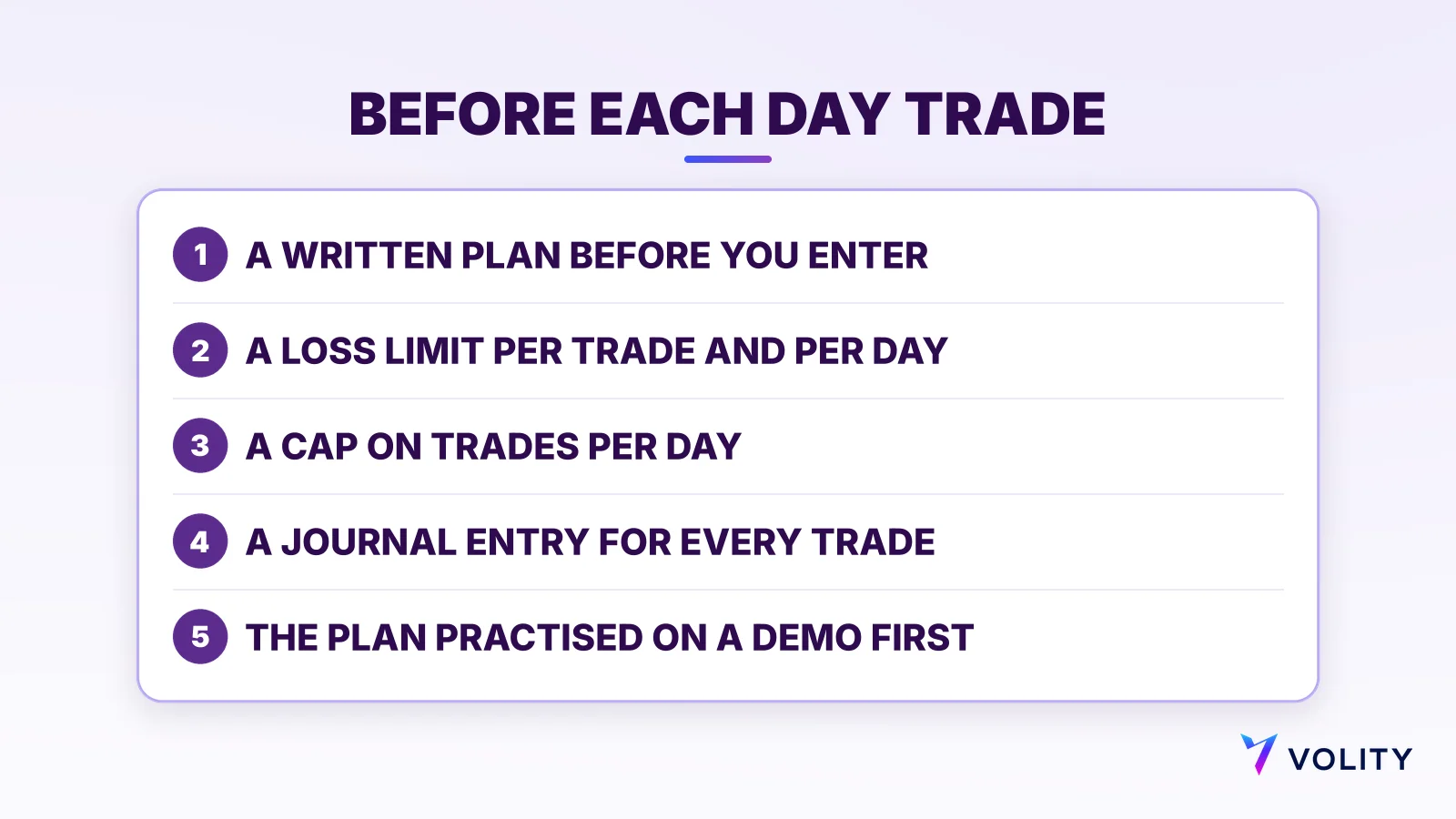
- Write the plan before you enter: the market, the reason, the exit price for a loss and the position size. A trade you cannot describe in advance is closer to a bet.
- Set a loss limit per trade and per day, and stop when you hit it. Say you risk 1% of a 10,000 demo balance per trade (a hypothetical example). Your planned loss per trade is then 100, and a 3% daily limit stops you after 300. The risk management guide and the position sizing guide show the method.
- Keep leverage low enough that one bad move cannot empty the account. ASIC’s CFD order has limited leverage since 29 March 2021. In its first six months, ASIC observed “a 91% reduction in aggregate net losses by retail client accounts” (ASIC, 2022).
- Cap your trades per day. Among 66,465 households at a large discount broker in 1991-1996, those that traded most earned 11.4% a year while the market returned 17.9% (Barber and Odean, 2000). The authors write: “Overconfidence can explain high trading levels and the resulting poor performance.” See the overtrading guide.
- Keep a journal of every trade: the reason, the result and how you felt. The Brazilian data showed no evidence of learning, so a journal is how you check whether you improve.
- Step back if the WHO requirements above sound familiar, and talk to a doctor or a gambling support service where you live. The trading psychology guide covers the emotional side.
Practise on a free demo first
A demo account lets you trade with virtual money instead of your own. You can test whether you keep your plan and limits when prices move fast. On Volity, a free demo account is available on every account tier. The demo vs live checklist lists what to confirm before you switch, and the day trading platform page describes where you would practise.
Before real money goes in, make two more checks. Read the provider’s risk warning in full. Then read the full cost list, which for Volity is on the charges and fees page.
A demo has a real limit: it cannot show how you will act when your own money is falling. If you go live, start small, keep the same limits and compare your live and demo journals.
Fact check: Definitions come from the WHO gambling fact sheet (2 December 2024), the Gambling Act 2005 (sections 6, 9 and 10) and the Gambling Commission. Results come from the abstracts of the studies named above, ESMA (March 2018), the FCA (2019 and 2025) and ASIC (2022 and 2026). All sources were read on 10 November 2026.
Frequently asked questions
Is day trading gambling?
By the WHO definition, it shares the core of gambling: money at risk on an uncertain outcome, in hope of a larger return. Under the UK Gambling Act 2005, a bet that is a regulated financial activity falls outside the Act’s definition of a bet. How you trade decides how close it comes to a bet.
Is forex trading gambling?
The studies cited here cover stock and futures day traders, not forex alone, so the same tests apply. Currencies can be traded through CFDs, and the regulator figures above (74-89% in the EU in 2018, 68% in Australia in the 2024 financial year) cover retail CFD accounts in general.
Do most day traders lose money?
In the studies cited here, yes. Of people who began day trading Brazilian equity futures in 2013-2015 and kept going for 300+ days, 97% lost money. In Taiwan from 1992 to 2006, less than 1% of day traders earned reliable returns after fees.
How is trading different from betting?
A casino game has a house edge written into its rules. A trade’s result depends on where the price moves. Costs still work against you, and the FCA says leverage magnifies both trading losses and other costs.
Can day trading be a skill?
For a very small group, the data suggests so. In Taiwan in 1992-2006, the top-ranked day traders kept earning after fees the next year, yet less than 1% earned reliable returns. The Brazilian study found no evidence of learning by day trading.
How do I stop trading like a gambler?
Write a plan before each trade, set loss limits per trade and per day, cap your daily trades, keep a journal and practise on a demo first. If you cannot stop at your limits, pause and talk to a doctor or a gambling support service.