Investing in financial products involves risk. Losses may exceed the value of your original investment.
Quick answer
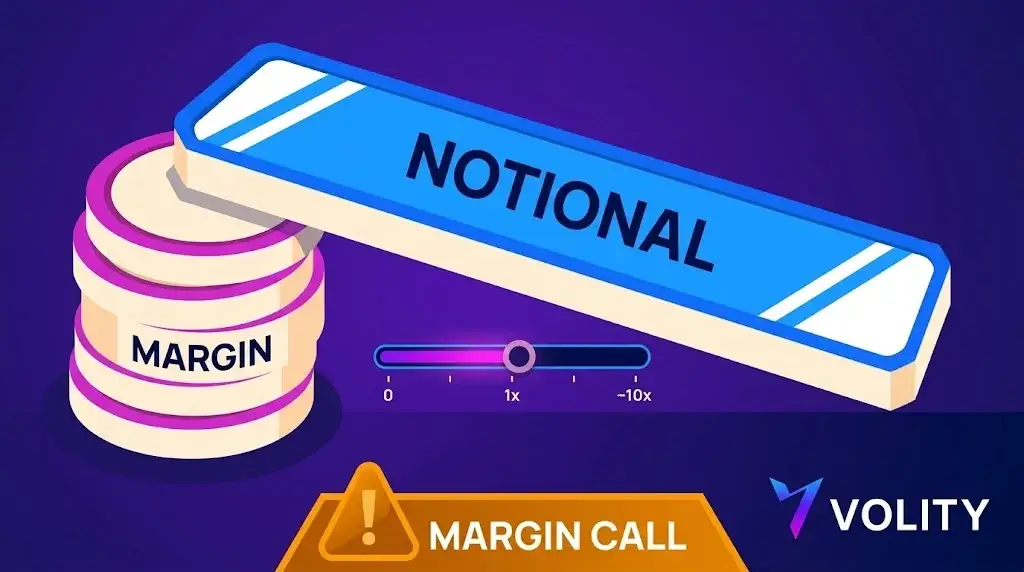
Margin in CFD trading is the deposit a trader puts down to open a leveraged position, expressed as a percentage of total exposure. Initial margin opens the position (3.33% on majors at 1:30 leverage). Maintenance margin keeps it open. Falling below maintenance triggers a margin call; below stop-out (typically 50%) the broker auto-closes the position to protect the account.
Margin in CFD trading is the cash you deposit to open and maintain a leveraged position. It is not a fee; it is collateral. Your broker holds it against potential losses on the position. Margin is expressed as a percentage of the trade’s notional value, and the inverse of that percentage is your leverage. A 5% margin requirement is 1:20 leverage. A 3.33% margin requirement is 1:30 leverage.
The three margin numbers that run a CFD trade
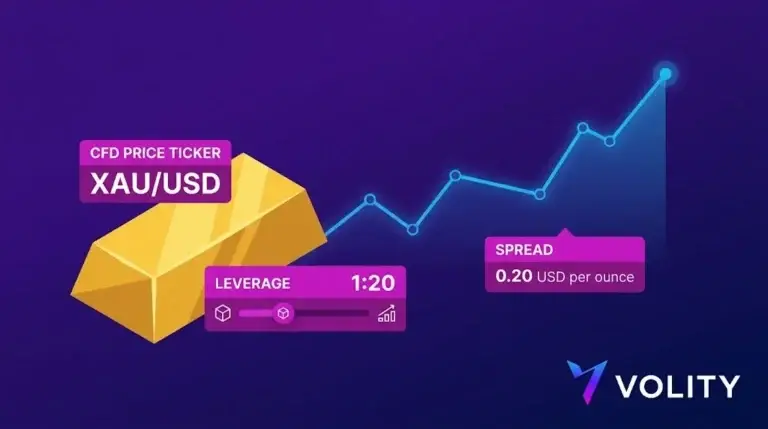
- Initial margin. The deposit required to open the position. Set by regulation in the EEA: 3.33% on major FX (1:30), 5% on non-major FX, indices, and gold (1:20), 10% on other commodities (1:10), 20% on individual equities (1:5), 50% on cryptoassets (1:2).
- Maintenance margin. The minimum equity required to keep the position open. Below this level, the broker issues a margin call.
- Margin close-out. ESMA mandates auto-close when account equity falls to 50% of the initial margin requirement on open positions. The broker closes positions to bring you back above the threshold.
How margin works in real numbers
You want long EUR/USD exposure of 100,000 (one standard lot) at 1.0850. Notional value: $108,500.
- Major FX retail leverage: 1:30. Initial margin = 3.33%.
- Initial margin in cash: $108,500 x 3.33% = $3,613.
- If EUR/USD drops 100 pips to 1.0750, your position is down $1,000.
- Equity remaining on the position: $3,613 – $1,000 = $2,613.
- That is 72% of initial margin, still above the 50% close-out threshold.
- If EUR/USD drops a further 80 pips to 1.0670, equity falls below 50% of initial margin and the broker auto-closes.
Free margin vs used margin
- Used margin. The total initial margin posted across all open positions.
- Free margin. Account balance plus floating P&L minus used margin. The headroom you have for new positions or adverse moves.
- Margin level. Equity divided by used margin, expressed as a percentage. At 100% you are fully consumed; at 50% the close-out kicks in.
When does using margin make sense?
- Short-term directional trades where capital efficiency matters and the time horizon is days, not months.
- Hedging existing exposure without tying up cash equal to the notional.
- Pairs and relative-value trades where two offsetting positions share a single margin requirement.
- You have written down a stop-loss before entry and the position is sized so the worst case is a small fraction of account equity.
What goes wrong
- Margin maxing. Opening positions to 95% of available margin. A 0.5% adverse move triggers margin call. No room to think.
- Adding to losers. The position moves against you, equity drops, the trader funds more margin to keep the position open. The size of the loss compounds with the size of the conviction error.
- Cross-margin contamination. A losing position consumes margin from a winning one. Both close at unfavourable prices.
- Weekend gaps. Equities and indices can gap 3-5% on Monday open after a weekend headline. Stops do not fill at advertised prices. Negative balance protection caps the damage at account equity, not at margin.
Margin at Volity
Volity offers ESMA-compliant retail margin requirements across all CFD asset classes: 3.33% on major FX, 5% on non-major FX and major indices and gold, 10% on other commodities, 20% on individual equities, 50% on cryptoassets. Negative balance protection applies on retail accounts. Trading is executed by UBK Markets Ltd, a Cyprus Investment Firm authorised by CySEC under licence 186/12. Eligible retail clients are covered by the Cyprus Investor Compensation Fund up to EUR 20,000 per client per firm.
Volity operates a trading platform and also publishes educational and analytical content about trading. The content on this page is for educational purposes only and should not be considered financial advice. Volity may benefit commercially when readers open trading accounts through links on this site.
Our content is produced and reviewed under documented editorial standards; see our comparison and review methodology.
Frequently asked questions
What is the difference between initial and maintenance margin?
Initial margin is what you must deposit to open a position. Maintenance margin is the lower level your equity must stay above to keep it open. Falling below the maintenance level triggers a close-out, not a request for more time.
Does margin change how much I can lose?
Margin determines the size you can control, and size determines the loss. The margin figure itself is not your risk; the distance between entry and stop, multiplied by position size, is.
What triggers a margin close-out?
Your account equity falling to the close-out threshold set by the firm and, for retail clients in several jurisdictions, by regulation. When it is reached, positions are closed automatically rather than left open for the market to recover.