Regulatory Risk Disclosure
Investing in financial products involves risk. Losses may exceed the value of your original investment.
Bitcoin fed politics is a core topic for traders in 2026. The complete guide follows.
Crypto Whirlwind: Trump Shakes Fed, NFTs Tumble, CZ Fights Back
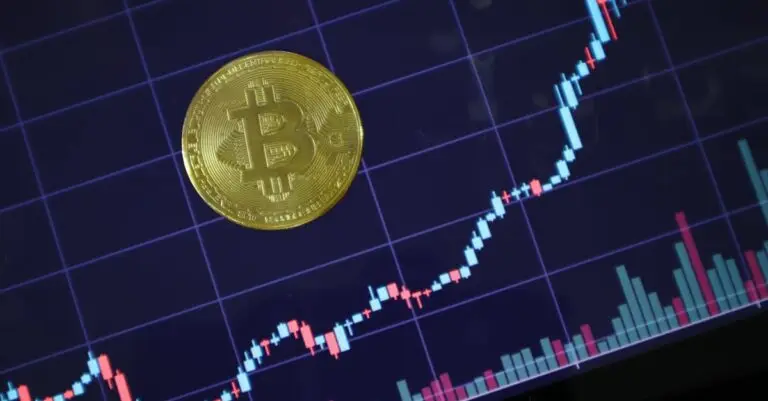
Crypto traders came in relaxed. And left with their stops in tatters. Late Friday, President Trump nominated something. Former Fed governor Kevin Warsh. To chair the Federal Reserve. Therefore, markets repriced rate risk. In minutes. And the crypto complex traded like something. A leveraged Nasdaq proxy.
The Dow slid hard. While Bitcoin dropped through the low $80,000s. Before steadying. Liquidations piled up. Across major venues. And the weekend tape turned jumpy.
However, the bigger shift sat in rates. Traders took the nomination as a hint. Of a stricter inflation posture. And that matters more to crypto. Than any chart pattern.
Fed Nomination Reverberates Through Markets
Warsh has not secured confirmation. And the Senate calendar still decides the timing. Even so, the signal alone tightened financial conditions. Meanwhile, macro sensitive tokens behaved like something. High beta tech. When equity volatility rises? Crypto tends to lose its “uncorrelated” halo fast.
Fed Politics Meets Leverage
Bitcoin’s break lower dragged altcoins with it. And dealers reported forced selling. Into thin liquidity. As a result, the market’s obsession with $65,000 returned. That level now sits as something. The popular downside magnet. Partly because it marks something. A prior congestion zone. Additionally, partly because traders love round numbers.
Ethereum and XRP Under Pressure
Ethereum fared no better. It cracked below its recent $2,800 range. And spot ETH ETF flows turned negative. Which spooked allocators. Who hoped ETFs would damp volatility. Meanwhile, XRP traders started whispering about something. A trip towards $1 again. With US inflation data. Additionally, Washington budget noise. Adding another layer of uncertainty.
Oddly, the equity shock did some of the work too. Microsoft’s sharp slide became something. A convenient explanation. For the everything selloff. However, it was really the rate narrative. That did the damage. Crypto can handle bad headlines. It struggles with higher real yields.
NFTs had their own ugly week. Sales fell 38%. To $74.8 million. And Bitcoin-based NFTs dropped 71%. Therefore, the market that spent early 2026 talking about “utility”? Spent late January talking about exit bids.
Daily volumes hovered around $13 million. Which looks stable. Only if you ignore where they came from. Meanwhile, the industry’s own projections still talk up something. A $60.82 billion NFT revenue year. In 2026. With gaming driving big chunks of activity.
Yet price is a cleaner truth teller. Than forecasts. And this week? It said risk appetite is thinning.
NFT weekly sales: $74.8 million. Down 38%
Bitcoin NFT weekly sales: Down 71%
Daily NFT volumes: About $13 million
CZ Rejects the Blame Game
Binance founder Changpeng Zhao went on offense. After claims his exchange sparked something. A prior liquidation cascade. “What crash?” he shot back. Arguing liquidations spread across venues. In line with market share.
In other words? He wants traders to blame leverage. Additionally, macro fear. Not a single matching engine.
That debate matters. Why? Because the market is again leaning on leverage. Therefore, narratives about who “caused” liquidations tend to resurface. Right when risk desks are most sensitive. Meanwhile, Binance keeps pointing to user compensation. Additionally, its SAFU fund. As proof of resilience. Even as skeptics focus on concentration risk.
Davos, Dimon and the Old Feud
In Davos, the long-running Wall Street versus crypto argument turned personal. JPMorgan’s Jamie Dimon. Additionally, Coinbase’s Brian Armstrong clashed. In a way that captured the mood. Trad finance wants control. Additionally, clear rules. While crypto wants speed. Furthermore, fewer gatekeepers.
However, as regulation tightens? Both sides are learning they need each other’s plumbing.
Europe’s MiCA framework is now the practical test case. Compliance costs are rising. And smaller platforms will feel it first. Meanwhile, in Washington? Lawmakers are again pushing crypto market structure work. And agencies are signaling more coordination.
Therefore, the next bull phase may arrive. With more paperwork. Rather than evangelism.
What Traders Are Watching Now
The immediate map is simple. First, traders will price the odds. Of Warsh actually taking the chair. Second, they will watch inflation prints. Additionally, rate messaging. For any sign. That policy stays tight for longer. Third, they will track ETF flows. Why? Because those numbers now steer the narrative. Every morning.
Bitcoin: Traders fixate on $65,000. As the headline support zone.
Ethereum: Failure to reclaim $2,800 keeps bears in control.
NFTs: Volume collapse signals fading discretionary risk.
Rates: Higher yield expectations remain the main macro lever.
However clever the crypto story, rate expectations still set the tone.
Therefore, keep leverage modest until liquidation cascades cool.
Meanwhile, ETF flows are the cleanest intraday sentiment gauge.
Watch confirmation risk on the Fed pick. As a volatility catalyst.
NFT weakness often flags broader risk fatigue. Before majors fully crack.
Volity: Navigating Your Path Through Global Financial Complexity
In today’s uncertain financial environment, reliable infrastructure delivers critical stability. Consequently, Volity provides one comprehensive account for secure international operations. Specifically, you can invest, hold, and pay across borders with professional confidence. In essence, it’s a dependable financial platform engineered for resilient global performance.
Notably, Volity combines regulatory excellence with robust technology. Therefore, these foundations enable steady execution in international markets. Moreover, Volity transforms complex cross-border transactions into manageable experiences. As a result, the platform provides comprehensive financial control with reliability and security. Ultimately, with Volity, borderless finance becomes stable, predictable, and accessible for prudent professionals worldwide.
For more on this topic see our deep-dives on Crypto Equities Explained: MicroStrategy, ABTC and Bitcoin Proxies, Bitcoin, Solana and AI Tokens: How Crypto Narratives Shift the Tape, and Bitcoin ETF Inflows and Crypto Rallies: Reading the Signal.
Quick answer: Crypto sentiment under Federal Reserve political pressure is the regime in which the asset class absorbs governance-risk premium that traditionally lived in equity and currency markets. The current configuration carries three discrete signals. Bitcoin reprices against a Fed nomination news cycle that elevates the perceived risk of policy-independence erosion, with the marginal allocator decision shifting from rate-path positioning to institutional-credibility positioning. Ethereum and XRP absorb the leverage-cycle component of that repricing because they sit higher on the volatility curve and react faster to shifts in derivative funding rates. NFT sales contracting alongside the broader crypto repricing reflects the speculative-tier component of the same flow, with the NFT venues acting as the leading indicator for retail-discretionary capital exit. Reading the three together produces a more informative sentiment read than any of them in isolation, because each captures a different segment of the allocator base under the same policy stress.
What our analysts watch: Three reads decode a Fed-politics sentiment regime. Yield-curve reaction asymmetry (when policy-independence concern dominates rate-path concern, the yield curve produces a steepening bias in the long end rather than the bull-flattening that follows pure rate-cut repricing; Bitcoin tracks the long-end signal more than the short-end one in these regimes). Cross-asset volatility convergence (when crypto, equity, and currency volatility all rise simultaneously without one leading the others, the structural read is governance risk rather than business-cycle risk, and the positioning response is broader hedging rather than directional repositioning). NFT venue volume floor (the absolute floor in NFT venue weekly volume during these windows historically precedes the broader speculative-tier recovery by two to four weeks; tracking the floor rather than the headline drawdown is the operationally useful signal). When all three align, the sentiment regime resolves through the standard channel and crypto positioning normalises. When they diverge, the regime extends and sizing remains tactical.
Frequently asked questions
Why does Federal Reserve nomination news move crypto more than rate-decision news in some windows?
Because rate decisions are partially priced through the rates futures market in advance, while nomination news represents an unpriced shift in the institutional-credibility variable that allocators cannot hedge through standard rate instruments. The marginal allocator response is to widen the tail-risk premium across all long-duration risk assets, which includes Bitcoin and the broader crypto complex. The pricing channel is therefore broader than the rate channel and produces sharper short-term moves. The historical pattern is that nomination-news repricing typically resolves within two to four weeks once the political path clarifies, while rate-path repricing extends across the full cycle. The Federal Reserve governance reference documents the institutional structure that frames the credibility variable.
What does the NFT volume contraction signal for the broader crypto cycle?
It signals that the speculative-tier capital that defines the late-cycle phase of crypto bull markets has rotated to defensive cash positioning. The NFT venue complex serves as the leading indicator for this rotation because the asset class concentrates retail-discretionary capital with low strategic conviction; that capital exits first during stress and re-enters last during recoveries. The structural read is that NFT volume contraction below trailing-quarter norms typically marks a multi-week defensive phase that resolves through one of two paths. Either the broader macro tape stabilises and the speculative-tier capital re-enters within four to eight weeks, or the broader macro stress extends and the speculative-tier capital remains parked until the next cycle. The CoinDesk NFT and markets coverage tracks the venue-level volume data.
How does the CZ public-feud factor change the sentiment read?
The factor adds noise more than signal. High-profile public exchanges between major industry figures during a sentiment trough function as headline-amplification rather than as fundamental drivers; the structural positioning of the major venues, banking partners, and regulated wealth channels does not shift on the basis of public commentary cycles. The right framing is to track the operational metrics (exchange volume share, deposit and withdrawal flow patterns, regulated-venue listing dynamics) rather than the headline cycle. Public feuds are entertainment for the news cycle and information for the venue-rotation analyst, not for the structural positioning thesis. The Investopedia reference on market sentiment covers the framework that distinguishes signal from noise.
Should traders adjust position sizing during Fed-politics sentiment regimes?
Yes, modestly and asymmetrically. The historical pattern during these regimes is that path-dependent volatility expansion punishes both directional shorts and aggressive long entries, while patient base-building works disproportionately well for traders who size positions to survive the full multi-week regime rather than to capture each intraday swing. The operational rule that produces the cleanest expected-value distribution is to reduce per-trade sizing by roughly 25 to 35 percent, lengthen the average hold period, and avoid concentrated positioning on a single FOMC, nomination, or congressional event. Position sizing handles the regime; trade-frequency optimisation does not.
ⓘ Disclosure
Volity operates a trading platform and also publishes educational and analytical content about trading. The content on this page is for educational purposes only and should not be considered financial advice. Volity may benefit commercially when readers open trading accounts through links on this site.
Our content is produced and reviewed under documented editorial standards; see our comparison and review methodology.