Investing in financial products involves risk. Losses may exceed the value of your original investment.
Crypto news bitcoin is a core topic for traders in 2026. The complete guide follows.
Today’s crypto landscape is stirring, with fresh price movements, platform innovations, and regulatory waves. Here’s your essential roundup for November 26, 2025, covering Bitcoin, Tezos, and the broader market.
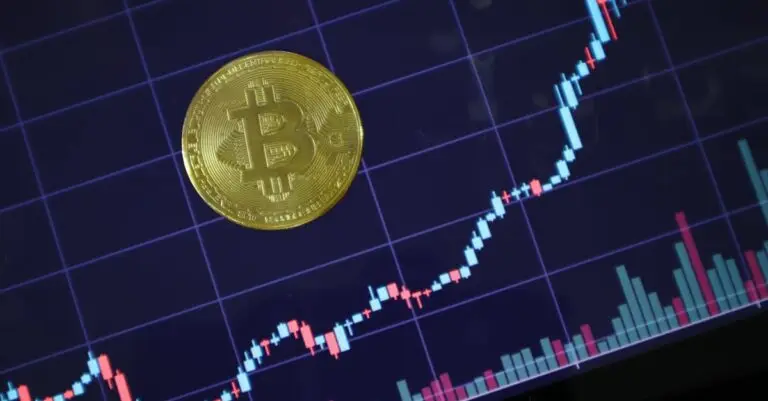
- Bitcoin is trading around $86,000, with its technical indicators presenting contrasting outlooks. Analysts are spotting a potential “three drives” pattern near $75,000, suggesting a possible bullish reversal.
- PlanB, a notable Bitcoin expert, is optimistic. He predicts a minimum doubling of Bitcoin’s current price of $109,000, citing its six-month stay above $100,000, which has flipped resistance into sturdy support.
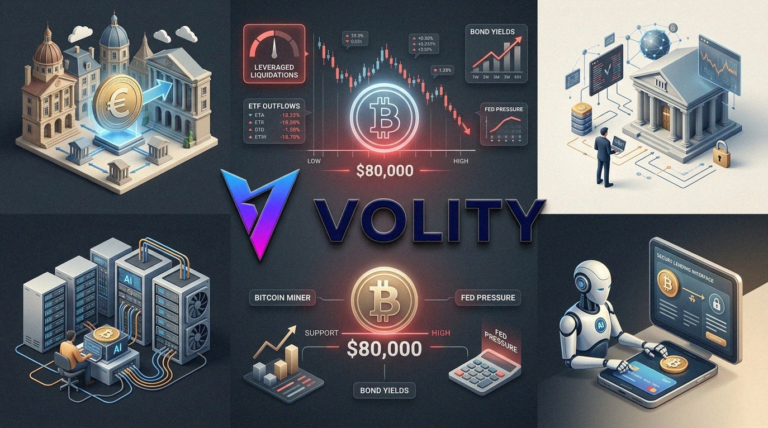
- On the flip side, sceptics highlight that Bitcoin may still be trapped in a bear market and could be overvalued by 40%. November saw Bitcoin ETF outflows surpass $3.5 billion, hinting at potential deeper losses ahead.
- Price predictions veer widely from $88,432 (Changelly) to a striking $210,644 (Digital Coin Price), with speculative highs hitting $230,617. Some foresee Bitcoin reaching $2.7 million or more by 2033.
Revolut eliminates fees on Tezos delegation rewards
- Revolut has now axed all fees on Tezos (XTZ) delegation rewards, allowing users to reap 100% of their on-chain earnings.
- This initiative follows Tezos’ recent Rio protocol upgrade, which slashed network cycles down to just one day, enhancing delegation efficiency.
- Revolut users can now automatically accrue rewards without the burden of managing validators or tinkering with settings. The platform hosts staking for 13 cryptocurrencies, but XTZ shines brightest with its zero-fee advantage.
- As an energy-efficient Proof of Stake blockchain with strong governance and smart contracts, this move is poised to amplify Tezos’ appeal among passive income investors.
Other cryptocurrency updates
- Starknet mainnet enhancement: Starknet’s latest upgrade introduces swifter block times and a new hashing standard, bolstering scalability and security.
- SEC to review tokenized equities: On December 4, the SEC will evaluate new regulations concerning tokenized equities and AI in the crypto sector, indicating rising regulatory oversight.
- Ethereum price concerns: Ethereum struggles below $3,000 amid waning staking demand, leaving bulls wondering if they can reclaim momentum.
- Solana ETF movements: Spot Solana ETFs have seen inflows of $53 million, stoking speculations that SOL may surpass $140.
- Reliance Global shifts to Zcash: The Nasdaq-listed firm has converted its entire crypto treasury to Zcash, showcasing a burgeoning interest in privacy-focused cryptocurrencies.
- U.S. Bancorp tests stablecoins: The bank is exploring stablecoin payments on the Stellar blockchain, hinting at a wider embrace of cryptocurrency within traditional finance.
- Polymarket gets regulatory nod: Polymarket has secured CFTC approval, becoming the first fully regulated prediction exchange in the U.S., paving the way for crypto-driven betting and forecasting.
Future trends in the crypto sector
The crypto market is in a state of flux, influenced by both bullish and bearish currents. All eyes will be on Bitcoin, as technical patterns and institutional investments dictate its trajectory. Moreover, platforms like Revolut are streamlining ways to earn passive income from staking, particularly through their zero-fee structures, such as with Tezos delegation.
In the immediate future, regulatory changes, technological innovations, and institutional shifts are set to dominate headlines. Whether you’re a seasoned trader, an eager investor, or simply curious about the crypto sphere, keeping up with these developments is essential for navigating this evolving landscape.
For more on this topic see our deep-dives on Ethereum ETFs and the USDC Welfare Pilot Reshaping Finance, Kyrgyzstan Gold-Backed Stablecoin USDKG: Secure Crypto Investment Trends, and Ethereum and Bitcoin Rallies: ETF Inflows, DeFi and Altcoin Drivers.
For more on this topic see our deep-dives on Crypto Market Crash: Bitcoin, XRP and Ethereum Price Analysis, Ethereum ETFs and the USDC Welfare Pilot Reshaping Finance, and Bitcoin Custody Risk and Layer-1 Challengers: BlockDAG vs the Majors.
What our analysts watch: Three lenses dominate our reading of the equity tape. Sector rotation tells us where capital is moving (defensives versus cyclicals, value versus growth).
Earnings revisions show whether analyst expectations are catching up to or trailing reality. Real yields and the dollar set the discount rate that valuation multiples respond to.
When earnings estimates rise faster than the index price and real yields stabilise, the setup tends to favour patient longs.
Frequently asked questions
How much money do I need to start trading stocks?
Many regulated brokers now allow account opening with no minimum deposit and offer fractional shares for as little as $1. A practical starting balance for a long-only beginner is $500 to $2,000, enough to diversify across a handful of positions without paying meaningful percentage spreads. The FCA publishes investor education resources worth reading before opening an account.
What is the difference between stocks, ETFs, and CFDs?
A stock is direct ownership in a company. An ETF is a basket of stocks (or other assets) traded as a single security. A CFD (contract for difference) is a leveraged derivative that tracks the underlying price without conferring ownership. Each has different cost, tax, and risk profiles. ESMA imposes leverage caps on retail CFDs in the EU and UK.
How do I choose a trustworthy broker?
Verify regulation with a tier-one authority (FCA in the UK, CySEC in Cyprus, BaFin in Germany, ASIC in Australia, or your local regulator). Check segregated client funds, negative-balance protection, transparent fees, and a clean disciplinary record. Avoid any platform offering guaranteed returns or pressuring deposits. The FCA Financial Services Register is free to search.
Should I day-trade or invest long-term?
Most retail accounts that day-trade lose money over time. Long-term passive investing in diversified index ETFs has historically delivered competitive returns with far less effort and lower stress. Active day-trading can work, but it requires capital, an edge proven over hundreds of trades, and the time to monitor positions intraday. Start passive; layer active only after the basics are durable.
Related guides
- Bitcoin explained
- Cryptocurrency trading
- Crypto trading platforms
- Best crypto investments
- Ethereum explained
What Volity Editorial watches: Crypto news is high-frequency, high-noise, and deceptively narrative-driven. The Volity research desk filters daily flow into three buckets: structural (regulatory rule-making, ETF approvals, custody-rail changes), cyclical (funding rates, basis, dominance ratios), and idiosyncratic (single-protocol upgrades, validator events, token unlocks). Reading the same headline through the structural lens versus the idiosyncratic lens often produces opposite trade conclusions. Discipline is asking which lens applies before reacting.
Volity desk Q&A
What is driving Bitcoin price movement right now?
The dominant inputs in 2026 are spot-ETF net flows, the post-halving supply schedule, and the relative attractiveness of dollar yield against Bitcoin’s zero-coupon profile. When real yields fall and ETF flows turn positive, Bitcoin tends to outperform; when real yields rise and ETF redemptions accelerate, the pair drifts lower. The CoinDesk Bitcoin price reference tracks the live print against scenario boundaries.
Is Tezos staking still worth it in 2026?
Tezos staking yields have remained competitive against most layer-one alternatives, with the trade-off of a smaller ecosystem and lower price beta. The honest answer for most retail allocators is that Tezos works as a yield-on-yield trade rather than a capital-appreciation thesis. Self-custody bakers retain the highest yield; delegated stakers accept a small fee for operational simplicity. The Investopedia proof-of-stake primer covers the structural mechanics.
How do I read crypto market trends without getting whipsawed?
Anchor on weekly closes, not minute-by-minute prints. Track three pairs in parallel: BTC USD as the macro anchor, ETH BTC as the rotation gauge, and a basket of altcoins as the risk barometer.
When all three move together, the regime is trending. When they diverge, the market is in transition and conviction trades carry higher risk.
The BIS digital-asset statistics contextualise crypto against traditional credit aggregates.
How quickly do crypto news headlines actually move price?
Genuine fundamental headlines (ETF approvals, exchange failures, regulatory enforcement) typically produce immediate one-to-three-day repricing followed by consolidation. Narrative-driven headlines (influencer commentary, single-tweet announcements, anonymous source reports) frequently reverse within hours. Distinguishing the two requires checking whether the headline changes the live cash-flow profile of the asset or merely the sentiment around it. Most retail traders conflate the two and pay the spread for the privilege.
External references
- CoinDesk Bitcoin price
- Investopedia proof-of-stake primer
- BIS digital-asset statistics
Volity operates a trading platform and also publishes educational and analytical content about trading. The content on this page is for educational purposes only and should not be considered financial advice. Volity may benefit commercially when readers open trading accounts through links on this site.
Our content is produced and reviewed under documented editorial standards; see our comparison and review methodology.