Crypto crossroads: prices test highs as regulators close in
Bitcoin is again pressing towards $80,000, while regulators tighten the pipes beneath the market.
That contrast defined the session. Prices looked buoyant, yet momentum weakened and policy risks became more concrete.
Bitcoin meets resistance near $80,000
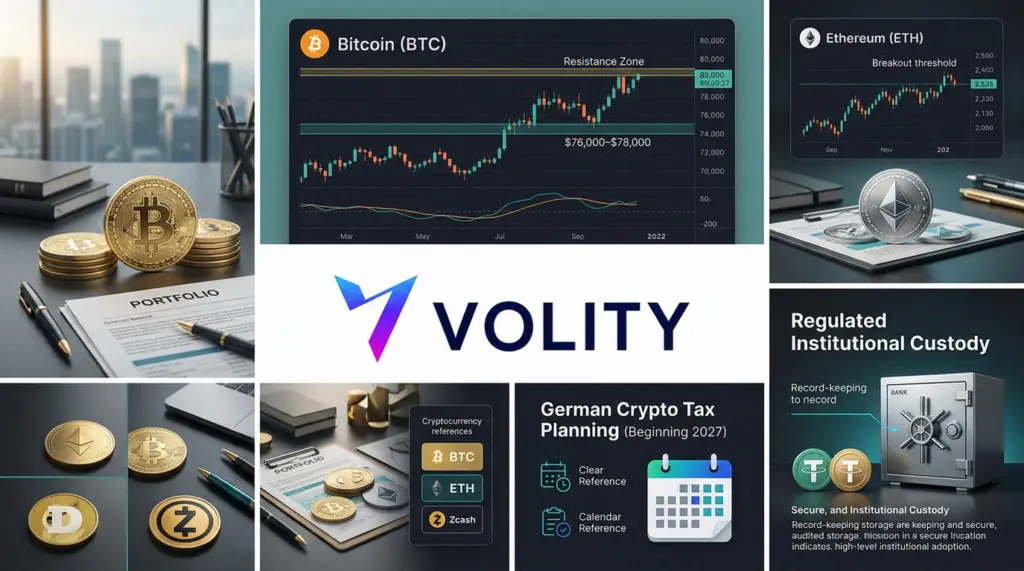
Bitcoin traded around $78,000 to $79,000, leaving $80,000 within sight but still out of reach.
However, the chart shows a growing fault line. Price has made higher highs, while momentum gauges have made lower ones.
That bearish divergence does not guarantee a decline. It still warns that buyers may need fresh capital to sustain the move.
The first important support lies between $76,000 and $78,000. A decisive break below that shelf could accelerate selling.
Conversely, a daily move above $80,000 would put $82,000 to $84,000 back into focus.
For now, Bitcoin looks less like a clean breakout and more like a market testing its own nerve.
- Support: $76,000 to $78,000
- Immediate resistance: $79,000 to $80,000
- Next upside zone: $82,000 to $84,000
Long positions need tighter risk controls than they did during the earlier advance.
Traders chasing a direct run towards $90,000 may find the current range unusually unforgiving.
Ethereum needs one clean break
Ethereum has also firmed, although its technical picture remains more conditional than Bitcoin’s.
A daily close above $2,535 would suggest a fresh upside leg. Until then, ETH remains trapped in a familiar trading range.
Above that level, momentum strategies may gain traction. Below it, however, mean-reversion trades still offer a more disciplined approach.
Elsewhere, the altcoin market has become selective rather than broadly euphoric.
Dogecoin has recovered above its 200-day moving average and now faces resistance near $0.092.
Meanwhile, Zcash traders continue to defend a pennant breakout. Some target $1,500, though that outcome would demand exceptional risk appetite.
Such moves underline an uncomfortable truth. Not every rising token reflects the same investor conviction.
Older coins can move sharply on thin liquidity, social attention, or short covering. Position sizing matters more than grand narratives.
Germany rethinks crypto’s tax advantage
Berlin provided the day’s most consequential policy development. Germany’s finance ministry has drafted rules reshaping crypto taxation for future purchases.
Under the proposal, crypto bought after 1 January 2027 would enter the standard capital-income tax regime.
Gains realised from 2028 onwards would face a flat 25% levy, subject to the final law.
Currently, German investors can often sell crypto tax-free after holding it for more than one year.
That rule has rewarded patience and helped Germany stand apart from many European peers.
The draft would preserve the old treatment for holdings bought before the proposed cutoff. However, future purchases would carry a permanent tax consideration.
- Proposed purchase cutoff: 1 January 2027
- Proposed taxation date: 2028 onwards
- Suggested tax rate: 25% on capital gains
- Expected annual allowance: €1,000
For German investors, the change makes record-keeping and purchase dates materially more important.
It may also reduce the appeal of frequent portfolio turnover. After all, each realised gain would face the same tax drag.
More broadly, Germany’s shift signals where European policy is heading. Crypto is increasingly being treated like shares, funds, and other mainstream investments.
Block seeks a place inside banking
In Washington, Block has applied to create Builders Bank & Trust, an uninsured national trust bank.
The proposed entity would provide Bitcoin and stablecoin custody, alongside fiduciary services for clients.
It would not take customer deposits or make loans. Nor would it offer federal deposit insurance.
Instead, Builders would operate as a regulated custodian under the supervision of the Office of the Comptroller of the Currency.
The application faces a lengthy review and approval remains uncertain. Still, the filing carries significance beyond Block itself.
Fintech groups increasingly want federal oversight rather than a patchwork of state licences and trust charters.
That preference reflects institutional demand for clearer custody rules, asset segregation, and accountable fiduciary obligations.
A successful charter could therefore make digital-asset custody more acceptable to corporate treasurers and professional investors.
It could also support compliant stablecoin payment systems. Those rails may matter as much as Bitcoin custody over time.
What traders should watch
- Respect Bitcoin’s range. A break below $76,000 could change the short-term tone quickly.
- Watch ETH at $2,535. A confirmed close above it would strengthen the bullish case.
- Separate majors from speculative altcoins. Dogecoin and Zcash carry different liquidity and volatility risks.
- Follow tax calendars. Germany’s proposal shows that holding-period assumptions can change with little warning.
- Track custody infrastructure. Block’s filing may shape where institutional crypto assets eventually sit.
The market is telling two stories at once. Charts still invite risk, while regulation demands more care.
For traders, that means buying strength selectively and keeping one eye on the rulebook.
Related coverage on Volity
- How to Avoid Crypto Scams: A Beginner Safety Checklist
- How to Choose a Trading Platform: A 10-Point Checklist
- Demo vs Live Trading Account: A 7-Step Checklist Before You Go Live
- How to Size a Trade: Position Sizing and Risk Per Trade for Beginners
- Risk-Reward Ratio Explained: How to Set It and Why It Matters
- ETF vs Index Fund: The Difference and Which to Pick