Crypto’s uneasy Friday: Bitcoin steadies as Europe tightens the net
Friday, October 9, 2026. Crypto traders found some relief after a bruising week, but few looked ready to celebrate.
Bitcoin rose above $82,000 after President Donald Trump said the United States would avoid military strikes against Iran before November’s midterm elections. The remarks eased fears of an immediate regional escalation, which had pushed investors towards cash and government bonds.
BTC traded near $82,365 in late trading, with daily turnover around $40.4 billion. Its market value stood near $1.65 trillion. Yet Bitcoin remained roughly 5% lower over seven days, while Ethereum and Solana still struggled to recover.
Markets treated the move as a geopolitical reprieve, not a clean reversal. Bitcoin had approached $80,300 before buyers returned. However, the rally lacked the force usually associated with fresh institutional demand.
Bitcoin’s bounce meets heavy selling
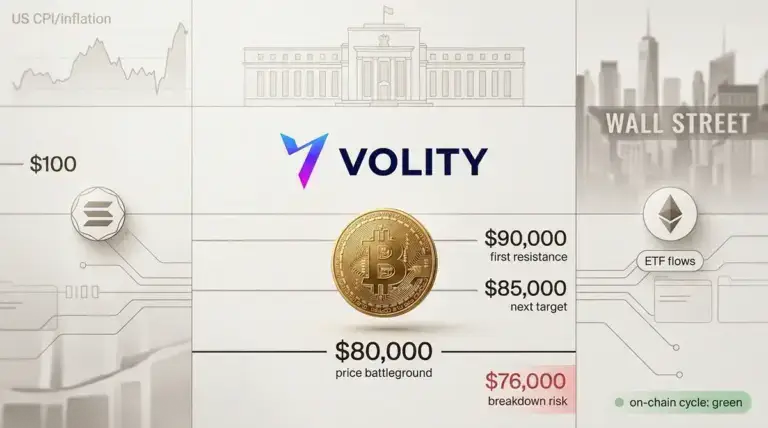
Traders are watching $82,500 as the first meaningful support level. A sustained break below it could draw attention back towards this week’s lows. On the upside, resistance sits near $84,281, followed by $87,151.
Profit-taking remains a problem. Bitcoin holders realised about $1.03 billion of gains in one day, the second-largest daily total this year. That selling suggests many investors still view rallies as exits rather than fresh entries.
Spot exchange-traded fund flows also need to improve. Bitcoin can rise quickly on an easing war risk, but a durable advance usually requires steadier demand from large buyers.
- Bitcoin: $82,000 remains the immediate psychological marker.
- Ethereum: ETH hovered near $2,500 after a weak week.
- Solana: SOL traded close to $110 as altcoin demand stayed thin.
- Bitcoin turnover: About $40.4 billion over 24 hours.
Europe puts stablecoins on a deadline
Europe’s crypto platforms now face a practical test of the Markets in Crypto-Assets regime, known as MiCA. The European Securities and Markets Authority has told national regulators to ensure exchanges stop offering services tied to non-compliant stablecoins.
Platforms have up to three months to bring customer exposure into line. The guidance does not name tokens, although Tether’s USDT remains the largest stablecoin likely to face scrutiny. PayPal USD may also fall within the same regulatory gap.
MiCA requires issuers to meet standards on authorisation, reserves, redemption rights and disclosures. Those rules matter most when markets turn rough and users want to exchange tokens for cash at once.
Customers may not lose access to coins overnight. Exchanges could halt new purchases, remove trading pairs or offer conversion into compliant alternatives. Each platform’s approach will depend on its home regulator and legal structure.
The immediate risk is fragmented liquidity. A stablecoin can remain transferable on-chain while becoming difficult to trade through a regulated European exchange. That difference may unsettle traders who assume a dollar peg guarantees easy access.
Tether’s banking links draw attention
Political pressure is also building in Washington. Senator Richard Blumenthal has sought information from Cantor Fitzgerald about its relationship with Tether, including banking arrangements, sanctions controls and oversight.
The inquiry follows renewed concern about wallets linked to Iran and regional proxy groups. Tether says it has worked with law enforcement and frozen roughly $550 million in Iran-linked assets during 2026.
The dispute reaches beyond one issuer. Stablecoin reserves now sit closer to traditional finance, often in Treasury bills, bank deposits and custody accounts. As a result, reserve managers may face tougher questions about what they can monitor and when they must act.
Quantum preparation moves into code
Far from Friday’s price action, Zcash developers are aiming for January to introduce post-quantum signature opcodes. No final activation date exists, but the work marks a shift from theoretical debate towards network engineering.
Quantum computers could eventually threaten current public-key cryptography. A sufficiently capable machine might derive a private key from an exposed public key, then sign transactions without the owner’s permission.
No such attack appears imminent. Still, moving an established network towards new cryptographic standards could take years. Wallet providers, exchanges, custodians and ordinary holders would all need to update systems and move funds safely.
Bitcoin and Ethereum face versions of the same challenge. Zcash’s work offers a useful early test, particularly because network upgrades must balance security with compatibility and user confidence.
Tokenisation tests old ownership rules
Institutional interest in tokenised assets continues to grow. Robinhood is exploring a tokenised exchange-traded fund with T. Rowe Price, while tokenised Apple shares have appeared on Solana.
The pitch is simple. Blockchain rails can support continuous transfers, faster settlement and programmable ownership records. Yet tokenised shares can carry a less obvious limitation.
A holder may gain price exposure without owning the underlying equity. Voting rights, dividends and corporate actions can depend on the issuer, broker and legal wrapper behind the token. In a failure, those details become rather more important than the blockchain’s speed.
European regulators are asking exactly who owes investors protection if a token issuer, custodian, broker or network fails. Tokenisation may improve market plumbing, but it cannot remove counterparty risk.
What traders are watching
- BTC support: A close below $82,000 would weaken the rebound narrative.
- ETF flows: Renewed inflows could give Bitcoin’s recovery more staying power.
- European stablecoins: Watch delistings, conversion terms and widening spreads.
- Altcoins: ETH near $2,500 and SOL near $110 need stronger broader risk appetite.
- Security upgrades: Post-quantum planning may increasingly distinguish serious networks from speculative projects.
Friday’s market offered a reminder that crypto now answers to several masters. It still reacts sharply to war headlines and shifting risk appetite. Yet regulation, custody arrangements and technical resilience are shaping prices and liquidity with growing force.
Bitcoin’s return above $82,000 calmed nerves. It did not settle the bigger questions facing the market.
Related coverage on Volity
- How to Avoid Crypto Scams: A Beginner Safety Checklist
- How to Choose a Trading Platform: A 10-Point Checklist
- Demo vs Live Trading Account: A 7-Step Checklist Before You Go Live
- How to Size a Trade: Position Sizing and Risk Per Trade for Beginners
- Risk-Reward Ratio Explained: How to Set It and Why It Matters
- ETF vs Index Fund: The Difference and Which to Pick