Investing in financial products involves risk. Losses may exceed the value of your original investment.
Bitcoin price surge is a core topic for traders in 2026. The complete guide follows.
Crypto market surges toward $3.2T as Bitcoin blasts past $95K
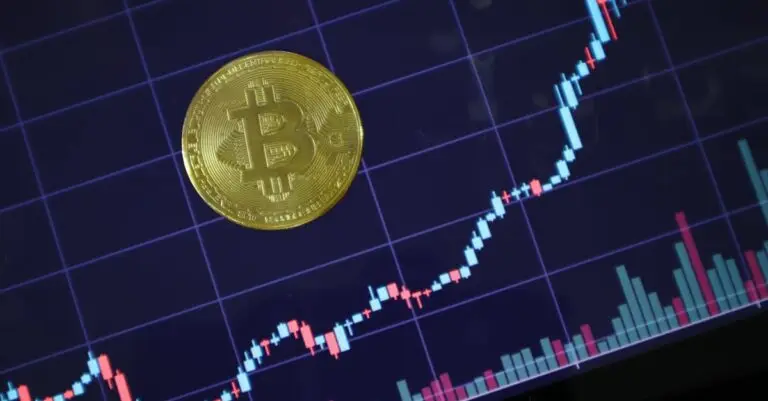
Bitcoin barged back above $95,000 on Tuesday, and the rest of the tape followed like it had been waiting all week. Meanwhile, the total crypto market value rose to about $3.14tn, up 1.52% over 24 hours, as traders leaned back into risk. Ethereum jumped 6-7% to roughly $3,300, while XRP and Dogecoin sprinted early and then cooled, which still counts as healthy in this corner of finance.
Behind the move sat a familiar cocktail. First, inflation prints looked less menacing, therefore easing the “rates higher for longer” itch. Second, investors kept shovelling cash into spot Bitcoin ETFs, which continues to matter more than most chart patterns. However, the rally also carried a whiff of crowding, because flows and leverage can lift prices faster than conviction can.
Bitcoin eyes $100K amid ETF frenzy and macro tailwinds
Spot Bitcoin ETFs took in about $753m of net inflows, which helped yank BTC from roughly $91,788 to as high as $96,495 in the past day. It then steadied near $95,066, up about 2.72% on the session. Therefore, the $100,000 level is back on screens as more than a pub joke and less than a certainty.
Macro also played along. Cooling inflation has given traders room to imagine easier policy later, while Middle East tensions nudged some money toward “hard” assets, digital or otherwise. Yet Bitcoin still trades like a risk asset when equities wobble, so the safe haven talk can turn slippery fast.
At the institutional end, options activity continues to thicken, which suggests hedging appetite rather than pure “number go up” chasing. Meanwhile, corporate treasury buying remains a key narrative, with some desks arguing companies now absorb multiples of new mining supply. However, longer term holder behaviour has thrown up tentative capitulation signals, which often arrive before narrative turns into volatility.
On the corporate headline reel, MicroStrategy saw a director buy shares after a long spell of selling. Elsewhere, Strive pushed for a vote tied to a Bitcoin heavy acquisition play involving Semler Scientific. Therefore, the “BTC on balance sheet” trade keeps spreading, even as sceptics argue it concentrates risk inside equity wrappers.
Ethereum and altcoins rotate back into focus
Ethereum got its own spark as new wallet creation reportedly hit a record 327,000 in a day. That sort of metric can mean real adoption, yet it can also mean speculative churn, so traders usually wait for follow through. However, ETH still faces a technical ceiling near the 200 day EMA around $3,637, and a consolidation back toward $2,600 remains plausible if momentum fades.
Large caps broadly ran with the tape. ETH rose about 6%, BNB added around 3%, and SOL gained roughly 2.14%. Meanwhile, DOGE rallied close to 5.99% and WLFI jumped about 8.67%, though these names can give back a morning’s gains in a single late afternoon candle.
- XRP pressed into a familiar resistance zone after talk of bank friendly tooling and heavy ETF related interest, with $1.5bn cited in inflows. However, traders still flag $2.00 as the line, because a clean break lower points toward about $1.77.
- Polkadot popped after a Robinhood listing catalyst, with charts showing a wedge break and eyes on $4.
- Memecoins stayed hot: PEPE printed a bullish engulfing pattern, WIF reclaimed its 200 day moving average, and DOGE bulls kept floating big upside numbers.
Even so, parts of the alt complex looked less euphoric by the close. Capital rotated back into BTC and ETH, therefore draining some of the froth from smaller names. NFTs, oddly, led pockets of the leaderboard, which is usually a sign the risk thermostat has been nudged higher.
Mining shakeup: Bitdeer hits 71 EH/s, cloud mining booms
In mining, Bitdeer claimed about 71 EH/s of capacity, putting it in sight of sector leaders like Marathon Digital. Meanwhile, the business model keeps shifting from “run rigs yourself” toward infrastructure and hosting, because power bills and hardware cycles have become brutal. Cloud mining platforms again pitched the “no rigs, no bills” promise to retail, although that segment has a long history of disappointment.
Institutional and regulatory fireworks
Regulation stayed noisy across borders. Germany’s second largest bank secured a BaFin approval tied to crypto trading. Meanwhile, Pakistan signed a deal involving the Trump linked World Liberty USD1 stablecoin project, which drew political scrutiny in Washington.
In the US, Elizabeth Warren urged a pause on a bank charter tied to WLFI because of those links, while a Lummis-Wyden bill aimed to shield non custodial developers from money transmitter rules. Elsewhere, Kazakhstan said it had blocked 1,100 unlicensed exchanges. However, dealmakers still pushed ahead, with a Kraken linked SPAC reportedly circling a $250m Nasdaq IPO. On DeFi, Aave “whales” bought a cited $500m dip as governance tensions simmered between a DAO and Labs.
Bitcoin vs gold: the 2026 showdown keeps getting priced
The Bitcoin versus gold argument also sharpened. Some strategists pushed the view that Bitcoin deserves a meaningful hedge role, even pitched as 15% of a portfolio in place of gold. However, 2025 belonged to bullion during crisis bursts, and some banks have floated eye watering gold targets near $4,800-$5,000 on rate cuts and central bank demand.
The BTC to gold ratio sat around 20.47, with low reported 12 month correlation, so the “same trade” story remains unproven. Therefore, the cleaner framing might be behavioural: gold thrives on fear, while Bitcoin thrives on flows.
What traders are watching next
- Bitcoin around the $97,000 zone, because a clean push higher puts $100,000 back in play.
- Ethereum wallet growth versus price action at the $3,637 area, which will test whether demand is real.
- XRP at $2.00, because that level still decides whether the chart is bullish or brittle.
- Event risk from geopolitics and a Supreme Court tariff decision due Jan 14, which could whack risk assets broadly.
For now, crypto is trading like a market that has found its groove again. However, it is also a market that loves to punish late arrivals, therefore discipline matters more than conviction.
For more on this topic see our deep-dives on Bitcoin Options Expiry and Crypto Volatility: Trader Playbook, Bitcoin and Geopolitical Risk: How BTC Reacts to Middle East Tension, and Crypto Regulation and Bitcoin: How Policy Clarity Reshapes the Market.
What our analysts watch: Three readings shape any rally call. Net spot ETF flows (creations minus redemptions) reveal whether the bid is genuinely institutional. Stablecoin market cap growth on USDC and USDT shows the dry powder available to rotate into risk. CME futures basis and perpetual funding rates tell us if the rally is leveraged speculation or cash-driven accumulation. When ETF inflows persist for two weeks, stablecoin supply expands, and basis stays controlled, the rally tends to extend rather than reverse.
Frequently asked questions
What actually causes a Bitcoin price rally?
Sustained Bitcoin rallies require a combination of catalysts rather than a single trigger. Falling real yields lower the opportunity cost of holding non-yielding assets. Spot ETF net inflows convert paper demand into custodied coin demand. Halving cycles compress new supply. Macro de-risking (banking stress, currency devaluation) periodically pushes capital into BTC as a non-sovereign store of value. The U.S. Federal Reserve publishes the rate path and balance sheet data that drive the macro side of this equation.
What does crypto market cap tell us that price alone does not?
Total market cap aggregates the value of every tracked token, so it captures rotation that single-asset price misses. When BTC rises but altcoins lag, the rally is concentrated and structurally fragile. When market cap expands faster than BTC alone, capital is broadening across the asset class, which historically marks a healthier mid-cycle phase. CoinDesk publishes the canonical market cap indices used by most desks.
How do Bitcoin spot ETFs influence price?
Spot ETFs introduce a regulated, balance-sheet-friendly wrapper that lets pension funds, RIAs, and corporate treasuries hold exposure without operational custody. Net inflows force authorised participants to acquire underlying BTC, which is direct demand on spot venues. The U.S. SEC publishes the issuer disclosures used to compile daily flow tables. The mechanism is a structural bid as long as net inflows persist.
How should retail investors size a Bitcoin position during a rally?
Treat any allocation as risk capital, sized so that a 50% drawdown does not threaten essential financial obligations. Most prudent allocations sit at 1% to 5% of liquid net worth for first-time buyers and scale only after surviving a full cycle. Use cost-averaging rather than chasing breakouts, custody long-term holdings on hardware wallets, and document cost basis for tax. The Bank for International Settlements tracks crypto as a share of household wealth in its quarterly reviews.
Related guides
- Bitcoin explained
- Ethereum explained
- Cryptocurrency trading
- Crypto trading platforms
- Best crypto investments
Volity operates a trading platform and also publishes educational and analytical content about trading. The content on this page is for educational purposes only and should not be considered financial advice. Volity may benefit commercially when readers open trading accounts through links on this site.
Our content is produced and reviewed under documented editorial standards; see our comparison and review methodology.