Crypto caught in the CPI crossfire as Bitcoin tests $80,000
October 15, 2026 – Bitcoin and Ether fell sharply after US inflation data revived fears of higher interest rates. Yet the broader crypto industry kept moving towards banks, regulated payments and artificial intelligence.
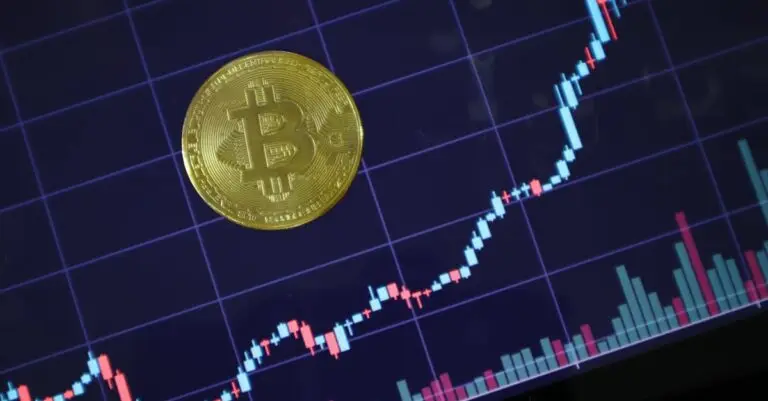
Bitcoin slipped from the mid-$83,000s towards $80,000, while Ether fell about 6% to roughly $2,350. The decline spread across risk assets, with Asian shares and technology stocks also retreating.
Inflation puts leverage under pressure
US consumer prices rose 3.7% year on year in September, beating the 3.6% consensus forecast. Core inflation reached 2.6%, while the monthly index increased 0.6%.
The figures lifted the dollar and reopened the rate-hike debate. As a result, traders cut exposure to assets that depend heavily on easy financial conditions.
Crypto’s immediate problem was leverage. About $942 million in positions were liquidated during the past 24 hours, according to market data.
Long positions accounted for $863.3 million, or 91.6% of the total. Ether saw about $283 million in liquidations, while Bitcoin positions lost roughly $196 million.
Forced selling can turn an ordinary decline into a disorderly one. When prices break support levels, leveraged traders must sell collateral into an already weakening market.
Bitcoin also moved below the estimated $81,500 average entry price for US spot Bitcoin ETF holdings. Those funds recorded net outflows of about $261.5 million.
Levels traders are watching
- $80,000: Bitcoin’s immediate psychological and technical support.
- $81,500: Estimated average entry price for US spot Bitcoin ETF holdings.
- $83,000 to $84,000: Area Bitcoin must recover to ease near-term selling pressure.
- $2,350: Ether’s current test after its sharp post-CPI fall.
Regulation draws crypto closer to finance
Prices may have fallen, but institutional crypto development did not pause. Circle’s USDC is operating under the European Union’s new stablecoin supervisory framework.
Meanwhile, BingX secured an Austrian licence that could support services across 29 European countries. Australia has also proposed exchange rules scheduled to take effect in 2027.
The European contest now extends beyond token listings and trading fees. Banks and licensed platforms want digital euros and stablecoins to handle payments, settlement and cross-border transfers.
Technology is not the main obstacle. Instead, euro stablecoins need liquidity, merchant acceptance and a reason to displace familiar bank payment systems.
Circle brings a large dollar-based network into that contest. However, established banks retain customer relationships, compliance teams and direct access to payment rails.
Kraken parent Payward has signed a deal to acquire a European bank. The move signals a push beyond brokerage revenue towards deposits, payments and regulated balance-sheet businesses.
Standard Chartered has taken a similar route by retaining crypto trading within the bank. The divide between digital-asset firms and conventional finance is becoming harder to spot.
Miners seek an AI-powered second act
Binance Pool is closing, forcing connected Bitcoin miners to move their computing power elsewhere. The closure will not remove that power overnight, but it exposes strained mining economics.
Operators face volatile Bitcoin prices, expensive electricity and relentless demand for newer equipment. At the same time, some are trying to turn data centres into AI infrastructure.
51AIpower is exploring that route without purchasing vast GPU inventories. The model reflects a wider effort to monetise power contracts, land and cooling systems already used for mining.
Still, AI customers expect reliable computing capacity rather than opportunistic access. They also need different networking, cooling and hardware from those used by Bitcoin miners.
Mining sites could become energy-and-compute platforms over time. But that transformation requires capital, contracts and technical skills, not just a spare warehouse.
AI agents find a use for wallets
Industry figures put AI-agent crypto payments at 138 million transactions. The more useful question concerns what those agents actually bought.
The likely answer includes data, software tools, automated services and machine-to-machine access. Small global payments often fit poorly within card networks and bank transfers.
Programmable wallets offer a practical alternative. Software can pay for a service, receive a result and settle instantly without waiting for human approval.
Yet automation introduces a sharp new risk. A compromised key or malicious instruction could spend funds at machine speed.
Tether is also developing an offline speech model for smart glasses and robots. Local models can reduce cloud dependence and keep sensitive information on devices.
That design shifts responsibility towards the hardware owner. The overlap between autonomous software, private wallets and physical machines now looks like product development, not science fiction.
DeFi reaches for Bitcoin collateral
Babylon plans to let Aave users borrow against Bitcoin. If the design attracts liquidity, holders could unlock credit without selling their coins.
However, the trade-off is visible in today’s market action. Greater capital efficiency also creates more liquidation risk during a rapid price decline.
Aurora Intents is connecting Solana wallets with Elara’s Ethereum-based yield products. Wallets increasingly combine swaps, lending and yield tools within a single interface.
That convenience makes risk easier to take. It can also make risk much faster to unwind when collateral loses value.
Security remains the industry’s weak seam
Ledger changed wallet sales rules after a series of thefts. South Korea is preparing tougher security standards after 16 hacks, while US authorities seized 241 scam-related websites.
Those measures underline an awkward truth for the sector. Fraud, custody failures and weak operational controls still limit wider adoption.
StandX is closing its perpetual futures exchange and cancelling a planned token launch. VanEck has also abandoned plans for a staked-Ether ETF.
Elsewhere, regulators approved binary options tied to Coinbase trading volume and Bitcoin mining output. Traders now have more precise ways to express a view.
Precision does not reduce danger by itself. It can concentrate risk in a narrow contract, especially when volatility rises.
Bitcoin’s next move may depend less on the latest protocol launch than on bond yields and Federal Reserve expectations. Until inflation cools and leverage clears, $80,000 remains the market’s most important line.
Related coverage on Volity
- How to Avoid Crypto Scams: A Beginner Safety Checklist
- How to Choose a Trading Platform: A 10-Point Checklist
- Demo vs Live Trading Account: A 7-Step Checklist Before You Go Live
- How to Size a Trade: Position Sizing and Risk Per Trade for Beginners
- Risk-Reward Ratio Explained: How to Set It and Why It Matters
- ETF vs Index Fund: The Difference and Which to Pick