Crypto’s new fault lines: stolen funds, institutional money and a faster financial machine
Monday, September 28, 2026
Crypto starts the week pulled between institutional ambition and an old security problem.
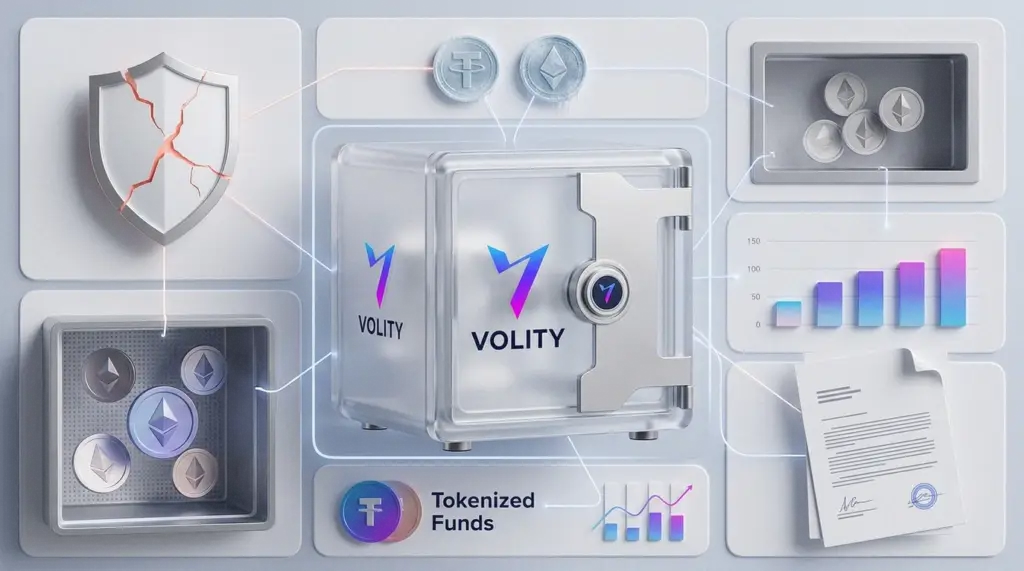
Funds are moving into tokenised products, corporate treasuries and exchange-traded funds. Yet a $387.5 million Bitget breach has revived hard questions about responsibility.
Bitget plans to restore bitcoin withdrawals at 08:00 UTC today. Ether withdrawals should follow on September 29, then USDT on September 30.
Other tokens, fiat withdrawals and peer-to-peer services are scheduled to return from October 2. The phased process gives engineers time to inspect the exchange’s systems.
Bitget tests permissionless finance
The exchange has asked THORChain to block wallets tied to the attack. Bitget argues that identifiable stolen assets should not move freely through decentralised infrastructure.
THORChain’s defenders point to its permissionless design. A network without a conventional operator has no obvious executive able to halt a transaction.
That disagreement reaches beyond one exchange. It asks who controls a decentralised system when criminal proceeds become visible on-chain.
Stablecoin issuers hold a clearer lever. Circle and Tether have frozen roughly $318,000 in USDC and USDT linked to the incident.
Cross-chain protocols work differently. Blocking addresses may require code changes, governance votes or liquidity-provider consent.
Investigators say about 101.5 BTC linked to the breach travelled through THORChain. Other assets moved from TRON through USDT0 and Ethereum before conversion into bitcoin.
About four BTC then entered a Wasabi CoinJoin round. CoinJoin can make a transaction trail harder to follow.
Bitget has offered a recovery bounty worth up to 10% of recovered assets. It proposes 5% for freezing funds and 5% for their return.
For traders, liquidity does not erase an asset’s history. Bridged, mixed or stolen coins can later create compliance and counterparty problems.
Ether becomes a treasury trade
Meanwhile, BitMine has added 17,362 ETH to its treasury. Its reported holdings now exceed six million ether.
Corporate buyers can alter available supply, even when retail demand remains uneven. They also turn token ownership into a balance-sheet decision.
Shareholders inherit exposure to custody, staking returns, liquidity and sharp price swings. A very large position can also become difficult to sell.
Ethereum’s technical ambition is expanding alongside its corporate ownership base. Vitalik Buterin describes a future “cryptographic world computer” built around proofs.
Under that model, users verify compact cryptographic evidence rather than repeat every computation. The approach could cut costs and lift network capacity.
Yet the work does not disappear. It shifts towards proof systems, specialist software and the groups running that infrastructure.
Trust, in other words, moves into code and mathematical assumptions. Investors should still ask who writes, audits and operates those systems.
Tokenised funds approach the exchange floor
Franklin Templeton is bringing a tokenised fund valued near $687 million to Bybit. The listing joins a traditional asset manager with a large crypto venue.
Tokenisation promises quicker settlement and programmable ownership. However, the structure matters more than the blockchain label.
Investors need to examine redemption terms, eligible buyers and custody arrangements. They should also watch whether trading stays close to net asset value.
Citi says 77% of institutions are considering tokenised collateral. That points towards quieter adoption inside banks and asset managers.
Collateral available around the clock could reduce settlement delays. It also requires firm rules on valuation, custody and liquidation.
Rules arrive as markets stay jumpy
The UK opens its crypto licensing window on Wednesday. Firms now face a test of governance, customer protection and financial-crime controls.
Marketing will not substitute for wallet segregation or incident planning. Nor will a licence protect customers without reliable transaction monitoring.
California has taken a narrower step, barring public officials from launching meme coins. The rule cannot stop existing tokens trading or imitators appearing.
Bitcoin remains caught between strong fund flows and defensive market behaviour. Renewed concern about Iran has pushed geopolitical risk back into focus.
Recent figures show $2.39 billion in weekly bitcoin ETF inflows. Separate reports also cited a $5.3 billion increase after a Treasury buyback plan.
Those flows support demand, while geopolitical shocks can drain leverage from risk assets. Bitcoin has struggled near $85,000, where momentum has weakened.
Ether traders are watching corporate accumulation and bullish calls towards $5,000. Such targets remain forecasts, not proof of a coming rally.
Wintermute’s reported short exposure across ETH, BTC and SOL has reached about $126 million. The position could reflect hedging or market-making, rather than a simple bearish wager.
Security remains the price of admission
Elsewhere, a MEXC user reportedly lost $340,000 in an account compromise. Zano restarted its chain at block 3,833,000 after an exploit.
Each event exposes a different weakness: exchange access, user credentials or protocol integrity. Together, they show how quickly risk travels through connected markets.
- Bitget: Bitcoin withdrawals due at 08:00 UTC on September 28.
- BitMine: Treasury reported above 6 million ETH after a 17,362 ETH purchase.
- Bitcoin ETFs: Reported weekly inflows of $2.39 billion.
- Wintermute: Reported ETH, BTC and SOL short exposure near $126 million.
Capital is building crypto’s institutional layer at speed. Still, the industry has not settled when intervention protects users or compromises decentralisation.
The strongest platforms will need more than fast settlement and deep liquidity. They will need systems that keep assets safe when the pressure arrives.
Related coverage on Volity
- How to Avoid Crypto Scams: A Beginner Safety Checklist
- How to Choose a Trading Platform: A 10-Point Checklist
- Demo vs Live Trading Account: A 7-Step Checklist Before You Go Live
- How to Size a Trade: Position Sizing and Risk Per Trade for Beginners
- Risk-Reward Ratio Explained: How to Set It and Why It Matters
- ETF vs Index Fund: The Difference and Which to Pick