Stories are the trade today
Volity traders woke up to a market with no single clean script. Oil is tight but carries downside risk. Artificial intelligence still pulls money into crowded winners. Michael Burry’s disclosed shorts have turned cyclical names into argument pits. Meanwhile, Bitcoin, Tesla and rate-sensitive ETFs keep swinging with the macro weather.
That mix can feel messy. However, it is useful if traders sort it by time frame. Some ideas deserve a one-day trigger. Others belong in a 12-month theme. A few should sit quietly in a long-term portfolio, far from the intraday noise.
Today’s job, therefore, is not to guess perfect fair value. It is to build a disciplined watchlist around live stories, clear catalysts and instruments traders can actually use.
Oil is a theme, not a level
Brent still trades with a geopolitical premium. Forecasts around mid-2026 cluster near $105 to $106 a barrel, before drifting toward the high $70s as supply normalises. Longer-term work, however, still points to oversupply and slower demand pushing crude into a $50 to $70 range later in the decade.
That split matters. The tape looks tight and jumpy. The medium-term thesis looks quietly bearish. Traders do not need to call $60 oil next week. Instead, they need to decide whether fresh data supports fading today’s tightness or respecting it.
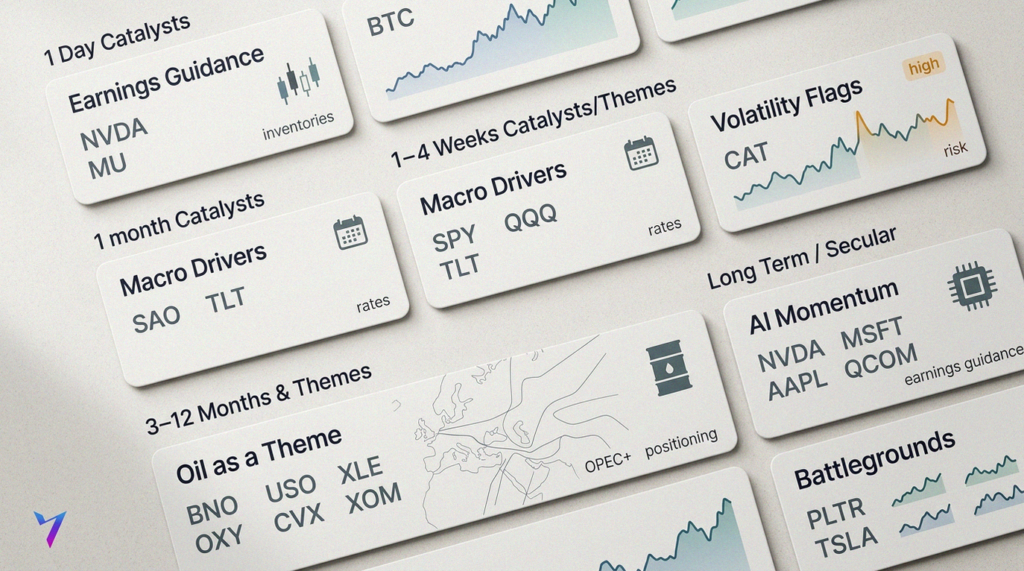
For commodity exposure, watch BNO and USO. For equity beta, focus on XLE, OXY, CVX and XOM. Meanwhile, the real triggers remain familiar: inventory surprises, OPEC+ language, Middle East headlines and any easing in the Strait of Hormuz premium.
In practice, oil is a 12 to 36-month downside-risk theme. It becomes a trade only when the catalyst arrives.
Ai momentum still sets the risk tone
Palantir remains one of the market’s purest AI narrative stocks. Its bulls see a native data platform with government and commercial tailwinds. Its sceptics see a rich valuation and crowded positioning. Both sides have ammunition, which is exactly why traders keep coming back.
PLTR belongs in the momentum bucket, not the comfort-value bucket. The better approach is tactical. Watch contract wins, product news, options flow and failed breakouts. When the stock moves, it usually brings a story with it.
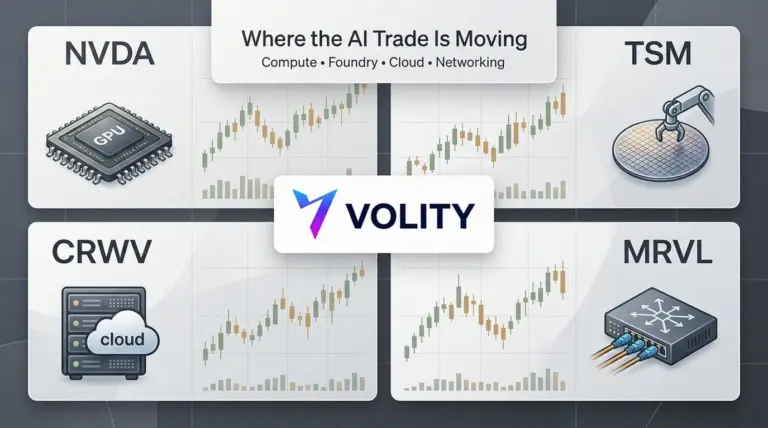
The wider AI complex gives traders cleaner signals. MSFT tracks cloud spending, Copilot adoption and index sentiment. NVDA still drives the mood in chips and AI infrastructure. AAPL moves more slowly, but any serious on-device AI update can change that. QCOM, meanwhile, links mobile chips, RF exposure and the next wave of AI handsets.
For now, this group works best as a risk appetite gauge. If traders buy dips in Nvidia and Microsoft, the market still wants AI exposure. If they sell good news, positioning may be too heavy.
Burry turns micron and caterpillar into battlegrounds
Michael Burry’s disclosed short in MU fits a familiar memory-chip argument. Micron is cyclical. Demand can surge, supply can overbuild, and late buyers can learn the lesson quickly. Yet the other side is not flimsy. High-bandwidth memory and data-centre demand continue to support bullish estimates.
That makes Micron tradable, not simple. Its theme is cyclical risk versus AI hype. Watch DRAM and NAND pricing, peer earnings and guidance language. Also watch how the stock reacts to positive news. Weak action after good data often says more than the headline.
CAT carries a different version of the same debate. Caterpillar sits between traditional industrial cycles and the AI infrastructure boom. Bulls see roads, power, data-centre construction and global machinery demand. Bears see a late-cycle industrial prized as if the cycle cannot turn.
Treat Caterpillar as a macro battleground. ISM readings, construction data and hyperscaler capex commentary all matter. The stock is not a one-way short. It is a place where old-economy bulls and macro bears meet in public.
Bitcoin and rates keep the macro fuse lit
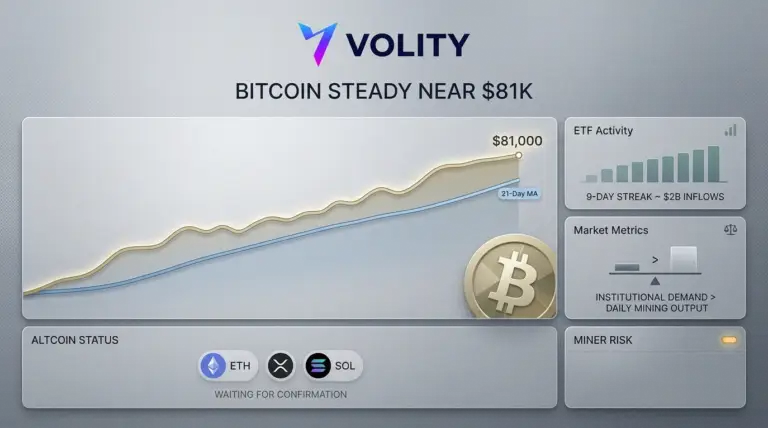
Bitcoin has already suffered a drawdown of more than 30 percent from recent highs. That does not automatically end a bull market. However, it does force traders to watch behaviour rather than distant targets.
The setup is straightforward. Failed rallies keep the correction alive. A decisive reclaim of prior support improves the tone. Meanwhile, ETF flows, real yields and regulatory headlines can all shift the mood quickly.
The June labour report adds another layer. A headline payroll miss, plus visible scepticism from well-known investors, keeps Federal Reserve expectations unstable. SPY, QQQ, DIA and TLT remain macro trading vehicles, not just passive holdings.
Wage data and revisions matter most now. A soft labour read with sticky wages would confuse the rates trade. A broad cooling would help bonds and long-duration equities. However, a surprise rebound could pressure both.
Single-name stories need their own lane
TSLA remains a high-beta narrative stock. Autonomy, robotaxis and energy storage still compete with worries about margins, competition and product breadth. For traders, that means deliveries, price changes and FSD events carry extra force. Weakness can invite short-bias setups, but squeezes remain part of the contract.
STZ offers a quieter test. Constellation Brands links summer demand, beer volumes and the market’s appetite for steadier consumer cash flow. After an earnings beat, its relative performance versus broader consumer names can show whether investors prefer durability or growth.
CRWV belongs firmly in the technical idea bucket. CoreWeave may attract short interest where liquidity, borrow and volume allow. Traders should focus on breakdowns, failed retests and position size. Thin liquidity can turn a smart idea into a bad fill.
By the numbers
- $105 to $106: recent Brent forecast range around mid-2026.
- $50 to $70: longer-term crude range suggested by oversupply scenarios.
- 30 percent plus: Bitcoin’s drawdown from recent highs.
- 12 to 36 months: useful horizon for the oil downside theme.
- 5 main buckets: AI, cyclicals, macro, oil and single-name narratives.
Long-term compounders are not day trades
Some names deserve a different shelf. AVGO, AMZN, LRCX, ADBE, BLK, AXTI and BE may fit long-term growth or niche leadership portfolios. However, that does not make them useful scalps every morning.
The distinction protects traders from muddled thinking. A compounder can be a fine allocation and a poor intraday setup. Meanwhile, a volatile trading stock can be a dreadful long-term holding. Mixing those horizons usually creates bad exits.
Key takeaways
- AI momentum: Watch PLTR, NVDA, MSFT, AAPL and QCOM for risk appetite.
- Burry shorts: Treat MU and CAT as volatility flags, not automatic copy trades.
- Macro risk: Use BTC/USD, SPY, QQQ, DIA and TLT around data shocks.
- Oil theme: Track BNO, USO, XLE, OXY, CVX and XOM.
- Single names: Keep TSLA, STZ and CRWV in the tactical lane.
The cleaner slate is now visible. Trade AI for momentum, Micron and Caterpillar for debate, Bitcoin and ETFs for macro tone, oil for a medium-term downside theme, and Tesla-style names for narrative speed. Everything else needs a separate time horizon.
Related coverage on Volity
- What Is a P/E Ratio and How to Use It
- Fundamental Analysis in Stock Trading: A Working Definition
- Growth Investing vs Value Investing: Which Style Fits You?
- Fractional Shares Explained: How to Start Investing With $50
- How to Start Stock Trading: A 2026 Beginner Guide
- Dividend Investing for Beginners: How to Start