An inverse fair value gap (IFVG) is a fair value gap that price has traded through and flipped. A bullish gap that fails and closes below becomes resistance; a bearish gap that fails and closes above becomes support. The flip confirms momentum in the new direction and gives a clean entry zone.
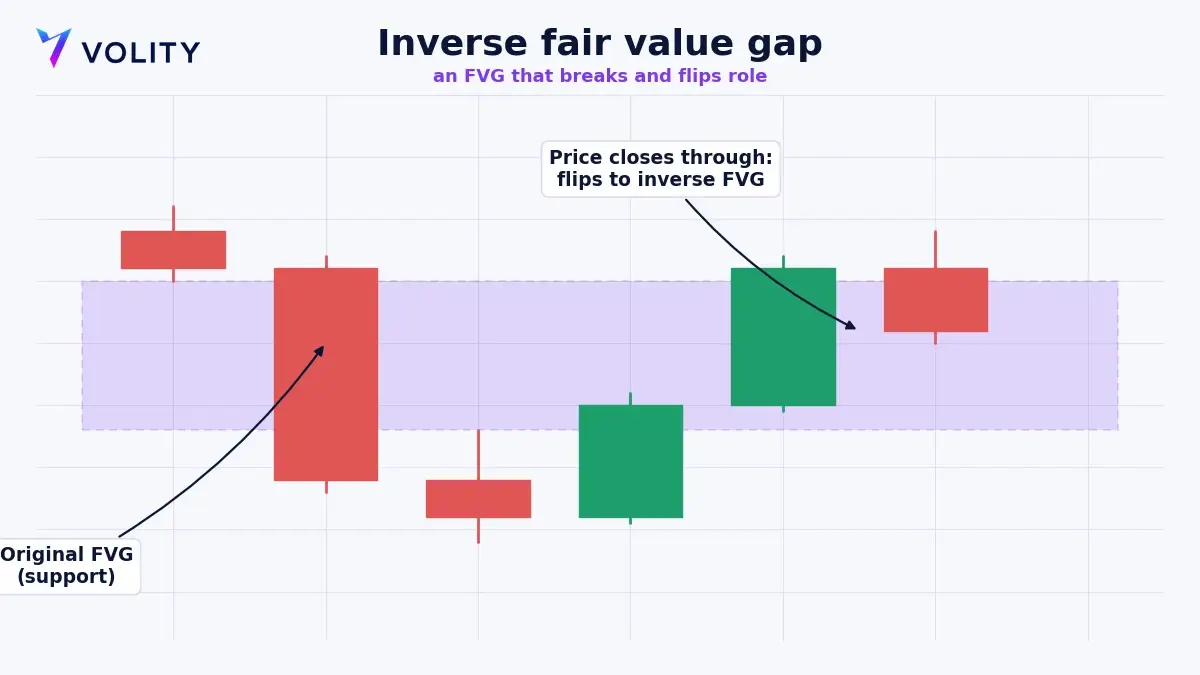
What is an inverse fair value gap?
To understand the inverse version, start with the original. A fair value gap is a three-candle imbalance where a strong move leaves a gap between the first candle’s wick and the third candle’s wick, a zone price skipped over too quickly to trade fairly. Markets tend to return to fill that gap, which is why an FVG works as support or resistance.
An inverse fair value gap is what happens when that expectation fails. If a bullish fair value gap, which should hold as support, is broken by a candle that closes clean below it, the gap does not just disappear. It inverts. The zone that was support now acts as resistance, and traders label it an inverse fair value gap. The failure itself is the signal.
The base pattern comes straight out of the smart money concepts playbook, where a fast move that leaves a price gap marks unfinished business. The inverse is the advanced read that turns a failed gap into a fresh trade.
How is an IFVG different from a normal fair value gap?
| Feature | Fair value gap (FVG) | Inverse fair value gap (IFVG) |
| Formed by | A three-candle imbalance from a strong move | An FVG that price closes through |
| Acts as | Support or resistance in the trend direction | Support or resistance in the opposite direction |
| Signals | A likely retracement and continuation | A failed gap and a shift the other way |
| Bullish gap outcome | Holds as support, price bounces | Fails, closes below, becomes resistance |
The key mental shift is that an FVG is a continuation tool within a trend, while an IFVG is a confirmation tool for a change in direction. When a gap that “should” have held gives way, the market is telling you the balance of orders has flipped.
How does a fair value gap flip into an inverse fair value gap?
The flip is mechanical, which is what makes it tradeable.
- A fair value gap forms during a strong, one-sided move, the kind of imbalance that marks a zone the market expects to defend.
- Price returns to the gap, but instead of respecting it, a candle closes decisively through it.
- The gap is now violated. Its boundaries stay on the chart, but their role reverses.
- When price trades back to the old gap from the new side, it often rejects, confirming the inversion.
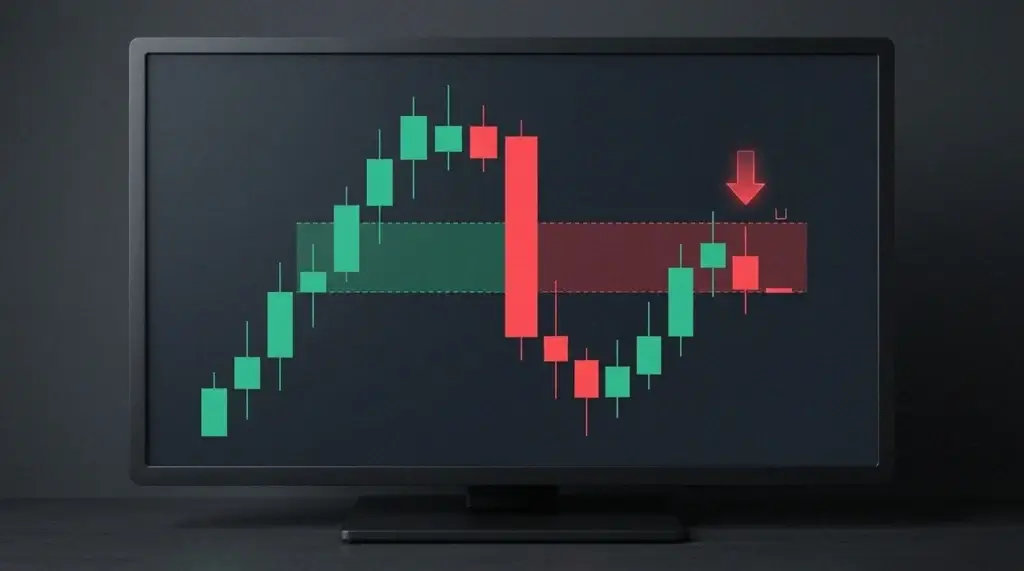
The clean close is everything. A wick through the gap that snaps back is not an inversion; it is more likely a liquidity grab. Wait for the candle body to close through before you treat the gap as flipped.
How do you trade an inverse fair value gap?
Trading an IFVG is a mechanical piece of technical analysis. You wait for the gap to fail, mark the flipped zone, and trade the retest rather than the break.
- Identify a fair value gap that has clearly failed, with a candle body closing through it.
- Mark the gap boundaries; they are now your inverse fair value gap zone.
- Wait for price to retrace back to the zone from the new direction.
- Enter on a rejection inside the zone, with the stop just beyond the far side of the old gap.
- Target the next structural level or an opposing pool of liquidity, and manage the trade as momentum carries.
Because the IFVG marks a specific price band, the stop is naturally tight, which favours reward-to-risk. The setup is strongest when the violation also produces a break of structure, because two independent signals agree.
When is the inverse fair value gap most reliable?
An IFVG is not a standalone magic level. It earns its reliability from context, and a few conditions separate the strong setups from the weak ones.
- It lines up with a shift in market structure, so the failed gap confirms a reversal that structure has already hinted at.
- The candle that breaks the gap shows strong displacement; the wider and more decisive that move, the more convincing the inversion.
- It sits at a higher-timeframe level, such as a daily swing or a prior order block, rather than floating in the middle of a range.
- There is clean liquidity above or below to aim at, such as an untouched pool of stops, so the trade has somewhere to go.
Read together rather than in isolation, imbalance, structure, and liquidity are what turn an inverse fair value gap from a line on the chart into a plan.
What are the common inverse fair value gap mistakes?
- Calling a wick an inversion. Only a body close through the gap flips it, and a wick through is often a grab that leaves the original gap intact.
- Trading it in isolation. An IFVG with no structural break and no liquidity target is a weak signal, so wait for the context to line up.
- Front-running the retest. The trade is the reaction when price returns to the flipped zone, not the moment of violation itself.
- Ignoring the higher-timeframe trend. An IFVG that fights a powerful daily trend faces stiff odds.
How do you set targets on an inverse fair value gap trade?
Getting the entry right is only half the trade. An inverse fair value gap gives a clean point to enter and a clean point to be wrong, but you still need a plan for where price is trying to go.
- Find the nearest opposing pool of liquidity. After a bearish IFVG, the obvious target is the sell-side liquidity resting below recent lows; after a bullish IFVG, aim for buy-side liquidity above the highs.
- Mark the next structural level. A prior swing, an untested order block, or a higher-timeframe level gives a logical place to take profit or trim.
- Consider partials. Some traders bank part of the position at the first pool and let the rest run toward a further target, moving the stop to protect the trade.
- Let structure trail the move. As price makes new breaks of structure in your direction, the stop can follow behind each new swing rather than sitting at a fixed distance.
The reason the inverse fair value gap works so well for planning is that the setup already tells you the direction and the invalidation. Adding a liquidity-based target completes the picture, so the trade has an entry, a stop, and an objective before you commit. That structure is what keeps an IFVG trade from turning into an open-ended hope.
Putting the inverse fair value gap to work on Volity
Spotting an inverse fair value gap depends on reading candle closes precisely and marking zones you can revisit. Volity gives you CFD trading across forex, the most heavily traded market in the world, plus indices, commodities, and crypto from one account, with charts on the Volity platform that let you shade a gap, watch it fail, and flip your annotation to the new side. You can open an account for nothing, practise the read on a demo, and start trading from $1 once the setup makes sense. Because the IFVG stop sits on a defined band, a fair spread protects the trade, so confirm the cost for your instrument on the charges and fees page first.
Leverage cuts both ways, and a failed inversion can move against you as fast as a clean one runs. Size each trade to a stop you can afford and let negative balance protection backstop the rest. Volity operates under CySEC licence 186/12 through UBK Markets, and every position runs on your own capital and leverage rather than a funded allowance.
Inverse fair value gap FAQ
Is an inverse fair value gap bullish or bearish?
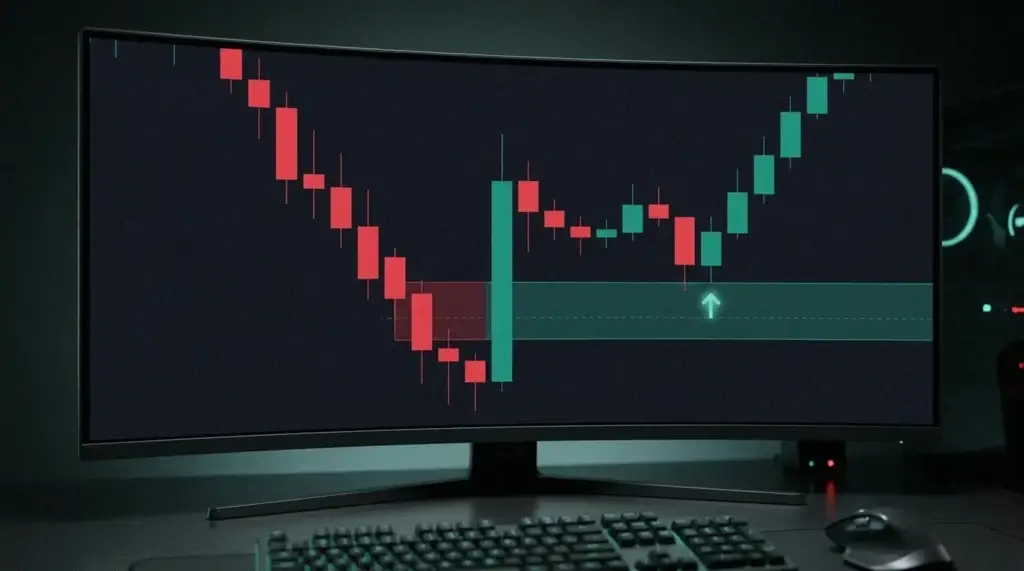
It can be either. When a bullish fair value gap fails and price closes below it, the inverse fair value gap acts as resistance and the read is bearish. When a bearish gap fails and price closes above it, the IFVG acts as support and the read is bullish. The direction of the violation sets the bias.
How is an IFVG different from a breaker block?
Both mark a failed level that flips role, but they are built differently. A breaker block is based on a failed order block, drawn from candle bodies at a swing that gets violated. An inverse fair value gap is based on a failed fair value gap, drawn from a three-candle imbalance that price closes through. They often appear near each other and can be used together as confluence.
Does an inverse fair value gap need a candle close?
Yes. A fair value gap only becomes an inverse fair value gap once a candle body closes through it. A wick that pierces the gap and pulls back does not flip it; that is closer to a liquidity grab, after which the original gap can still hold. Waiting for the close is what separates a real inversion from a fake-out.
What timeframe is best for the inverse fair value gap?
The 15-minute, 1-hour, and 4-hour charts are popular, because they balance signal quality with enough setups to trade. A common approach is to define structure and the failed gap on a higher timeframe, then refine the entry on a lower one. Very fast timeframes generate more inverse gaps but a higher share of failures.