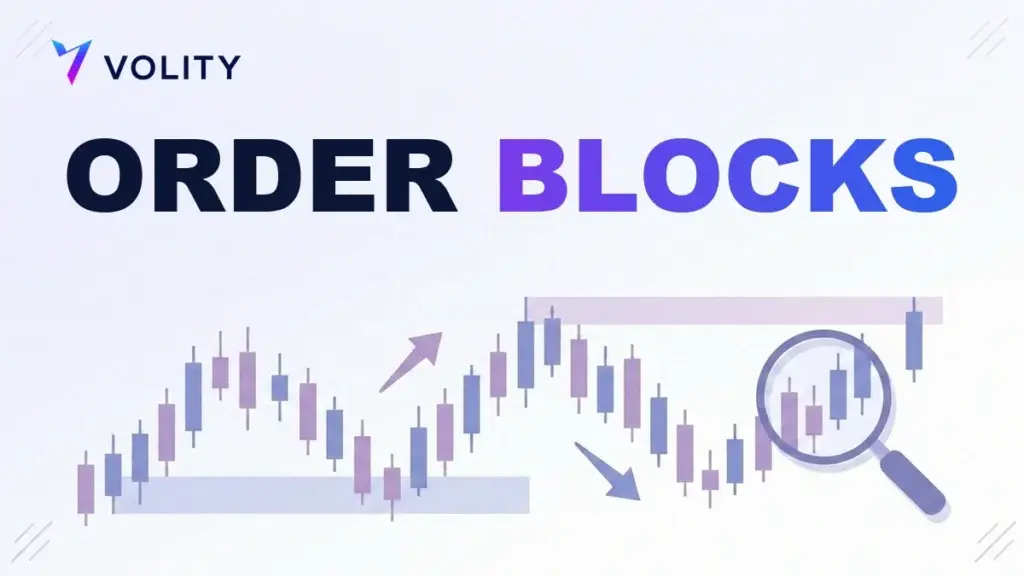
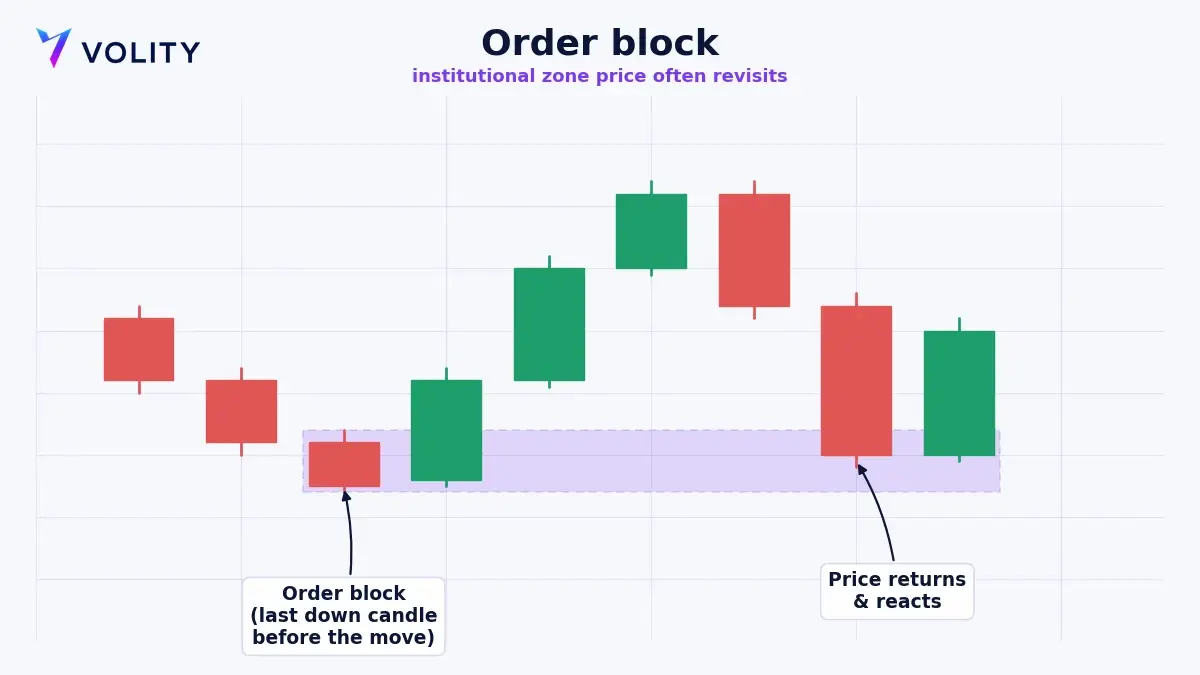
An order block is the last opposing candle before a strong, structure-breaking move: the final down candle before a sharp rally, or the final up candle before a sharp sell-off. Traders read it as the footprint of the institutional orders that kicked the move off, then wait for price to return to that zone and react. That is what turns it into one of the most-watched entry areas in smart money trading.
What is an order block in trading?
The question “what is an order block in trading” has a precise answer: it is the origin candle of a powerful move. When a large operator wants to buy a big position, it cannot fill the whole thing at one price without pushing the market away from itself, so it works the last stretch of selling before the move, absorbs the available supply through the order flow, then drives price higher. The candle, or the small cluster of candles, where that absorption happened is the order block. Because the institution may not have finished filling its order, price often comes back to that zone later and offers a second entry in the direction of the original move. That return-and-react behaviour is the whole basis of order block trading.
One clarification for anyone who arrived searching for block order trading: a block order is a single very large trade negotiated away from the public order book, while an order block is a candlestick zone on a chart. The words look alike, but they describe two different things: one is a transaction, the other is a level.
How does an order block form?
An order block forms where big money is positioned against the crowd. Picture price grinding lower into a support area. Retail sellers pile in and expect the fall to continue, while institutions quietly absorb those sell orders. Once enough supply is soaked up, price reverses hard and breaks the previous structure to the upside. That last down candle before the reversal is where the buying was concentrated, so it becomes the bullish order block. The mirror case, the last up candle before a decisive drop, becomes the bearish order block. A valid order block almost always produces a break of market structure and often leaves a fair value gap behind it, and both of those are signs that real imbalance drove the move.
What do bullish and bearish order blocks look like?
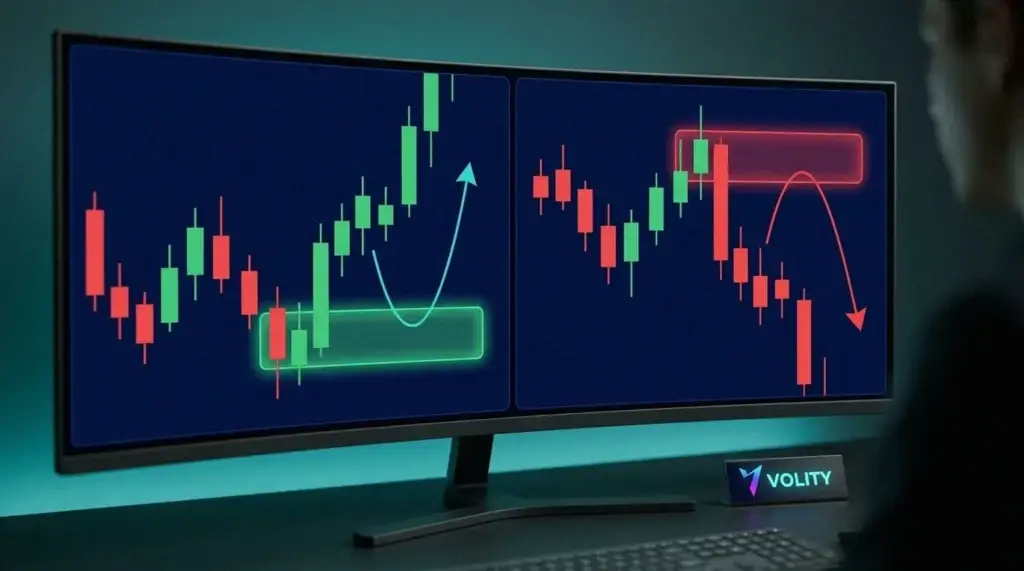
- A bullish order block is the last down candle before an up-move that breaks structure. It sits below the current price and tends to act as support when price revisits it, so you look to buy from it.
- A bearish order block is the last up candle before a down-move that breaks structure. It sits above the current price and tends to act as resistance on a revisit, so you look to sell from it.
How do you identify a valid order block?
Not every candle before a move qualifies. The strong order block examples share the same features, so treat them as a checklist.
- It is the last opposing candle before the impulsive move, not just any nearby candle.
- It causes a break of structure that takes out the previous swing point.
- It leaves imbalance behind, usually a fair value gap in the same direction.
- It is unmitigated, which means price has not already returned and used it up.
- It lines up with the higher-timeframe trend, which raises the odds of a clean reaction.
The more of these boxes a zone ticks, the more weight it carries. An order block that breaks structure, leaves a gap and points the same way as the trend is a far better prospect than an isolated candle stuck in the middle of a range.
How do you trade an order block?
Order block trading waits for the return rather than the first move. The routine below is written for a bullish order block, so flip it for a bearish one.
- Set your bias from the higher-timeframe trend so you trade blocks in its direction.
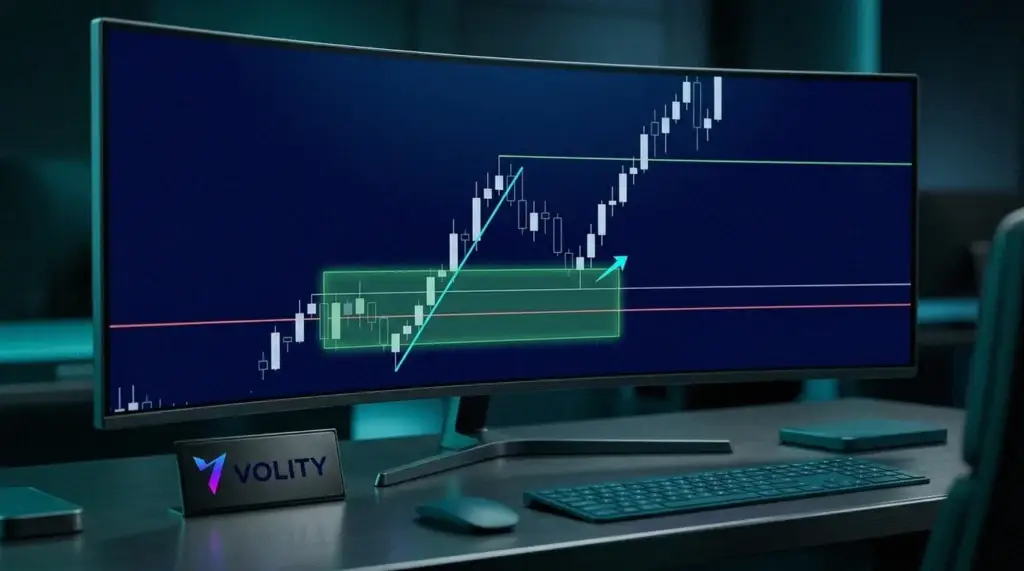
- Mark the order block using the body, or the body-to-wick, of that last opposing candle.
- Wait for price to trade back into the zone instead of chasing the breakout.
- Look for confirmation inside the zone, such as a rejection wick or a lower-timeframe shift back up.
- Enter on that confirmation and set a stop just beyond the far side of the block.
- Target the next liquidity pool or opposing order block, and trail the stop as new structure builds.
Order block vs supply and demand vs fair value gap
| Concept | Definition | Emphasis |
| Order block | Last opposing candle before a structure break | The specific origin candle of the move |
| Supply/demand zone | A broader area where price previously turned | The wider region, less precise |
| Fair value gap | An intrabar imbalance across three candles | The inefficiency left by the move itself |
These three ideas work together. An order block is really a tightly defined supply or demand zone, and the strongest setups tend to show up where an order block and a fair value gap overlap.
How are order blocks used in forex and ICT?
An order block in forex works especially well because currency markets are among the deepest and most liquid anywhere, with daily turnover measured in the trillions and pricing driven by the same dealing banks the concept is built around. Their market structure and liquidity tend to give clean, repeatable reactions at these zones. The order block ICT reading, popularised through Inner Circle Trader material, adds stricter rules: an ICT order block usually has to sweep liquidity first and pair with a fair value gap and a market structure shift before it counts. Whether you follow the strict ICT order block definition or a looser one, the logic holds. You mark where large orders were likely placed, then wait for price to come back to them. The same reading works on indices, commodities and crypto, though forex tends to give the cleanest examples.
What are the risks, and where can you trade order blocks?
Order blocks fail like any other level. Price can slice straight through a zone, and a block that looked perfect in hindsight can be hard to trust in real time. Always wait for a reaction, place a real stop, and never widen it just to stay in a losing trade. These setups are usually traded with leverage through contracts for difference, which magnify losses as much as gains. That is why regulators such as the FCA and ESMA restrict how leveraged products are sold to retail traders, so size every position from its stop distance. On Volity you can trade order blocks across forex, indices, crypto and commodities on Volity MT, with spreads from 0.6 pips, 99.6% of orders filled in under a second, and leverage up to 1:500 on selected forex pairs, 1:100 on commodities and 1:50 on crypto, with execution regulated by CySEC through UBK Markets (licence 186/12). Check the published charges and fees and rehearse on a free demo before you trade live.
Related patterns
Frequently asked questions about order blocks
What is an order block in simple terms?
An order block is the last candle going one way just before price turns and moves strongly the other way. Traders treat that candle as the spot where big institutional orders were filled, and they watch for price to return there so they can enter in the direction of the strong move.
What is the difference between an order block and a block order?
They sound alike but are unrelated. A block order in block order trading is one very large trade, often arranged privately to avoid moving the market. An order block is a candlestick zone on a chart that marks where a big move began. One is a transaction, the other is a technical level.
How reliable are order blocks?
Reliability depends on quality. An unmitigated order block that broke structure, left a fair value gap and sits with the trend is far more dependable than an isolated candle. Even then it is a probability rather than a certainty, so confirmation and a stop-loss matter on every trade.
What timeframe is best for order blocks?
Higher timeframes such as the 1-hour, 4-hour and daily produce fewer but more respected order blocks, which suits swing traders. Intraday traders drop to the 5-minute and 15-minute for entries. A common method is to mark the block on a higher timeframe and refine the entry on a lower one.