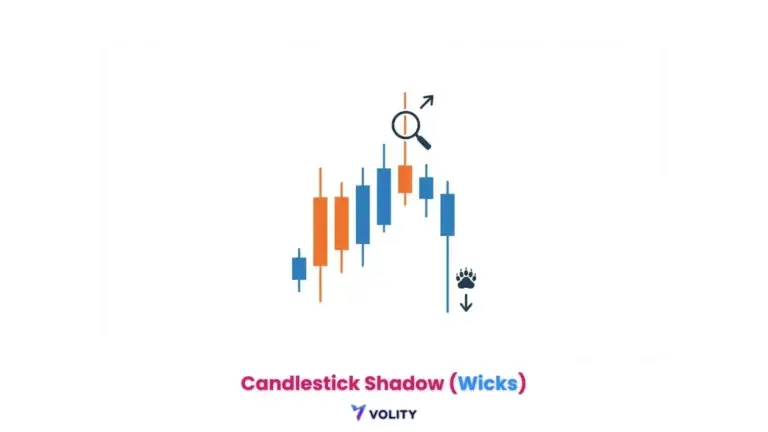
A weaker single-bar cousin worth knowing is the inverted hammer, whose long upper wick at a low often needs a stronger candle to confirm it.
Trading technical indicators involves leverage risk and signal limitations. Engulfing candlestick patterns do not guarantee future price movements and require additional confirmation through volume and timeframe analysis. Past performance is not indicative of future results. Capital at risk.
Engulfing candlestick patterns are two-candle formations signaling a potential trend reversal. Research shows a ~65-70% success rate when formed at key structural levels on H4 timeframes. Volume confirmation further enhances signal reliability for identifying market inflection points where momentum shifts from one side to the other.
Engulfing candlestick patterns represent a decisive takeover of market momentum by either buyers or sellers. This formation identifies potential trend reversals by visualizing how a larger subsequent candle completely overwhelms the preceding price action.
Technical analysis in 2026 emphasizes the use of price action signals that filter out algorithmic noise. The engulfing pattern remains a cornerstone for retail and institutional traders seeking to identify high-probability reversal zones.
While understanding Engulfing Candlestick Pattern is important, applying that knowledge is where the real growth happens. Create Your Free Forex Trading Account to practice with a free demo account and put your strategy to the test.
What is an engulfing candlestick pattern?
An engulfing candlestick pattern is a two-candle formation that signals a definitive shift in market control from one side to the other.
The visual anatomy of an engulfing pattern consists of a small first candle followed by a much larger “engulfing” second candle. The critical distinction involves the real body, the area between open and close prices, rather than the wicks (the thin lines extending above and below). A “perfect” engulfing formation covers 100% of the previous candle’s range, though technically valid engulfings need only enclose the real body of the first candle. The momentum expansion visualized by this pattern reveals how aggressive trading overwhelms the prior period’s indecision. When the first candle closes with minimal trading range (a doji, spinning top, or small body) and the second candle opens beyond that small body and closes beyond the opposite extreme, it indicates a surge in institutional participation flooding into the market.
The Federal Reserve Bank of St. Louis working paper Technical Analysis in the Foreign Exchange Market records that candlestick patterns originated in Japan centuries ago and remain valid today because they visualize the psychological shift between buyer and seller control. The how to read candlesticks guide demonstrates how to interpret the open, close, high, and low to identify engulfing formations in real-time trading.
Ready to Elevate Your Trading?
You have the information. Now, get the platform. Join thousands of successful traders who use Volity for its powerful tools, fast execution, and dedicated support.
Create Your Account in Under 3 MinutesBullish vs. Bearish Engulfing: Identifying the Reversal Signal
Bullish and bearish engulfing patterns identify potential trend reversals at opposite ends of a market cycle.
Bullish engulfing patterns occur at the bottom of a downtrend where a red (or dark) small candle precedes a large green (or light) candle that completely encloses it. This formation signals that sellers exhausted their pressure, buyers attacked aggressively, and the market is transitioning from bearish to bullish momentum. Conversely, bearish engulfing formations occur at the top of an uptrend: a green candle precedes a large red candle that envelops it entirely, revealing that buyers lost control and sellers initiated a counter-offensive. The market psychology shift from exhaustion to aggressive counter-attacks explains why engulfing patterns represent such powerful reversal signals, they visualize the exact moment when institutional money changes sides.
Understanding the contextual placement of engulfing patterns is essential: a bullish engulfing in the middle of an uptrend lacks the same reversal significance as one forming at major support levels. The trend reversal signals in Forex guide documents how engulfing patterns combine with support/resistance for maximum effectiveness, and the optimal timeframes for technical patterns resource explains timeframe selection for filtering out false signals.
How reliable is the engulfing pattern in 2026 markets?
Engulfing candlestick pattern reliability in 2026 depends significantly on timeframe selection and institutional liquidity presence.
Statistical analysis reveals that engulfing patterns achieve approximately 65-70% success rates when formed at major horizontal support and resistance levels. Timeframe selection dramatically impacts this success rate: the H4 (4-hour) and D1 (daily) timeframes filter out approximately 40% more market noise compared to M15 (15-minute) charts, where intraday algorithmic noise triggers false engulfing patterns. The two-candle structure inherently requires confirmation, meaning the signal lags the initial momentum shift, this delay reduces whipsaws but sacrifices entry timing compared to faster-moving indicators. Volume confirmation becomes a critical filter: a surge in trading activity that validates the second candle strengthens the signal.
The BIS Triennial Central Bank Survey 2025 documents that institutional liquidity concentration determines signal quality. When major banks participate in the reversal move, engulfing patterns transition from technical observations to structural market events. Conversely, thin liquidity environments see engulfing patterns form and immediately reverse, trapping traders who relied on the signal without confirming institutional participation.
How to trade the engulfing candlestick pattern effectively?
Trading an engulfing candlestick pattern effectively requires aligning the signal with higher-timeframe structural anchors.
Entry strategies vary by trader preference: market orders executed at the exact close of the engulfing candle provide immediate entry but risk slippage in volatile assets. Limit orders placed at 50% retracement of the engulfing candle’s range offer better execution but risk missing the move entirely if price never retraces. Stop-loss placement must extend beyond the extreme high of a bearish engulfing or the extreme low of a bullish engulfing, this protection level ensures capital preservation if the reversal fails as quickly as it initiated. Take-profit targets align with Fibonacci extension levels (1.618, 2.618) or mechanical 2:1 risk-to-reward ratios where the profit target is twice the stop-loss distance.
A real trading example from 2026 demonstrates this framework: a trader identified a bearish engulfing pattern forming at 1.1050 resistance on the EUR/USD daily timeframe. Entry occurred at the close of the engulfing candle, stop-loss placed 20 pips above the pattern’s high, and profit target set at 1.0930 support, a 120-pip decline. Past performance is not indicative of future results. This trade illustrates how structural anchors (resistance level + engulfing formation) combine to trigger high-probability reversals. The Forex risk management strategies guide documents the complete position management framework that professionals use alongside engulfing entries.
Engulfing vs. Harami: Which price action signal is stronger?
The engulfing pattern identifies a surge in dominance, whereas the Harami pattern reveals a contraction and potential indecision.
Range expansion characterizes the engulfing formation: the second candle dramatically exceeds the first, indicating an aggressive momentum shift. Range contraction defines the Harami pattern: a small second candle forms entirely within the first candle’s range, suggesting that aggressive momentum has stalled and indecision is building. Both patterns indicate potential reversals, but they reveal different market conditions. Engulfing signals are generally considered more aggressive and reliable because they show immediate evidence of directional conviction, while Harami patterns represent a pause that may precede either continuation or reversal. Contextual differences determine which pattern to prefer: if you seek to catch major reversals early, engulfing patterns offer superior entry timing. If you prefer waiting for confirmed indecision before entering counter-trend trades, Harami patterns combined with oscillators like RSI provide additional confirmation layers.
The Doji wick range and gap validation guide explains how different candlestick formations signal specific psychological states, allowing traders to construct coherent price action strategies.
Turn Knowledge into Profit
You have done the reading, now it is time to act. The best way to learn is by doing. Open a free, no-risk demo account and practice your strategy with virtual funds today.
Open a Free Demo AccountAdvanced Filters: Why do engulfing patterns fail?
Engulfing patterns often fail when they form within a low-volume consolidation range or ignore broader regulatory requirements.
Range noise represents the primary failure mechanism: false “engulfments” form within tight consolidation periods where price moves are mechanically constrained and lack trend context. A bearish engulfing pattern that forms after price has simply oscillated sideways for days lacks the same predictive power as one forming after a 300-pip directional advance. Volume requirements separate genuine reversals from algorithmic false signals, a low-volume engulfing where the second candle closes on minimal activity suggests that institutional participation never materialized. FCA Consumer Duty requirements, which apply across UK-regulated firms, ensure that traders account for signal limitations and understand platform-specific risk disclosures. This regulatory framework acknowledges that candlestick patterns are probabilistic, not deterministic, and traders must maintain appropriate risk management regardless of pattern type.
The FCA Consumer Duty establishes that firms must provide suitable tools and warnings about technical indicator limitations. Professional traders filter engulfing signals by requiring: 1) formation at major support/resistance, 2) a volume surge on the second candle, and 3) alignment with higher-timeframe structure. These filters reduce failure rates from approximately 35% to under 20%.
Key Takeaways
- Engulfing candlestick patterns identify potential trend reversals when a larger second candle’s body fully encloses the first.
- Bullish engulfing formations signal uptrend potential at the bottom of a decline, while bearish patterns mark potential tops.
- Engulfing pattern success rates reach ~65-70% when aligned with key horizontal support and resistance levels.
- Timeframe selection is critical, with H4 and Daily charts providing 40% higher reliability than lower-period noise.
- Volume confirmation is a non-negotiable filter, as a surge in trading activity validates the momentum shift.
- Stop-loss orders must be placed beyond the engulfing candle’s extreme to protect capital against failed reversals.
Frequently Asked Questions
This article contains references to engulfing candlestick patterns, technical analysis, and Volity, a regulated CFD trading platform. This content is produced for educational purposes only and does not constitute financial advice or a recommendation to buy or sell any financial instrument. Always verify current regulatory status and platform details before using any trading service. Some links in this article may be affiliate links.
What our analysts watch: Three filters convert the textbook engulfing pattern into a tradable edge. Structural location (the pattern earns weight only at a level the higher timeframe respects: a prior swing high or low, an unfilled volume node, or a moving-average that has acted as support or resistance in the recent past). Volume on the engulfing candle (the strongest setups print volume at least 1.5 times the 20-bar average, confirming the reversal is flow-driven rather than thin-book drift). Body-to-wick ratio on the engulfing candle (a clean body with minimal wick on the closing side suggests directional conviction; an engulfing candle with a long wick rejecting the close direction is a weaker signal even if the body technically engulfs the prior candle). When all three line up, the pattern is investible; when any deteriorate, the signal is downgraded to a watch-only candidate.
Volity operates a trading platform and also publishes educational and analytical content about trading. The content on this page is for educational purposes only and should not be considered financial advice. Volity may benefit commercially when readers open trading accounts through links on this site.
Our content is produced and reviewed under documented editorial standards; see our comparison and review methodology.