Crypto’s uneasy Tuesday: inflation, outflows and a wallet-key warning
November 10, 2026. Crypto opened Tuesday in a defensive mood, with bitcoin hovering near the mid-$74,000s. Investors await US inflation data, while fund withdrawals continue to drain market confidence.
Meanwhile, Binance has warned iPhone users about a reported iOS vulnerability affecting locally stored wallet credentials. The warning shifted attention from price charts to the less glamorous business of protecting keys.
Bitcoin faces an inflation test
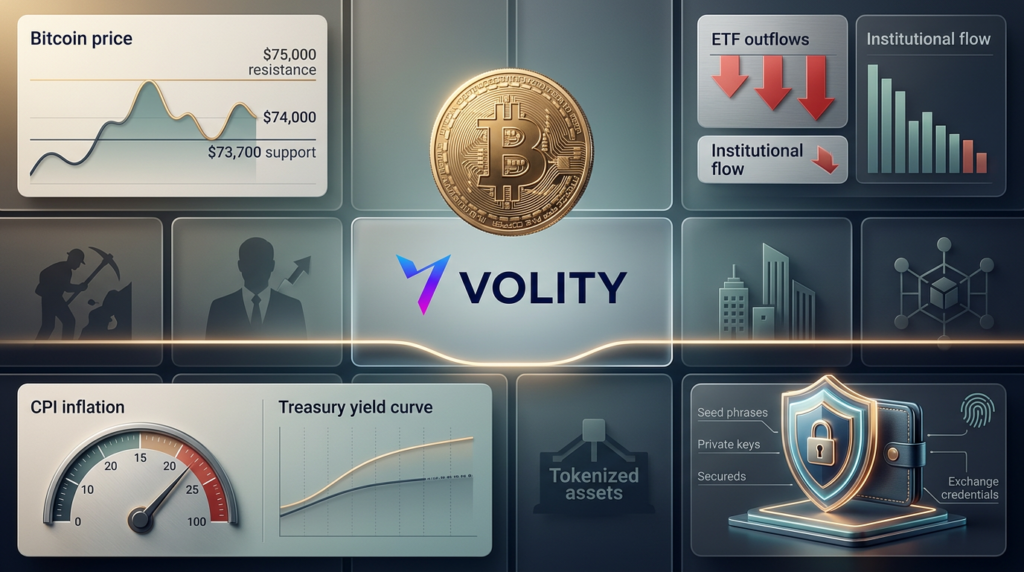
Bitcoin traded near $74,766 early Tuesday after briefly touching roughly $73,700. The wider crypto market recorded about $269 million in liquidations during the previous 24 hours.
Markets expect headline US CPI to rise 0.3% in October from September. Economists expect core CPI, which excludes food and energy, to increase 0.2%.
A higher reading could lift Treasury yields and the dollar. That combination often punishes assets whose value depends heavily on future growth or speculative demand.
By contrast, a softer report could spark a relief rally across crypto and technology shares. Still, one benign inflation print would not erase bitcoin’s recent loss of momentum.
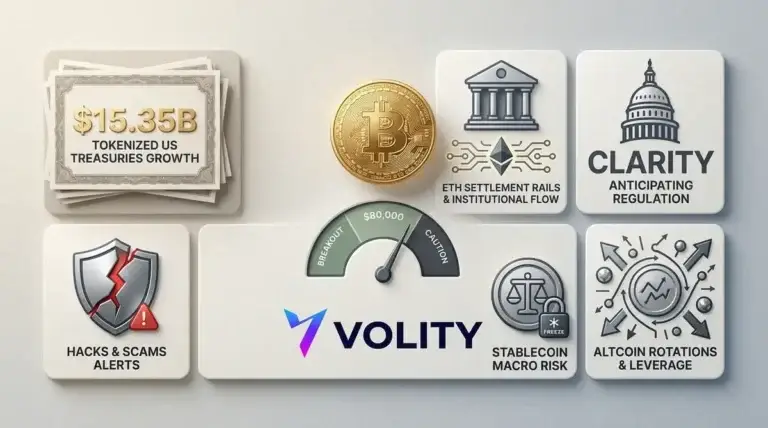
Traders are watching two nearby levels. Bitcoin needs to hold $73,700, while a sustained move above $75,000 would improve the short-term picture.
Peter Schiff has renewed his familiar warning about a bitcoin crash. Yet forced selling and weaker institutional demand look like more immediate concerns for active traders.
ETF withdrawals deepen the strain
US spot bitcoin ETFs recorded about $201 million in net outflows on Monday. November withdrawals have now reached roughly $1.48 billion.
BlackRock’s iShares Bitcoin Trust, ticker IBIT, led the retreat with $213.2 million leaving the fund. Other products received smaller inflows, limiting the day’s net loss.
IBIT has now posted seven consecutive sessions of withdrawals. Since October 30, investors have pulled roughly $1.66 billion from the fund.
Ethereum products also faced selling pressure. US spot ether ETFs lost about $184.6 million, including $119.3 million from BlackRock’s ETHA.
Those figures matter because ETFs remain the clearest daily gauge of institutional appetite. Large conversions into IBIT may represent portfolio reshuffling rather than fresh capital.
BitMine added another 9,587 ETH to its holdings during the downturn. However, corporate accumulation has not yet outweighed broad reductions in risk exposure.
Corporate buyers and sellers tell different stories
Public companies have reportedly sold $8.08 billion of bitcoin during 2026. That figure sits awkwardly beside loud corporate promises to build long-term crypto treasuries.
Trump Media added 1,510 bitcoin during the third quarter. Its holdings were valued at about $1.17 billion at the reported period’s end.
Strategy bought another 1,036 bitcoin and repurchased $188 million of STRC preferred stock. The company continues to treat bitcoin as the centrepiece of its capital strategy.
Miners have taken a different route. MARA sold $1.1 billion in bitcoin while reporting a 35% fall in third-quarter revenue.
Super League, meanwhile, bought 16 bitcoin for about $1.23 million. Miners need operating cash, while treasury companies can make longer-duration balance-sheet bets.
Binance warning puts phone security in focus
Binance flagged an iOS flaw known as “worse_query”, which could let malicious applications read files from other apps. The exchange listed iOS 26.7.1, 27.0.1 and 27.2 among affected versions.
Seed phrases, private keys and stored login details face the greatest danger. No confirmed theft linked directly to the reported flaw had emerged when Binance issued its warning.
The issue lies within Apple’s operating system, rather than Binance’s application. Even so, users storing readable recovery phrases on phones face an avoidable risk.
Anyone using sideloaded or manually signed software should remove it immediately. Users should update iOS and applications through official channels only.
- Move funds: Create a new wallet on a clean device if compromise seems possible.
- End sessions: Revoke active exchange and wallet sessions after changing passwords.
- Protect phrases: Never store seed phrases in notes, screenshots or cloud files.
- Check approvals: Review token permissions before signing fresh transactions.
Hardware wallets offer better protection because private keys usually remain outside the phone’s file system. A compromised phone can still expose passwords, approvals and two-factor authentication codes.
New rails arrive as rulemakers close in
Solana tokens can now trade through X Cashtags using Fomo. The connection brings social discovery closer to execution, which may also amplify short-term volatility.
Upbit is listing Hyperliquid’s HYPE across three trading pairs. That could deepen liquidity, although listings often attract fast-moving speculative flows.
Ethereum developers are testing a peer-to-peer protocol from Optimum that reportedly doubles block-delivery speed. Faster propagation could help validators receive blocks with fewer network delays.
Elsewhere, the New York Stock Exchange has selected Avalanche for settlement on a tokenised-stock platform. Formation also plans round-the-clock stock trading on Solana under a proposed US framework.
Regulators are moving just as quickly. The IMF has urged Kenya to apply Travel Rule reporting requirements to crypto firms.
Binance has blocked transfers involving MEXC after a major FinCEN crackdown. Coinbase, Kalshi and Kraken’s parent company also back a CFTC lawsuit over stock perpetuals.
What traders are watching
- CPI at 0.3% or above: Bond yields may rise, placing renewed pressure on bitcoin and ether.
- Bitcoin at $73,700: A clean break below that level could trigger another round of liquidations.
- ETF flows: A return to consistent inflows would carry more weight than one brief price rebound.
- XRP leverage: Binance funding rates have reached a one-year high as XRP ETFs lose money.
Tuesday offers a simple test for crypto markets. Inflation, ETF demand and leveraged positioning will decide whether $75,000 becomes a recovery point or another failed bounce.
New products and institutional projects keep arriving. For now, though, traders face a market where patience and secure wallet habits may prove more valuable than bravado.
Related coverage on Volity
- How to Avoid Crypto Scams: A Beginner Safety Checklist
- How to Choose a Trading Platform: A 10-Point Checklist
- Demo vs Live Trading Account: A 7-Step Checklist Before You Go Live
- How to Size a Trade: Position Sizing and Risk Per Trade for Beginners
- Risk-Reward Ratio Explained: How to Set It and Why It Matters
- ETF vs Index Fund: The Difference and Which to Pick