What is a commodity trading platform? A commodity trading platform is the software that lets you take positions on raw-material prices: oil, gold, silver, gas, agricultural goods. Volity offers commodity CFDs on 150+ instruments through Volity MT, with leverage up to 1:500, spreads from 0.03 points, and CySEC-regulated execution.
A commodity trading platform lets you speculate on the price of raw materials like oil, gold, silver, natural gas, and agricultural goods without buying physical inventory. Volity is your all-in-one money hub. Trade 150+ commodities via CFD trading platform on Volity MT, with leverage up to 1:500, spreads from 0.03 points, and CySEC-regulated execution.
What you can trade on the Volity commodities trading platform
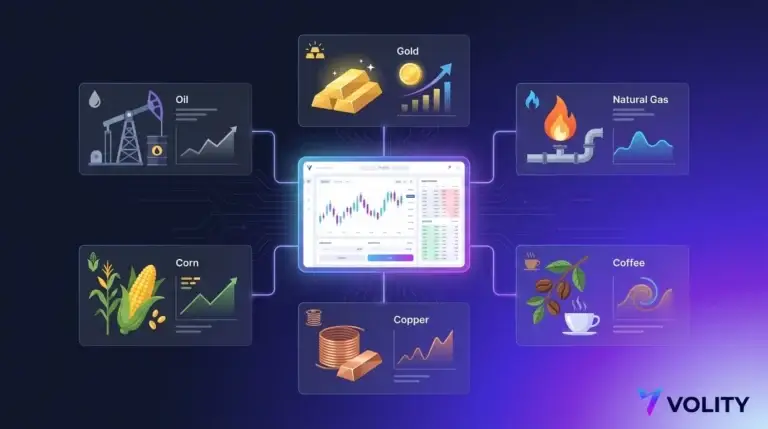
Commodity CFDs on Volity span six categories. Every instrument is on Volity MT, accessible from the same account that holds your forex, crypto trading platform, indices, and stocks positions.
- Energy: WTI crude oil, Brent crude oil, Henry Hub natural gas, heating oil, gasoline
- Precious metals: gold (XAUUSD), silver (XAGUSD), platinum, palladium
- Industrial metals: copper, aluminium, nickel, zinc
- Agricultural grains: corn, wheat, soybeans, rice
- Soft commodities: coffee, sugar, cocoa, cotton, orange juice
- Livestock: lean hogs, live cattle, feeder cattle
Leverage on commodity CFDs tops out at 1:500 on selected products. Spreads start from 0.03 points on the most liquid contracts. Trading hours follow the underlying futures markets, typically Monday to Friday with brief overnight gaps for settlement windows.
How commodity CFDs work
A CFD on a commodity lets you take a position on the price without ever touching the physical asset. You do not need a refinery to trade oil, a vault to trade gold, or a silo to trade corn. The contract mirrors the spot price (or a future contract price) of the underlying. You make money when your direction matches the move, and lose when it does not.
Two practical advantages over physical commodity ownership:
- No storage or insurance. Holding physical gold costs vault fees. Holding oil requires a tank. CFDs charge a swap fee on overnight leveraged positions and that is the entirety of the carry cost
- Both directions. Going short on commodities is straightforward with CFDs. With physical ownership it is not
Two practical advantages over commodity futures:
- No expiry roll. Standard futures expire monthly or quarterly and require you to roll the position into a new contract. CFDs on Volity are open-ended; no roll administration
- Smaller minimum size. Futures have standardised contract sizes that may be too large for small accounts. CFDs let you scale position size to your account
Commodity trading platform cost structure on Volity
- Spread: built into bid-ask. From 0.03 points on the most liquid instruments. Live spreads visible before order entry
- Swap (overnight financing): applied to leveraged positions held past 22:00 GMT. Can be positive or negative depending on the funding-rate market for that commodity
- No commission on most retail accounts
- Wallet: $0 to hold
- FX conversion: 1% when funding in one currency and trading in another. Useful if you fund in EUR but the commodity contract is USD-denominated
Risk in commodity trading
Commodities have their own risk profile, different from forex or crypto:
- Geopolitical risk: oil prices move on OPEC+ decisions, Middle East tensions, US sanctions, and Russia-Ukraine developments. A single news event can move WTI 5% in minutes
- Weather risk: agricultural commodities move on drought, frost, harvest reports. Corn can gap 8% on a USDA crop report
- Storage cycles: natural gas and oil follow seasonal storage patterns. EIA storage reports every Thursday move prices regardless of position
- Contract specifications: different commodities have different tick sizes and margin requirements. Volity shows the per-instrument specs before order entry
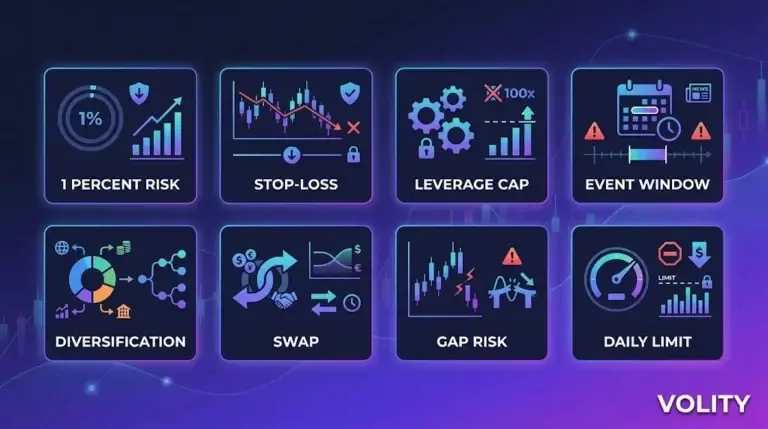
At 1:100, a 1% adverse move wipes 100% of margin. Oil routinely moves more than 1% in a day. Use position sizing. Use stop-losses. Start on demo.
Why CFDs beat ETFs and futures for active traders
- ETF tracking error: commodity ETFs like USO (oil) and GLD (gold) carry expense ratios and can drift from spot due to contango and roll costs. CFDs price the underlying directly with no annual fee
- Futures contract size: one WTI futures contract = 1,000 barrels. At $70/barrel that is $70,000 notional. Most retail accounts cannot hold full futures. CFDs let you size from a fraction of a barrel upward
- Multi-asset margin pool: on Volity, your commodity margin sits in the same balance as your forex, crypto, indices, and stocks margin. One account, six asset classes, unified risk view
For long-term passive exposure, ETFs or physical may suit. For active trading, CFDs win on flexibility and cost.
Specific opportunity windows
Commodities have predictable catalyst windows that experienced traders set up around:
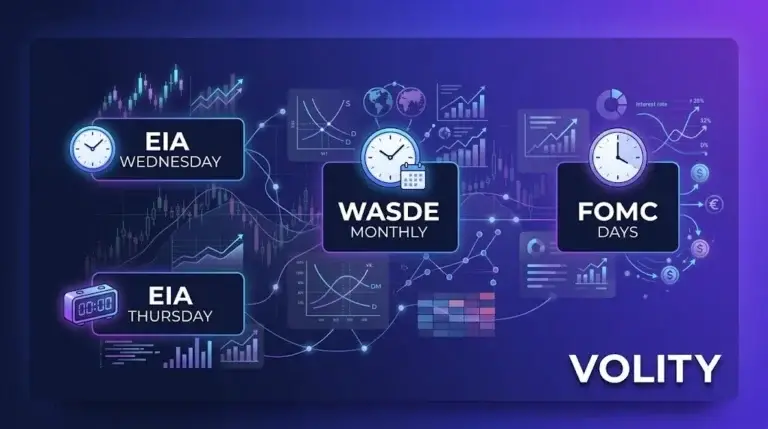
- Oil: EIA Petroleum Status Report every Wednesday 10:30 EST. Weekly inventory delta drives intraday moves
- Natural gas: EIA Natural Gas Storage Report every Thursday 10:30 EST. Storage build/draw moves prices
- Gold: Federal Reserve meetings (FOMC), inflation reports (CPI, PCE), and gold-USD inverse correlation around dollar-strength events
- Agricultural: USDA WASDE reports monthly, planting and harvest reports seasonally
- Soft commodities: weather windows in growing regions (Brazil for coffee, West Africa for cocoa)
Volity MT displays an economic calendar with the relevant events flagged. The platform also supports automated trading via EAs if you want to systematise around these windows.
Frequently asked questions
Sources
Specific commodity markets
- Coffee CFD Trading: Arabica and Robusta on Volity
- Commodity Futures Trading vs CFDs: Which Suits Retail?
- Commodity ETFs Explained vs CFD Trading
- Agricultural Commodities Trading: Grains, Softs, Livestock
- Oil Trading: WTI and Brent CFDs
- Crude Oil Trading: WTI CFDs in depth
- Natural Gas Trading: Henry Hub CFDs
- Silver Trading: XAG/USD CFDs
Related Volity platforms
- Crypto Trading Platform: 20+ coins on Volity MT
- CFD Trading Platform: 10,000+ markets
- Crypto Derivatives Trading on Volity
- Trade with Volity: 80+ countries
Frequently asked questions
What is a commodity trading platform?
A commodity trading platform is the software that lets you take positions on raw-material prices like oil, gold, silver, gas, and agricultural goods. The platform handles order entry, charting, leverage management, and execution. Volity offers commodity CFDs on 150+ instruments through Volity MT, with leverage up to 1:500, spreads from 0.03 points, and CySEC-regulated execution.
How does commodity trading work on Volity?
Open a free Volity wallet, fund it, then trade commodity CFDs on Volity MT. Pick from energy, metals, agricultural grains, soft commodities, or livestock. Set position size and leverage (up to 1:500 product-dependent). Place the order. Spreads start from 0.03 points on the most liquid contracts. Markets follow the underlying futures schedule, typically Monday to Friday.
What is the minimum to start trading commodities?
Demo trading is free. Live trading starts from $1, with no upper cap. KYC takes a few minutes during signup. You can fund with card, SEPA, or stablecoin transfer.
What leverage does Volity offer on commodities?
Up to 1:500 on selected commodity products. Leverage is set per instrument and visible before every order. A 1:100 position means 1% margin requirement; a 1% adverse price move wipes 100% of margin. Position sizing matters more at higher leverage.
Can I trade oil on Volity?
Yes. WTI crude oil and Brent crude oil are both available as CFDs on Volity MT, with leverage up to 1:500. You can go long or short. Spreads on oil are competitive. The contracts are open-ended, so no monthly expiry roll. See our oil trading page for the full breakdown.
Can I trade gold or silver on Volity?
Yes. Gold (XAUUSD), silver (XAGUSD), platinum, and palladium are all available as CFDs with leverage up to 1:500. Spot-tracking contracts with no physical delivery. Markets open 24/5 with a brief settlement break daily.
Are commodity profits taxable?
Yes, in most jurisdictions, realised CFD gains on commodities are taxable income. Treatment varies by country. Volity provides annual statements showing realised P&L for tax filings. Volity does not provide tax advice; consult your local advisor.
How are commodity CFDs different from ETFs?
Commodity ETFs (e.g., USO for oil, GLD for gold) hold futures contracts and roll them quarterly, which creates tracking error and contango drag. ETFs also charge expense ratios annually. CFDs on Volity price the underlying directly, have no annual fee, and allow leverage. ETFs suit passive long-term exposure; CFDs suit active trading.