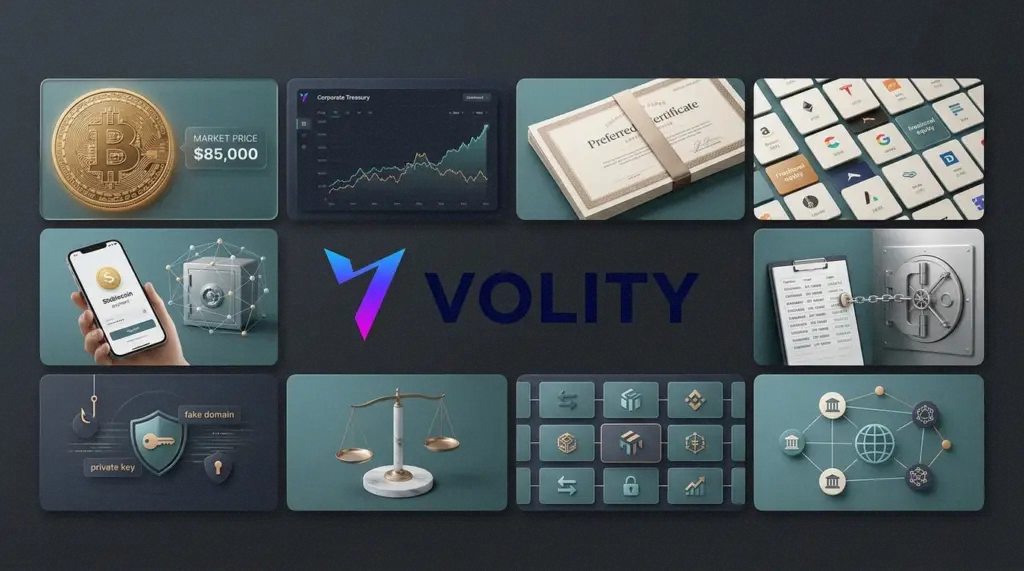
Crypto’s new trading floor stretches from Bitcoin treasuries to tokenised stocks
Monday, 12 October 2026. Crypto markets opened the week with Bitcoin trying to steady itself and the industry pressing further into conventional finance.
Corporate Bitcoin treasuries, tokenised shares, stablecoins and crypto-backed loans all drove the day’s conversation. Price still sets the mood. Yet the business of building financial rails now matters almost as much.
Bitcoin stalls beneath $85,000
Bitcoin rose above $83,000 after a bruising week, although the recovery looked tentative. The token had slipped from about $87,000 as oil prices and Treasury yields climbed.
Traders now face a narrow technical map. A sustained break above $85,000 could bring $87,000 back into view. Failure there could instead expose the low-$80,000 area.
Leverage makes those levels more dangerous than they appear. High derivatives open interest can turn a small move into a forced scramble.
A rally may push short sellers to cover. A sharp fall, however, could trigger long liquidations and deepen the decline.
Strategy’s STRC preferred shares have climbed close to their $100 reference price. They recently changed hands near $99.71, after falling to roughly $71 in June.
The security offers a 12% annualised dividend, backed by the company’s dollar reserves. More importantly, its price could shape Strategy’s next Bitcoin purchase.
Shares trading firmly above $100 would make fresh preferred issuance more appealing. That could give Strategy another channel to raise capital for Bitcoin acquisitions.
The company remains the market’s best-known corporate Bitcoin accumulator. Its reported holdings reached 847,666 BTC following a September purchase of 1,665 coins.
Investors in the strategy are making more than a directional Bitcoin bet. They also carry financing risk, dividend obligations and dilution from future capital raises.
That distinction matters when Bitcoin weakens. The treasury can remain intact while the company’s securities still lose ground sharply.
Crypto exchanges want the brokerage account too
Bybit said eligible customers can now access more than 1,000 US-listed shares and exchange-traded funds. The service includes fractional trading, with selected instruments available during extended weekday hours.
The offer puts crypto venues closer to established online brokers. It also reflects a changing customer expectation: one account for tokens, shares and dollar settlement.
For exchanges, the attraction is obvious. More assets can bring more trading, deeper customer relationships and a wider revenue base.
Yet the practical difficulties remain considerable. Platforms must manage local licensing, custody arrangements, liquidity and the legal rights attached to each instrument.
Meanwhile, Kraken parent Payward secured a full Dubai licence ahead of its United Arab Emirates launch. The approval includes dirham deposits and withdrawals.
Dubai has become a favoured base for digital-asset firms seeking clearer rules and regional access. The city still needs to prove that compliance can keep pace with expansion.
Former acting CFTC chair Caroline Pham argued that existing commodity law gives the agency broad authority over crypto markets. Her comments covered leveraged retail trading in particular.
The CFTC proposed a federal framework on 5 October for leveraged, margined and financed crypto transactions. Eligible firms could seek oversight through registered trading venues.
Fully paid spot purchases would sit outside that framework. The agency is gathering public comments before setting detailed requirements.
The proposal could matter for platforms offering products that resemble margin trading without using that label. Firms may soon need to decide whether federal registration offers safety or added cost.
Pham also drew a distinction between stablecoins and tokenised bank deposits. Stablecoins can serve parties without an established relationship, while tokenised deposits suit familiar institutional networks.
She estimated that instant on-chain settlement of wholesale obligations could require $15 trillion in cash. That figure shows why blockchain settlement cannot simply replace existing banking machinery overnight.
Stablecoins move towards phones, banks and collateral desks
Samsung is preparing USDC transfers for Galaxy users in supported regions. The plan would bring stablecoin payments nearer to a familiar consumer device.
Availability will depend on local rules and supported services. Still, the direction is clear: stablecoins are leaving specialist wallets and entering everyday payment systems.
At the institutional end, Standard Chartered added Ripple’s RLUSD to its crypto-custody service. The move connects the newer stablecoin with established banking infrastructure.
RLUSD enters a competitive market dominated by larger rivals with deeper liquidity. Bank custody may help, although it cannot create trading volume by itself.
South Korea has chosen another route. Jeonbuk Bank became the country’s first lender to offer loans backed by Bitcoin.
Bitcoin-backed borrowing lets holders raise cash without selling their coins. However, a fast price fall can bring margin calls, extra collateral demands or forced sales.
Tokenised stocks still face familiar market hazards
Tokenised equities promise faster settlement, fractional ownership and longer trading windows. Those benefits may attract investors who find conventional brokerage accounts restrictive.
Yet reports over the weekend cited International Monetary Fund concerns about tokenised shares. Such instruments can be about 1.5 times more volatile than their traditional counterparts.
Near-continuous access can magnify reactions to headlines. Thin liquidity during off-hours can also produce prices that look dramatic but lack broad market participation.
Investors should also ask a basic question before buying. Does the token represent a direct shareholding, a claim on a custodian, or a synthetic exposure?
Security remains the industry’s oldest weakness
Ledger faced fresh warnings over fake websites and theft-related claims. Separately, a suspected Malaysian wallet breach reportedly cost one victim about $3 million.
Reports said some funds moved through Tornado Cash. The details may change, but the lesson does not.
Phishing, fraudulent support accounts and compromised devices remain immediate threats to individual holders. No market rally can repair weak key management after the fact.
What traders are watching
- Bitcoin: $85,000 is the first recovery test, while $87,000 marks the next resistance area.
- Strategy: STRC holding above $100 could strengthen expectations for another preferred-share issuance.
- Regulation: The CFTC framework may reshape leveraged crypto products offered to US retail customers.
- Tokenisation: Bybit’s stock offering tests whether crypto platforms can become credible multi-asset venues.
- Risk: Bitcoin-backed loans require close attention to collateral levels, liquidation terms and volatility.
Bitcoin remains crypto’s loudest signal, but the larger shift is happening beneath the price chart. Exchanges are becoming brokers, banks are becoming custodians, and corporate treasuries are becoming financing machines.
The next market leaders may not be the noisiest tokens. They may be the firms that can combine speed, custody, regulation and liquidity when prices suddenly move.
Related coverage on Volity
- How to Avoid Crypto Scams: A Beginner Safety Checklist
- How to Choose a Trading Platform: A 10-Point Checklist
- Demo vs Live Trading Account: A 7-Step Checklist Before You Go Live
- How to Size a Trade: Position Sizing and Risk Per Trade for Beginners
- Risk-Reward Ratio Explained: How to Set It and Why It Matters
- ETF vs Index Fund: The Difference and Which to Pick