A risk reward calculator compares what you stand to lose on a trade against what you aim to win, shown as a single ratio. Enter your entry, your stop-loss and your take-profit, and it returns the risk-reward ratio along with the number most traders skip past: the win rate you need just to break even. That figure is what tells you whether a setup is worth taking at all.
What is a risk-reward ratio?
The risk-reward ratio compares the distance from your entry to your stop-loss, which is the risk, with the distance from your entry to your take-profit, which is the reward. A ratio of 1:2 means you risk one unit to make two. It tells you, before a single trade is placed, whether the potential gain is worth the potential loss.
On its own, though, the ratio only tells you half the story. A 1:5 setup looks generous, but if it comes off just one time in ten it still bleeds money. Brokers such as CMC Markets frame the ratio around the gap between your entry, stop and target, and that gap is only the starting point. A risk and reward calculator that also gives you the break-even win rate is far more useful than one that stops at the ratio.
How to calculate risk and reward
Three prices give you everything you need: your entry, your stop-loss and your take-profit.
- The risk is the distance from your entry to your stop-loss. A buy at 1.1000 with a stop at 1.0950 puts 50 pips at risk.
- The reward is the distance from your entry to your take-profit. A target at 1.1100 offers 100 pips.
- The ratio is the reward divided by the risk. Here that is 100 divided by 50, which is 2, so the risk-reward ratio is 1:2.
A risk reward ratio calculator runs this in prices or in cash and lands on the same ratio either way, because position size scales both sides of the trade equally. The ratio does not care how big the position is, and that is exactly what makes it useful for comparing one setup against another.
What win rate do you need to break even?
This is the number that turns a ratio into a decision. To break even, your win rate has to cover your losses at the given ratio. The formula is short:
Break-even win rate = 1 / (1 + reward-to-risk ratio)
| Risk-reward ratio | Win rate to break even |
| 1:1 | 50% |
| 1:1.5 | 40% |
| 1:2 | 33.3% |
| 1:3 | 25% |
| 1:5 | 16.7% |
At 1:2 you only need to be right one time in three to break even; win more often than that and you are ahead. That is why patient traders hunt for higher-ratio setups, because a healthy reward-to-risk ratio lets a fairly modest win rate stay profitable. A risk to reward ratio calculator that shows this figure is doing the real work.
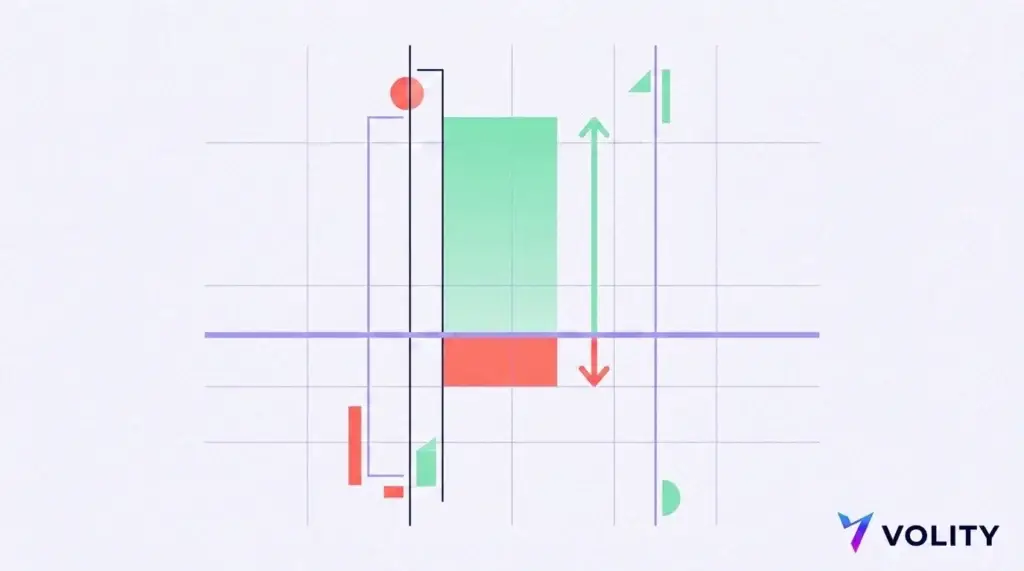
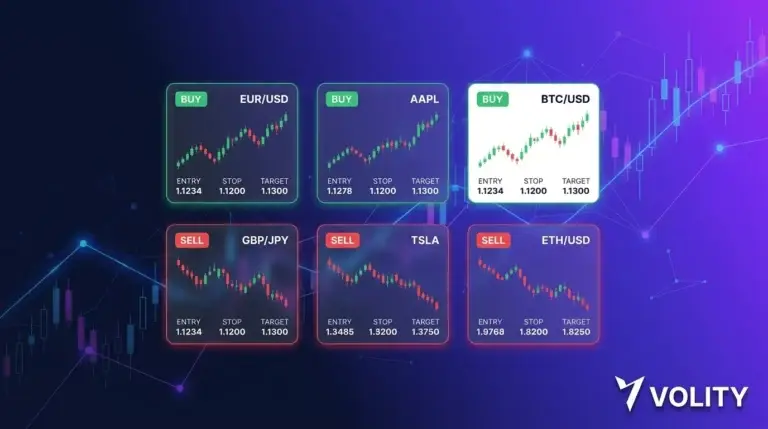
A 1:2 setup in practice: entry at 1.1000, a stop at 1.0950 that risks 50 pips, and a target at 1.1100 worth 100 pips, which breaks even at a 33% win rate.
Use the free risk-reward calculator
Enter a trade below to see its risk-reward ratio, the win rate you need to break even, and how much to stake once you set a percentage of your account to risk. It works in any market: forex, indices, commodities or crypto.
Risk-reward calculator
Enter a trade to see its risk-reward ratio, the win rate you need to break even, and a sensible position size.
Work out the position size in lots (forex)
Pip value depends on the instrument and your account currency, for example roughly 10 in your account currency per pip on a standard lot of many pairs. Enter the figure your broker shows for the pair you trade.
Past results are not indicative of future performance. This calculator is for education only and is not financial advice. Trading on leverage carries a high risk to your capital.
Set stops and targets on a free Volity demoWhy the ratio alone will not make you profitable
Chasing high ratios can backfire. Pushing the take-profit further out improves the ratio but lowers the odds of price ever reaching it, so the win rate falls away and the expectancy can turn negative. The three numbers only mean anything when you read them together. The ratio decides how much each win is worth against each loss. The win rate decides how often those wins actually arrive. And your position size decides how much any single trade can cost you, which is the part you control by risking a fixed percentage of the account on each trade rather than a fixed number of lots. A lot size calculator turns that percentage into an exact position, a drawdown calculator shows what a run of losses does to the balance, and a compound calculator projects how the wins add up over time.

Ratio, win rate and position size have to balance. A big potential reward means little if the setup rarely comes off.
Multiply those together and you get expectancy, the average result per trade. Pair a ratio you can actually hit with a realistic win rate and a controlled position size, keep an eye on how deep a losing run could drag your balance, and you are trading a plan rather than a hunch. Educators from Corporate Finance Institute to seasoned desk traders land on the same point: the ratio is a filter, not a strategy on its own.
Plan trades on Volity
Volity MT lets you attach a stop-loss and a take-profit at the moment you open a position on the Volity forex trading platform, so the risk-reward ratio is locked in before the trade goes live. Forex leverage runs up to 1:500 on selected products, which changes the cash on each side of the trade without changing the ratio, so it pays to plan the ratio first and size the position second. Building the habit on a free demo account is the simplest way to make sure you never enter a trade without both levels set.
Leverage cuts both ways. The FCA in the UK and ESMA across the EU both cap the leverage retail clients can use and require brokers to publish clear risk warnings, because a leveraged position can lose money as fast as it can make it. Sound risk management and trading only with money you can afford to lose matter more than any single ratio. For the wider picture, our trading education hub covers position sizing, stops and expectancy in more depth. Volity accounts are provided with CySEC-regulated execution under UBK Markets (licence 186/12); opening an account is free, you can fund from as little as $1, and you can start trading from $1.
Frequently asked questions
What is a good risk-reward ratio?
Many traders look for at least 1:2, where the target is twice the stop distance, because that only needs a 33% win rate to break even. There is no single right number. A ratio is good when it matches a win rate you can genuinely achieve, so a 1:1.5 with a 55% win rate beats a 1:5 that comes off one time in ten.
What win rate do I need for a 1:2 ratio?
You need to win more than 33.3% of trades to profit at 1:2, since break-even sits at exactly one third. Win 40% and the account grows steadily; win 50% and it grows quickly. The higher your reward-to-risk ratio, the lower the win rate you need to stay ahead.
Is a higher risk-reward ratio always better?
No. Pushing the target further out raises the ratio but lowers the chance price gets there, so the win rate drops and profitability can fall with it. The best ratio is the one your strategy reaches often enough. Use a risk reward calculator alongside your real win rate to check the combination has positive expectancy.
How do I set a risk-reward ratio on a trade?
Read your stop-loss from the chart structure first, then place the take-profit at a multiple of that distance for the ratio you want. On Volity MT you attach both levels as you enter the order, so the ratio is fixed before the trade opens and cannot drift while it runs.