Crypto’s uneasy rebound: Bitcoin tests the floor as money turns selective
Saturday, October 17, 2026. Crypto markets opened the weekend with a wary bounce rather than a convincing recovery. Bitcoin reclaimed $82,000 after briefly dropping below $80,000, yet buyers remain notably hesitant.
The immediate focus rests on the Federal Reserve, ETF flows and the durability of Bitcoin’s recent support. Meanwhile, money is moving selectively through altcoins, payments infrastructure and tokenised markets.
Bitcoin’s rebound faces a hard ceiling
Bitcoin found buyers near $79,700 and rose above $82,000 during the latest session. Lower expectations for an October rate rise helped, although the wider chart still looks unsettled.
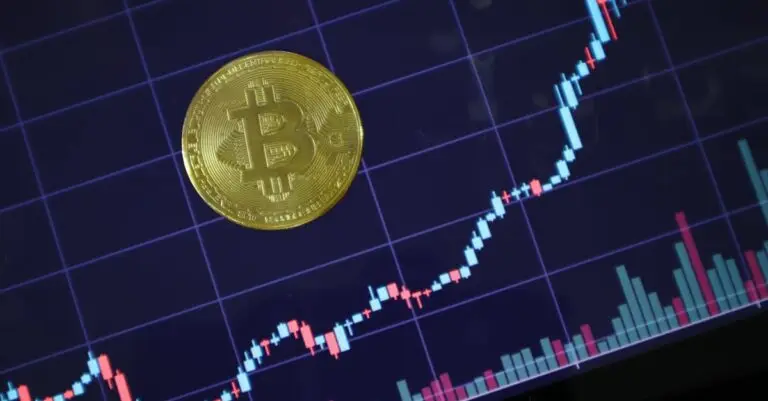
Traders now see resistance between $84,000 and $87,000. A sustained move through that range could reopen the path towards $90,000.
However, the market lacks the broad conviction seen during earlier rallies. Bitcoin repeatedly failed to hold the mid-$80,000s, leaving short-term traders ready to sell into strength.
Institutional flows provide the clearest warning. US spot Bitcoin ETFs posted about $82.4 million in net outflows on October 16. October withdrawals have now reached roughly $535 million.
Ether funds also lost $69.7 million during the session. That divergence matters because Ethereum usually absorbs greater risk appetite during stronger crypto advances.
Bitcoin ETFs still hold about $105 billion in assets. Investors are reducing exposure, rather than abandoning the asset class altogether.
- Bitcoin support: $80,000, then $79,700
- Bitcoin resistance: $84,000 to $87,000
- October Bitcoin ETF outflows: about $535 million
- Bitcoin ETF assets: about $105 billion
A firmer dollar and elevated bond yields continue to limit speculative appetite. As a result, Bitcoin needs a clean technical break before momentum traders return with confidence.
Altcoins split into winners and casualties
Ethereum has recovered towards $2,550, but fund redemptions still shadow the move. Its price needs sustained demand, not merely a bounce in a quieter weekend market.
Solana is moving towards $100, a level carrying both technical and psychological weight. If that support breaks, traders may question whether its broader recovery remains intact.
Celestia offered the opposite picture. TIA rose about 19% above $0.70, drawing volume into a market segment that had recently gone quiet.
Cardano fell around 11%, leaving holders focused first on stabilisation rather than distant upside targets. ADA bulls still discuss $0.36, although the chart needs to stop deteriorating.
Dogecoin slipped below $0.081 as large-holder activity returned to view. Whale buying can produce a temporary floor, but it rarely replaces deep market liquidity.
Elsewhere, NEAR is approaching $6 and Injective is gaining on better volume. These moves show that crypto is no longer trading as one single macro wager.
Bitcoin is negotiating rates and ETF flows. Altcoins are increasingly negotiating their own charts, token supply and product stories.
Payments companies make stablecoins practical
The more durable crypto story sits away from price screens. Mastercard and BVNK have introduced infrastructure combining fiat accounts, stablecoins, conversions, cards and local payouts.
The service targets banks, fintechs and large companies that want fewer moving parts. It also reflects a changing commercial question.
The question is no longer whether stablecoins have a use. The contest now centres on distribution, compliance and bank relationships.
Visa has expanded stablecoin use through Visa Direct. Eligible partners can use USDC to prefund cross-border payouts outside traditional banking hours.
That feature could matter most in regions with slow and expensive international transfers. Circle is also pursuing access to 40 additional markets.
Tether has backed Saber Money, which is targeting payment growth across Asia and the Gulf. Such deals may prove more meaningful than another brief token rally.
Tokenised markets meet old-fashioned risks
Tokenised equities have reached about $3.8 billion in value. Weekly decentralised exchange turnover has also climbed as platforms recreate familiar financial products on blockchain rails.
The scale remains tiny beside listed global equities. Yet the direction is unmistakable, with firms seeking programmable versions of stocks, funds and settlement.
Growth also brings familiar operational failures. An exploit at UNCX exposed a share-accounting flaw and produced reported losses near $1.5 million.
The failure carried a simple lesson. A protocol can offer elaborate yield products while still miscalculating who owns which assets.
Investors often focus on audits, token incentives and annualised returns. They should also examine accounting logic, withdrawal design and emergency controls.
Regulators raise the cost of access
Regulation is tightening across several fronts. Thailand arrested a suspect linked to an alleged 500 million yuan crypto laundering case.
In America, Gemini and the Commodity Futures Trading Commission failed to overturn a $5 million penalty. The decision adds another marker in crypto’s increasingly formal legal landscape.
Australia plans to share crypto tax information internationally by 2028. Taiwan has blocked Coinbase and Kalshi over concerns tied to election betting.
Authorities increasingly accept digital assets within defined limits. They also want clearer records of customer identities, money flows and politically sensitive transactions.
For exchanges, compliance now affects commercial survival. Weak controls can quickly damage banking access, licences and institutional partnerships.
Builders keep moving despite the price wobble
Development activity has not slowed with the market. Lighter launched an EVM development network promising one-second blocks and contract-based trading.
LayerZero introduced Aerie, citing a quantum-safe signature benchmark of 0.65 seconds. Pump.fun is adding Hyperliquid perpetuals, though fees can reach 0.10% per order.
US restrictions remain a constraint for some products. Still, builders continue chasing faster execution, cheaper settlement and better privacy.
Vitalik Buterin has also raised questions around artificial intelligence, energy use and privacy-preserving AI agents. Google’s quantum progress revived longer-term concerns over existing cryptography.
That threat remains distant for Bitcoin. Even so, post-quantum security has moved from an academic topic towards a practical development priority.
What traders are watching next
- Bitcoin’s ability to defend $80,000 during thinner weekend trading.
- Whether Bitcoin can close decisively above the $84,000 to $87,000 resistance band.
- Fresh ETF flow data, especially for Ethereum funds.
- Dollar strength and rate expectations before the Fed’s next signal.
- Whether selective altcoin gains attract broader liquidity or fade quickly.
Crypto enters the new week with no single narrative in command. Bitcoin remains tied to macroeconomics, while Ethereum faces an institutional demand test.
Meanwhile, stablecoin payments and tokenised assets are gaining commercial weight. Traders may find better opportunities in selectivity than in broad-market enthusiasm.