Before you put a single penny into the market, you need a buffer for when life lurches. So how much should an emergency fund be? The honest answer is a range, not a fixed figure, and the right number depends on your own bills and how steady your income is. This guide gives you a starting target, a fuller target, and a simple way to land on your own number.
TL;DR / Quick insight: An emergency fund should cover your essential living costs, not your whole lifestyle. Start with one month of essentials as a first milestone, then build toward three to six months of those same costs, going higher if your income is irregular. Keep it in easy-access cash, never in volatile markets, so it is there the day you need it. Once the fund is set, Volity lets you invest the rest in one account with a $0 wallet.
Nothing here is personal advice – everyone’s situation differs, and investing carries risk. The numbers below illustrate the method, not targets to copy.
What an emergency fund is for
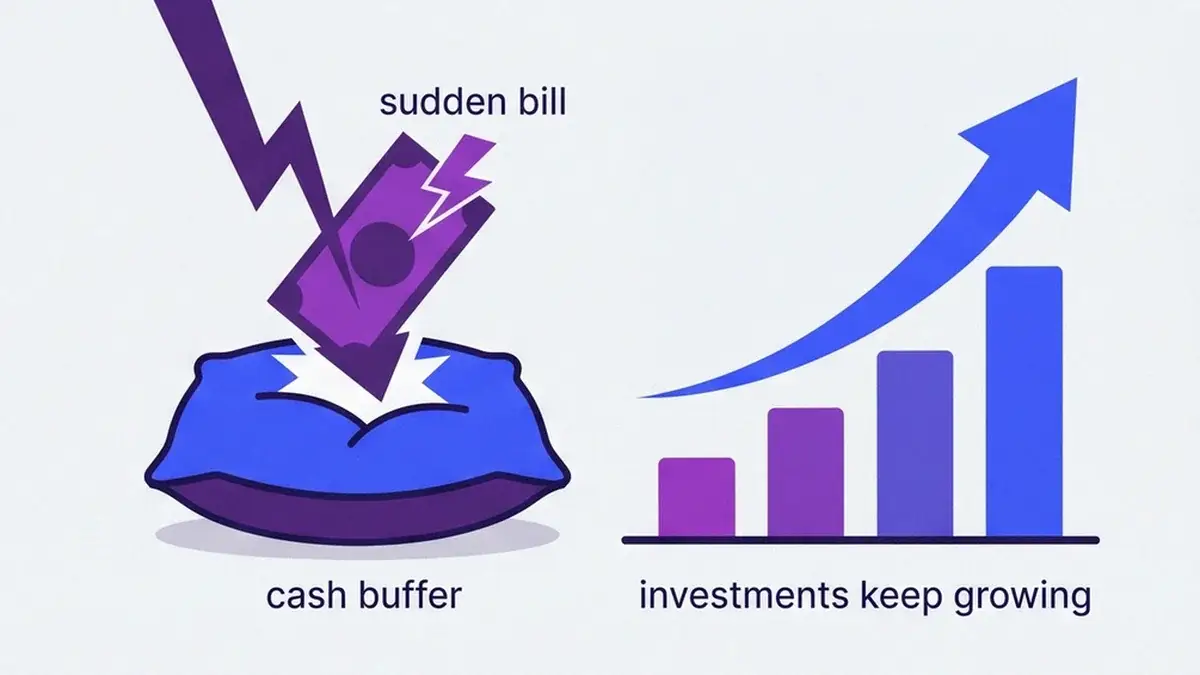
An emergency fund is a pot of cash set aside for the things you cannot plan for: a broken boiler, a sudden job loss, a car that fails its inspection the week rent is due. It exists so one bad event does not force you to sell investments at the worst moment or reach for expensive credit.
The key word is essential. This fund covers the bills you must pay to keep a roof up and the lights on, not holidays, subscriptions or a new phone, which belong to a separate savings goal. Mix the two and you convince yourself you have a buffer when you really have a spending account.
Think of it as the foundation under everything else you do with money. With the buffer in place, a surprise cost is an annoyance, not a crisis.
The starting number, one month of essentials
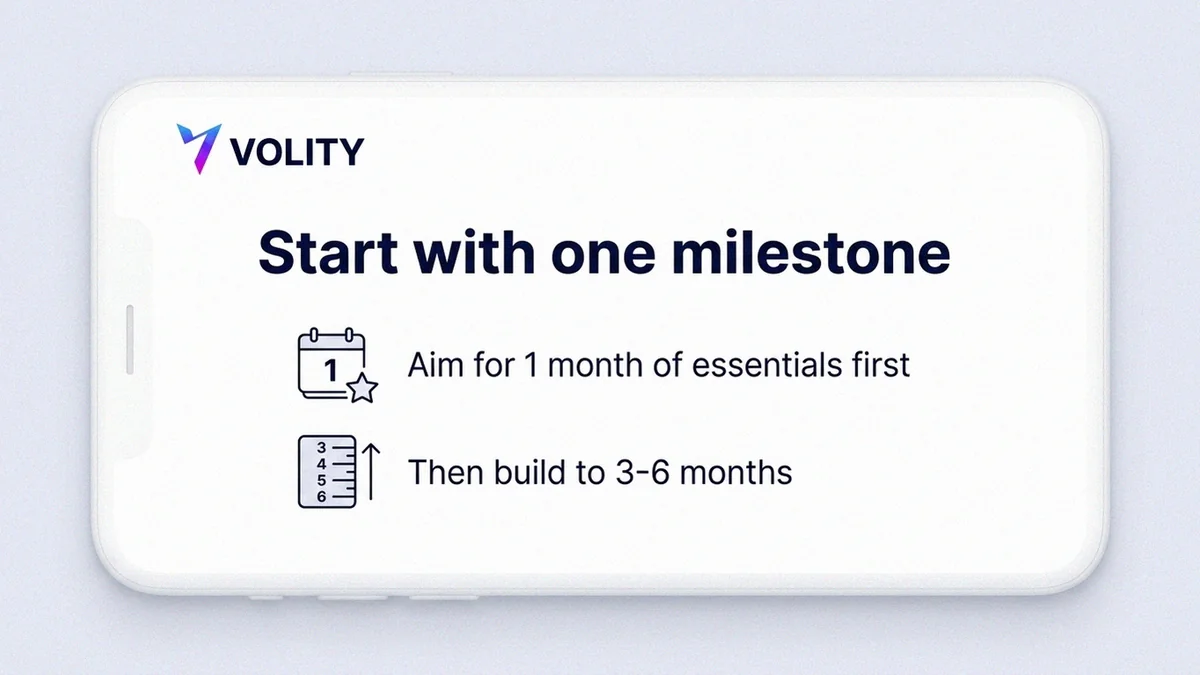
The full target can feel out of reach from zero, so do not aim for it first. Aim for one month of essential expenses as your opening milestone. That single month already turns most small shocks from a panic into a quiet transfer.
One month is a target you can picture, which makes it easier to hit, and hitting it proves the habit works. Many people stall because the headline figure looks enormous; a one-month goal removes that excuse. If even one month feels far away, set a smaller cash anchor first and climb from there.
The full target, three to six months and when to go higher
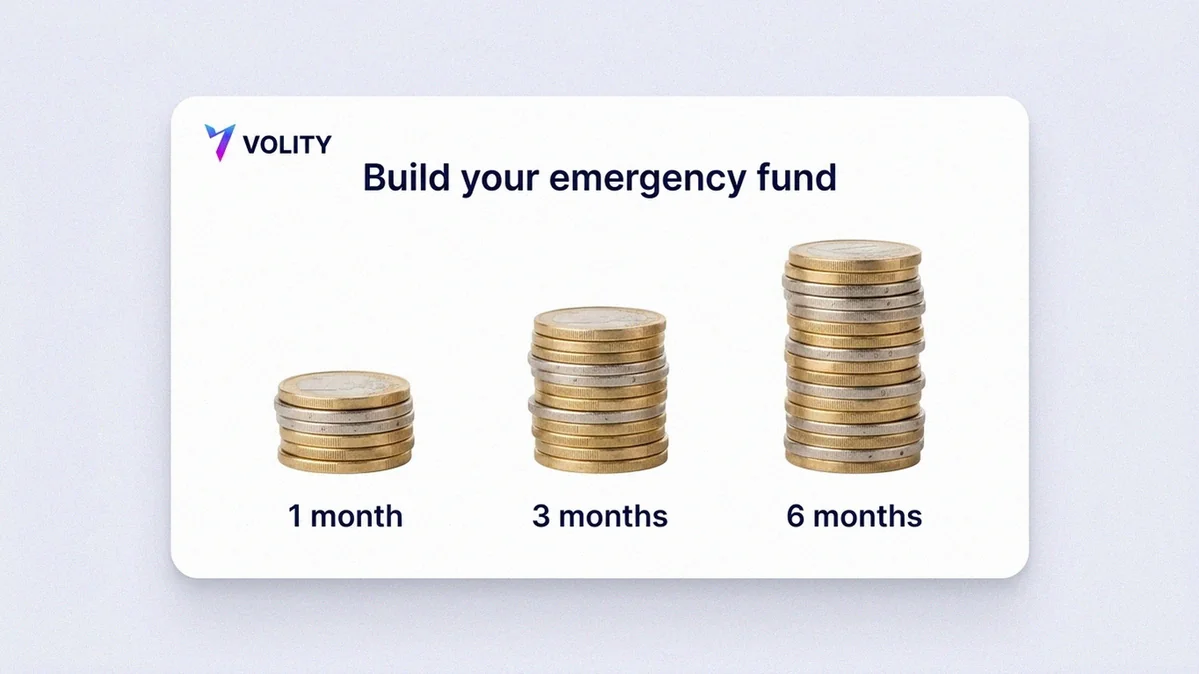
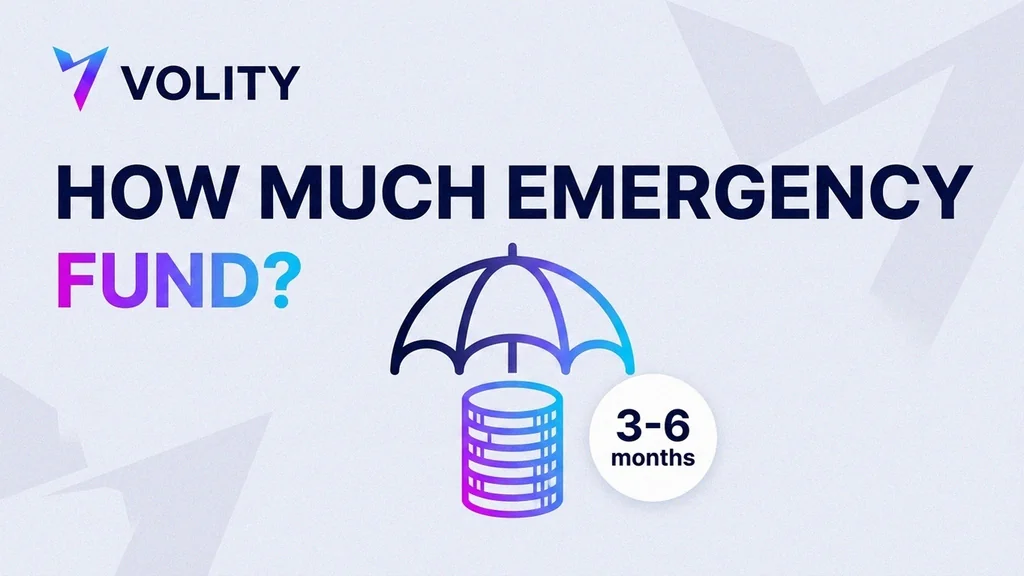
The common rule of thumb is three to six months of essential expenses. Three months suits people with stable, predictable income and few dependants; six months suits those with less certainty. Both are widely cited as guidance rather than law, so place yourself inside the band honestly.
Lean toward the higher end, or beyond it, when your income is irregular, when you are self-employed or on commission, or when you support a family on one wage. Lean lower when two stable incomes share the load.
How big should an emergency fund be in real figures? Work from essentials, not total spending. Say your essential outgoings come to 1,500 a month in your currency. Three months is 4,500 and six months is 9,000, so your full target sits between those. That is the emergency fund amount to aim for, built up over time rather than overnight.
How to work out your monthly essentials
Your whole target rests on one figure: what one month of essentials actually costs. Guess it and the fund is built on sand, so spend a few minutes getting it right.
- List the non-negotiables: rent or mortgage, utilities, food, transport to work, insurance, minimum debt repayments, childcare, essential medication.
- Leave out the extras: streaming, dining out, gym memberships you would pause, holidays, anything you could drop in a tight month.
- Add it up for one month. That total is your essential monthly cost, the unit the fund is measured in.
- Multiply for your targets: one month for the starter, three to six times that figure for the full fund.
- Revisit it yearly. Rent rises, a new baby or a house move all change the number.
The point of stripping out the extras is honesty. In a genuine emergency you would cut the nice-to-haves anyway, so sizing the fund around survival costs is how to calculate an emergency fund without overshooting.
Where to keep an emergency fund
An emergency fund has one job: be there, in full, the moment you need it. That rules out anything that can fall in value or take days to access. Keep it in easy-access cash.
The temptation is to chase a return on it. The problem is timing. Emergencies tend to arrive when markets are also having a bad day, so the one time you need the money is exactly when a market-held fund might be down, forcing a sale at a loss.
| Where you keep it | Easy to access fast? | Value stays put? |
|---|---|---|
| Easy-access cash | Yes, within a day or so | Yes, it does not swing |
| Shares or funds | Often a few days to sell and settle | No, the value moves daily |
| Crypto | Fast, but value can lurch hard | No, highly volatile |
So keep the emergency fund itself in cash. The money you invest sits on top of a complete buffer, not inside it. Once your fund is set, that surplus is what goes into a Volity account, where a $0 multi-currency wallet keeps your investing cash ready, separate from the buffer.
How to build it without stalling your investing
A common worry is that saving a cash buffer means putting investing on hold for a year. It does not have to. The sequence below protects you and keeps a foot in the market.
- Get the one-month starter milestone in cash first. It is the non-negotiable base.
- Automate a fixed transfer on payday so the fund builds itself.
- Once the starter is in, split spare money between the full buffer and investing, so neither stops.
- Funnel windfalls to the fund. A bonus or refund closes the gap faster than monthly saving.
- Top up after you spend it. If an emergency draws the fund down, rebuilding becomes the priority until it is whole.
This way the buffer and your portfolio grow in parallel once the base is down. A free demo lets you rehearse investing the surplus before committing real money, and Volity keeps real shares, fractional shares, crypto and CFDs in one login when you are ready.
Size and start your fund
Run through this to set your number and get the fund moving, then revisit it each year.
- Have I listed only my essential monthly costs and excluded the extras?
- Do I know my one-month essential figure as a single number?
- Have I set one month of essentials as my first milestone?
- Have I chosen a full target inside the three-to-six-month band?
- Did I push toward the higher end if my income is irregular?
- Is the fund held in easy-access cash, not in markets?
- Is a fixed transfer automated for payday?
- Do I have a plan to rebuild the fund after I use it?
- Is my investing money kept separate from this buffer?
- Have I diarised a yearly review to update the figure?
If any line gets a “no”, fix that first. A buffer you have sized and started beats a perfect plan you never fund.
What to do next
Work out your one-month essential figure, set the one-month milestone, then build toward three to six months in easy-access cash. Once that buffer is complete, the surplus is what you invest – real shares, fractional shares, crypto and CFDs in one account, plus a $0 wallet for ready cash. Rehearse on the free demo first, then OPEN A VOLITY ACCOUNT when your fund is set, or browse the trader education hub. Want the numbers first? SEE FEES AND ACCOUNT TYPES.
Reviewed by: A. Bennett, Volity editorial desk.
Data integrity: the Volity product figures here ($0 multi-currency wallet, free demo on every tier, one account for real shares, fractional shares, crypto and CFDs) are verified against Volity’s published account and fee docs. The three-to-six-month guidance is a widely used rule of thumb, and the monetary figures illustrate the method, not advice.
Related Volity guides
- Ways to save money that actually work
- How to save for a house deposit
- How much money do you need to start trading?
Related coverage on Volity
- Ways to Save Money That Actually Work: A Practical Guide
- The 50/30/20 Budgeting Rule, Explained With Examples
- How to Save for a House Deposit: A Step-by-Step Plan
- How Much Money Do You Need to Start Trading? A Realistic Guide
- How to Deposit and Withdraw From a Trading Account
Frequently asked questions
How many months should an emergency fund cover?
A widely used rule of thumb is three to six months of essential living costs. Three months suits steady, predictable income; six months suits less certain situations. Aim higher if you are self-employed, on commission, or the sole earner. Start with one month as a first milestone, then build toward your full target.
Where should I keep my emergency fund?
Keep it in easy-access cash you can reach within a day, not in shares, funds or crypto. Emergencies often coincide with bad market days, so money held in volatile assets might be down exactly when you need it, forcing a sale at a loss. The buffer’s job is to be there in full.
Should I invest my emergency fund?
No. The emergency fund is the cash floor beneath your finances, so it stays out of markets. The money you invest is the surplus that sits on top of a complete buffer. Once your fund is set, that extra can go into a Volity account, where a $0 wallet keeps your investing cash ready and separate.
How do I build an emergency fund fast?
Automate a fixed transfer on payday so saving needs no willpower, then funnel any windfalls, bonuses or refunds straight into the fund. Hit the one-month starter milestone first, then split spare money between the full buffer and investing so neither stalls. Small, regular and automatic beats large and occasional.
Does the emergency fund amount include all my spending?
No, size it on essential costs only: rent or mortgage, utilities, food, transport, insurance, minimum debt payments and childcare. Leave out holidays, dining out and subscriptions you would pause in a crisis. Sizing the fund around survival costs keeps your target realistic and reachable.
Sources
The guidance above draws on the following public sources.
- Corporate Finance Institute – three to six months of expenses
- Corporate Finance Institute – where the buffer sits in a plan
- Federal Reserve Board – coping with an unexpected expense
- Citizens Advice – listing your essential outgoings
- Citizens Advice – which costs you could pause
- Consumer.gov (FTC) – separating essentials from extras
- Financial Services Compensation Scheme – how cash deposits are protected
- Bank of England – the cost of holding cash
- Investor.gov – plan the monthly transfer
- Office for National Statistics – typical essential monthly costs