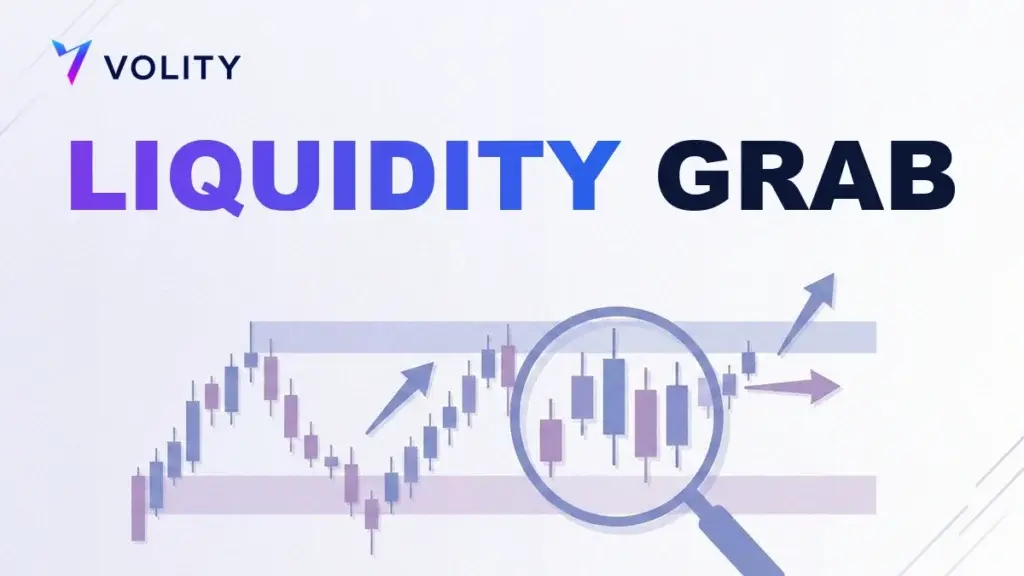
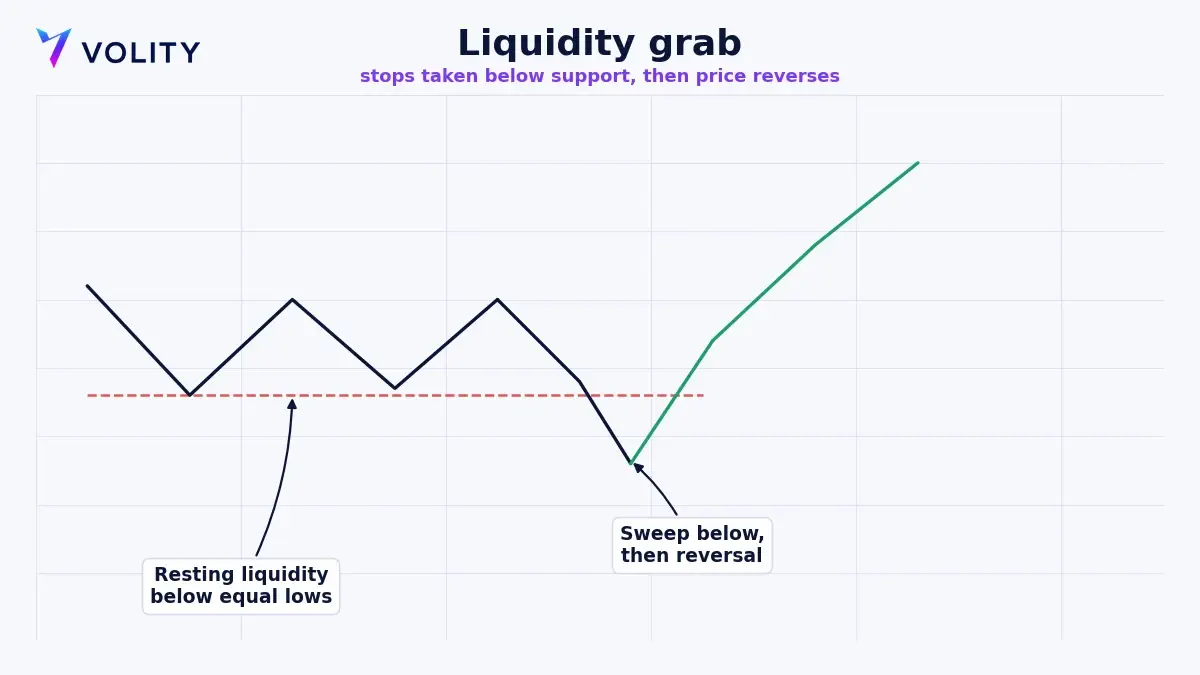
A liquidity grab is a sharp move beyond a swing high or low that triggers a cluster of stop-loss and pending orders, then reverses. Large players push price into these order pools to fill their own positions, which is why your stop is often hit moments before price turns back the way you expected. Learn to read the grab and you stop being the trader who feeds it.
What is a liquidity grab?
Liquidity is simply resting orders that are willing to trade. Every stop-loss is a market order waiting to fire, and every breakout order is the same. When many of those orders sit at a similar price, they form a pool of liquidity. A liquidity grab is the market reaching into that pool, filling the orders, and then moving on without you.
On the chart it looks like a fast spike, usually a long wick, that pierces an obvious level and closes back on the other side. The move looks like a breakout for a few seconds, then fails. Traders who bought the break are trapped in a false breakout, and traders who were stopped out watch price go exactly where they expected, without them. Stop hunt, stop raid, and liquidity grab are the names traders give the same behaviour.
Why does price hunt your stop-loss?
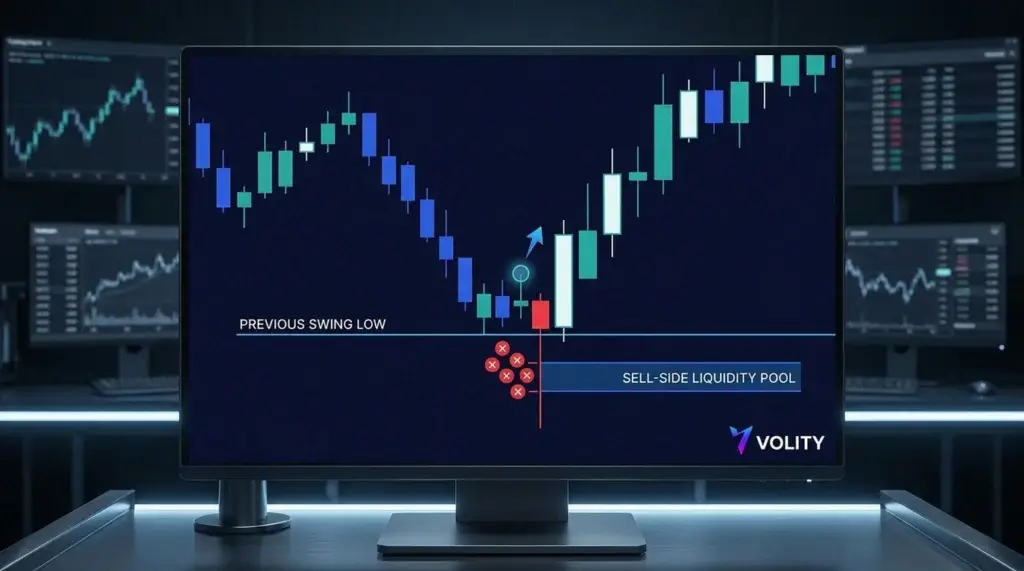
It is not because a broker is watching your ticket. The reason is structural. A large institution that wants to buy a big position cannot do it at one price without moving the market against itself, so it needs a crowd of sellers to trade against. The densest crowd of sell orders sits at predictable places, just below recent swing lows, where thousands of long traders have parked their stops.
Push price down into that shelf and every stop becomes a market sell, handing the institution the order flow it needs to fill a large buy. Academic work backs this up. Research by Carol Osler on currency markets, published through the Federal Reserve Bank of New York, found that stop-loss orders cluster around round numbers and prior extremes, and that these clusters can produce fast, self-reinforcing price cascades. That is the liquidity grab, described in a journal rather than a trading room.
Where does liquidity sit on a chart?
Liquidity gathers in a handful of obvious spots, which is exactly why they get targeted. Knowing where liquidity sits in forex trading turns a random-looking spike into a level you could have marked in advance.
- Above swing highs, where short sellers put stops and breakout buyers put entries. This is buy-side liquidity.
- Below swing lows, where long traders put stops and breakout sellers put entries. This is sell-side liquidity.
- At equal highs and equal lows. Two or more touches of the same level look like strong support or resistance, so stops pile up tightly, which makes double tops and double bottoms magnets for a grab.
- At round numbers such as 1.1000 on EUR/USD, which attract orders for no reason other than that they are round.
Reading these pools is the core of the concept. It leans on the same support and resistance levels every trader watches, and both feed the wider framework of institutional order flow that Inner Circle Trader (ICT) and smart money methods are built around.
Liquidity grab, liquidity sweep or stop hunt: are they the same?
The terms overlap, and traders use them loosely. The differences are mostly about scale and intent.
| Term | What it usually means | Typical read |
| Liquidity grab | A quick spike that takes one pool of stops and reverses | Reversal from the level |
| Liquidity sweep | A broader run through one or more pools, often before a real move | Reversal or the start of an expansion |
| Stop hunt or stop raid | Informal names for the same action, framed from the retail victim’s view | Reversal |
In practice, treat them as one idea. Price is being pushed to an obvious level to release resting orders before it does what it actually intends to do. Whichever label a stop hunt travels under, the trading response is the same.
How do you trade a liquidity grab?
You do not trade the spike. You trade the failure of the spike, which is the higher-probability event.
- Mark the obvious liquidity, a clear swing high or low, or a pair of equal highs or lows.
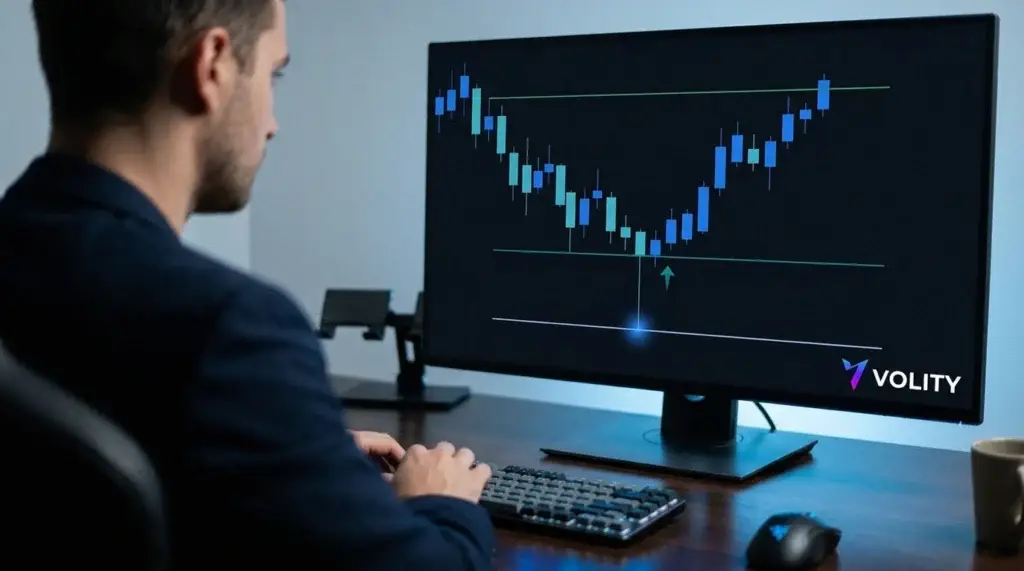
- Wait for price to spike through the level and, crucially, close back on the original side. A wick through and a body back is the tell.
- Look for a shift on a lower timeframe, such as a small break of market structure in the reversal direction, to confirm the grab is done.
- Enter on the reversal, with your stop just beyond the extreme of the wick, where the grab actually reached.
- Target the opposite pool of liquidity. A grab below a swing low often runs toward the buy-side liquidity above the range.
The stop placement is the whole point. Because the grab has already taken the level, the extreme of that wick is a logical, defended place for your stop, and it is usually a tight one, which improves your reward-to-risk.
How do you avoid getting your own stop grabbed?
- Do not park your stop at the obvious level. If every long trader’s stop is a few pips below the swing low, that is exactly where price will reach, so give it room beyond the pool rather than inside it. Our guide to where to place a stop-loss works through the mechanics.
- Avoid round numbers for stops, because they attract orders. Place stops a sensible distance away from whole figures.
- Size to the wider stop. A stop with room needs a smaller position to keep risk fixed, so set the size from the stop distance, not the other way round.
- Wait for the close. Reacting to a wick in real time is how you get shaken out, while judging the candle on its close filters most grabs.
How do you confirm a liquidity grab is complete?
Jumping in on the spike is the fastest way to be wrong, because a grab in progress can extend further than you expect. Wait for evidence that the raid has finished before you act.
- The candle closes back through the level. A wick beyond the pool with a body back inside is the core signal that the grab has failed.
- A lower-timeframe shift appears. Drop a timeframe or two and look for a small market structure shift in the reversal direction, which confirms momentum has turned.
- The grab reached an obvious pool. A raid that takes a clean swing low, a pair of equal lows, or a round number is more convincing than a spike into nothing.
- The timing fits. Grabs cluster around session opens and news, when fresh liquidity arrives, so a spike at a logical time is more likely to be a deliberate raid than random noise.
When several of these line up, the odds that the grab is complete rise sharply, and you can enter the reversal with the stop beyond the wick. When only one is present, treat it as a maybe and wait. The discipline of confirmation is what turns the liquidity grab from a guess into a plan, and it keeps you from being the trader whose stop feeds the next raid.
Putting the liquidity grab to work on Volity
Reading liquidity is only half the job. You also need execution that fills you at the price you see when a grab reverses in seconds. Volity offers CFD trading across forex, indices, commodities, and crypto from one account on Volity MT, so the same liquidity-grab read applies whether you are watching EUR/USD, gold, or a large-cap coin. Spreads start from 0.6 pips, 99.6% of orders are filled in under a second, and leverage runs up to 1:500 on selected forex pairs, all regulated by CySEC through UBK Markets under licence 186/12. You can open an account for nothing, invest from as little as $1, and start trading from $1, using your own capital plus leverage rather than a funded account.
Leverage magnifies losses as much as gains, so size every position from its stop distance. The foreign exchange market is the deepest and most liquid market in the world, so the pools a grab targets can be large enough to move price sharply. Practise spotting the pattern on a Volity demo first, and check the spread for your instrument on the charges and fees page, since a wide spread eats into a tight-stop trade.
Liquidity grab FAQ
Is a liquidity grab bullish or bearish?
It depends on which pool is taken. A grab below a swing low takes sell-side liquidity and is often bullish, because price reverses up after the stops are cleared. A grab above a swing high takes buy-side liquidity and is often bearish. The reversal direction, confirmed by a close back through the level, tells you which.
How is a liquidity grab different from a normal breakout?
A real breakout closes beyond a level and holds, continuing in that direction. A liquidity grab pierces the level, usually with a wick, then closes back on the original side and reverses. The difference is the close. If the candle body finishes past the level and follows through, it is a breakout, not a grab.
Do brokers hunt stops?
The liquidity-grab pattern is driven by the market, not by a broker looking at your ticket. Large orders naturally reach toward the densest pools of resting stops because that is where the volume is. A regulated broker executing under a clear order-execution policy fills your order at the available market price. The clustering of stops at obvious levels is what makes grabs predictable.
Where should I place my stop to avoid a liquidity grab?
Beyond the pool, not inside it. If you are long, place the stop below the level that the grab is likely to reach, not a few pips under the swing low where everyone else sits. Then reduce position size so the wider stop still risks the same fixed amount. Structure protects the stop, and sizing protects the account.