Buying market dips exposes traders to the risk of “catching a falling knife” where purchased assets continue declining significantly, resulting in losses that exceed the initial correction. Market timing requires precise identification of support levels and trend integrity; failures in this assessment lead to capital losses that can impair long-term wealth accumulation. The opportunity cost of holding cash while waiting for a dip can exceed the benefits of the lower entry price if markets rally without a meaningful pullback. Past performance is not indicative of future results. Capital at risk.
Buying the dip is an investment strategy that involves purchasing an asset after its price has experienced a significant short-term decline to achieve a lower average entry cost. While psychologically appealing, the success of this strategy depends on the underlying market trend and the investor’s ability to manage the “opportunity cost” of holding cash on the sidelines. In 2026, data suggests that buying the dip is most effective when price pulls back to key support levels within a confirmed long-term bullish trend.
Buy the dip means adding to a position after a sharp short-term price drop, so you lower your average cost basis before the trend resumes. It is a primary method for long-term investors to build holdings at a discount. This strategy identifies moments of market fear where short-term selling pressure creates a disconnect from an asset’s fundamental value. It serves as a psychological anchor for retail participants seeking to “buy low and sell high” in 2026.
The 2026 financial landscape highlights the importance of differentiating between a minor correction and a structural trend reversal. Successful execution requires a disciplined filter that separates high-probability bounces from “falling knives” that lead to permanent capital impairment.
While understanding Buy the Dip is important, applying that knowledge is where the real growth happens. Create Your Free Forex Trading Account to practice with a free demo account and put your strategy to the test.
What does “buy the dip” mean in modern investing?
Buying the dip is an investment philosophy that identifies price pullbacks as strategic entry points to acquire assets at a perceived discount to their future value. The “dip” concept ranges from 1% intraday drops to 10% market corrections, with the common theme being temporary price weakness within a broader uptrend. The “buy-low-sell-high” mantra drives investors to chase downward momentum, hoping to capture the rebound and achieve superior returns compared to buy-and-hold approaches.
The difference between pullbacks and structural breakdowns is critical for capital preservation. The strategy is weaker than it feels. Testing every 40-year window of the US market with dividends reinvested and adjusted for inflation, Even God Couldn’t Beat Dollar-Cost Averaging finds that buying the dip loses to simple regular investing more than 70% of the time even when the buyer knows in advance exactly where the bottom is.
Pullbacks vs. Corrections vs. Bear Markets
Market declines are categorized by their severity and duration, with ‘dips’ typically representing temporary pullbacks rather than long-term bear market entries. A 5% pullback indicates minor weakness that typically resolves within weeks; a 10% correction signals more serious selling pressure but still occurs within established long-term uptrends; a 20%+ bear market identifies a structural shift that requires Buy the Dip traders to remain cautious. The 200-day Simple Moving Average functions as the “line in the sand”, when an asset trades above it, pullbacks represent buying opportunities; when it trades below, further weakness is likely and the dip-buying strategy should be avoided.
Ready to Elevate Your Trading?
You have the information. Now, get the platform. Join thousands of successful traders who use Volity for its powerful tools, fast execution, and dedicated support.
Create Your Account in Under 3 MinutesIs it better to buy the dip or use Dollar-Cost Averaging?
Dollar-cost averaging represents a superior statistical strategy compared to buying the dip because it eliminates the opportunity cost of holding cash on the sidelines. The cost of waiting is the return you forgo while the cash sits idle, and it compounds. The same analysis shows how quickly the edge disappears once the timing is imperfect: a buyer who misses the bottom by only two months underperforms regular investing 97% of the time.
Emotional discipline is often cited as the advantage of Dollar-Cost Averaging, as it removes the stress of market timing and the temptation to chase perfect entry prices. A hybrid model combines regular monthly buys with “dry powder” (cash reserves) that is deployed during major market declines, balancing the certainty of regular accumulation with the opportunity for enhanced gains during extreme weakness. Portfolio Rebalancing during dips creates a natural buying mechanism where selling winners to rebalance forces investors to buy weakness automatically.
How to identify a high-probability dip-buying opportunity
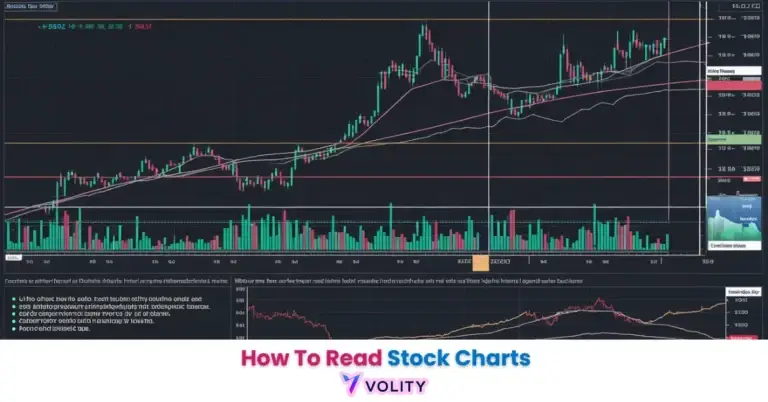
A high-probability dip occurs when an asset’s price returns to a key support level while its underlying fundamental growth story remains intact. Technical support levels define where buying pressure historically emerges, the 50-day moving average and 200-day moving average serve as major barriers where institutional buyers enter positions. Momentum confirmation using Technical Analysis of the RSI indicator reveals oversold conditions (below 30), signaling that sellers are exhausted and rebounds are likely.
Fundamental checks ensure that the price drop isn’t caused by a permanent business failure or competitive disruption. A temporary earnings miss or market-wide selloff creates a dip-buying opportunity; a company’s loss of market share or product obsolescence creates a “falling knife” that continues lower. Worked illustration (not a record of a real trade): A large-cap stock pulls back to a moving average that has held before, while nothing in the demand picture has changed. That is the shape of a high-probability dip: a price move without a matching change in the business. The judgement is not whether the chart looks oversold but whether anything in the underlying story actually broke. Past performance is not indicative of future results.
The risks of “catching a falling knife” in 2026
Risk assessment identifies the critical differences between a temporary price dip and a permanent capital loss during an economic downturn. A falling knife represents a price decline that reverses neither quickly nor substantially, instead continuing downward as market conditions deteriorate and fundamental assumptions prove incorrect.
| Factor | High-Probability Dip | Falling Knife Trap | Verdict |
| Trend | Above 200-day SMA | Below 200-day SMA | Avoid |
| Volume | Decreasing on the Drop | Increasing on the Drop | Avoid |
| Sector | Strong Relative Strength | Weakest in Market | Avoid |
| News | Noise / Profit Taking | Earnings Miss / Fraud | Avoid |
| Support | Bounces at Key Level | Slices Through Level | Avoid |
A qualitative checklist, not a backtest. The evidence on dip-buying versus regular investing is set out in Even God Couldn’t Beat Dollar-Cost Averaging.
Strategic Timing: When does buying the dip work best?
Historical market cycles indicate that buying the dip is most effective during secular bull markets where pullbacks are caused by temporary sentiment shifts rather than macro reversals. Bull market resilience explains why “Buy the Dip” became the dominant strategy from 2009-2024, as nearly every dip was followed by new all-time highs. In flat or sideways markets, the strategy works by trading the range-bound asset between support and resistance. The danger zone emerges during the first 6-12 months of a recession, when the primary downtrend is established and each “dip” becomes merely a pause before lower prices return.
Bull Market conditions create the ideal environment for dip-buying because economic fundamentals remain strong and the psychological pullbacks are temporary. Market Volatility spikes during corrections, and in 2026, “Algorithm-Driven Dips” often occur in milliseconds, price can flash-crash and recover before humans notice, making limit orders at key support levels essential for capturing these opportunities.
Turn Knowledge into Profit
You have done the reading, now it is time to act. The best way to learn is by doing. Open a free, no-risk demo account and practice your strategy with virtual funds today.
Open a Free Demo AccountPortfolio Management: Integrating Dips into your Plan
Systematic rebalancing represents the most disciplined way to ‘buy the dip’ without attempting to perfectly time the market’s bottom. Automated rebalancing forces buying of declining assets and selling of winners, creating a natural mechanism for deploying capital during weakness. Maintaining a 5-10% liquidity buffer for extreme market events allows participation in severe dips without liquidating existing positions at unfavorable prices.
How to Choose Stocks that possess strong fundamentals and competitive moats ensures that dip-buying captures quality assets at discounts rather than distressed stocks facing permanent decline. Stop Loss Order discipline prevents unlimited downside losses if a dip becomes a falling knife, protecting capital by exiting positions that break below key technical support levels.
Key Takeaways
- [Buying the dip] is a market timing strategy that aims to lower the average cost of an investment by purchasing after a price decline.
- [Trend integrity] is the most important filter; the strategy works best when the asset remains above its long-term moving averages.
- [Opportunity cost] is the primary downside of buying the dip, as holding cash while waiting for a drop can lead to missed compounding gains.
- [Falling knives] represent stocks in a permanent downtrend, where buying the dip results in continued capital losses rather than a rebound.
- [Regular investing] beats dip-buying in the great majority of historical windows, because it keeps capital in the market instead of waiting on the sidelines.
- [Limit orders] at key support levels allow traders to capture sudden price spikes and volatility without constant market monitoring.
Frequently Asked Questions
This article contains references to buying the dip and Volity, a regulated CFD trading platform. This content is produced for educational purposes only and does not constitute financial advice or a recommendation to buy or sell any financial instrument. Always verify current regulatory status and platform details before using any trading service. Some links in this article may be affiliate links.