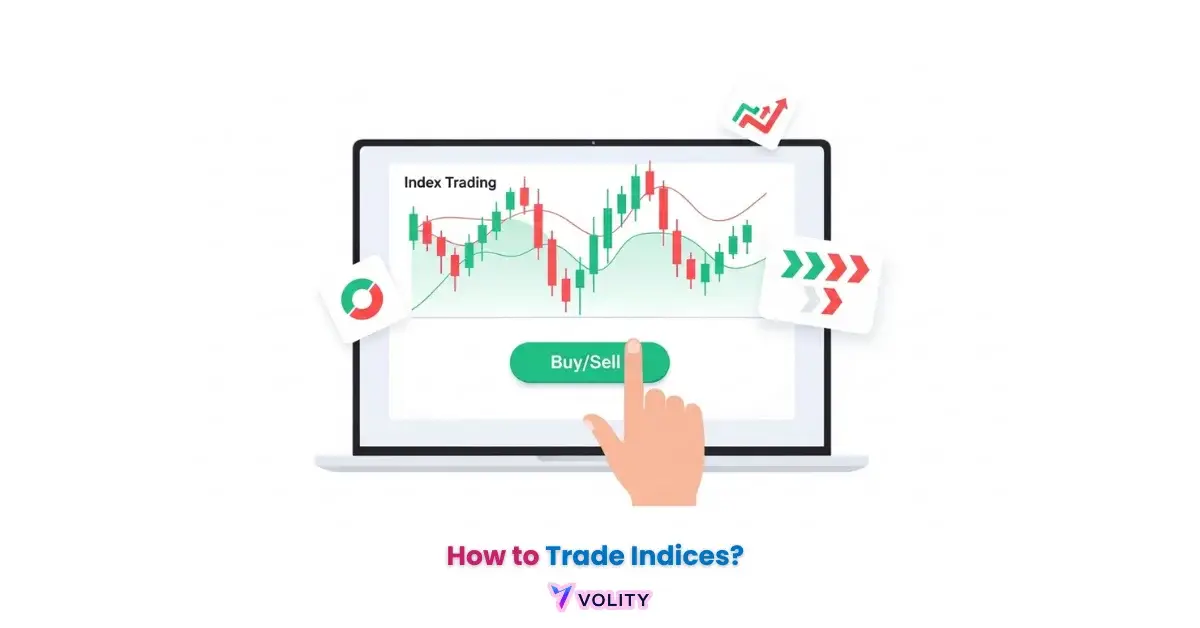
Indices trading offers a diversified alternative to individual stocks, allowing you to speculate on market sectors without owning underlying assets. This guide breaks down the essential steps, from selecting a broker and choosing indices to market analysis and risk management. By following these practical steps, you’ll gain the confidence to open and monitor your first index trade effectively.
While understanding How To Trade Indices is important, applying that knowledge is where the real growth happens. Create Your Free Forex Trading Account to practice with a free demo account and put your strategy to the test.
How to Trade Indices
Index trading is a straightforward process, even if you’re a beginner. Follow this guide and you’ll be trading with confidence in no time.
1. Choose a Broker
The first step to trading indices is to find a reliable index trading broker. An index trading broker is a platform where you can buy and sell contracts to track the price movements of indices. They essentially give you access to trade indices through various financial instruments.
Before selecting one, you must consider the available assets, the fee structure, the variety of tools on the platform, and how easy they are to use. Look for brokers that offer competitive leverage, a fast onboarding process, and multiple payment methods.
2. Select Your Indices
Next, pick the indices you wish to trade. If you prefer short-term trading, the Germany 40 (DAX) is a solid choice. If you want to trade over the long term and seek steady returns, the US 500 (S&P 500) is a popular option. Your choice of index also depends on your investment goals, your knowledge of the market, and how much risk you’re comfortable taking.
Understanding what indices are and how different stock market sectors influence them will help you make a more informed selection.
3. Analyse the Market
Discern the direction of the market using fundamental analysis, technical analysis, or a combination of both. Fundamental analysis examines economic data — it considers events related to a country’s politics, central bank decisions such as those made by the FOMC, and national earnings reports. Technical analysis, on the other hand, uses tools like charts and indicators to identify patterns and trends.
4. Pick a Trading Strategy
Before you commit capital, decide if you’re going long or going short. Going long means you expect the value of an index to rise, in which case you “buy” when opening your trade. Going short is the approach when you expect the index to fall in value — you start your trade with a “sell.”
For a deeper look at which approaches work best, explore our guide on the best index trading strategies.
5. Implement Risk Management Strategies
Trading indices comes with both opportunities and risks, but you can limit your downside with the right approach. You could use proper position sizing to prevent excessive leverage, keep an eye on economic reports like the non-farm payroll so you know when they’ll impact the index, or set up stop-loss orders that automatically close your trade when the loss reaches a certain level.
A solid understanding of asset allocation and your personal reward-to-risk ratio will also go a long way in protecting your capital.
6. Open a Trade and Monitor It
Now that you’ve taken all the preparatory steps, it’s time to open a trade. Log in to your broker platform and select from options, cash, or futures trades. An options trade is one where you set a price to buy or sell an asset at a particular price before an expiry date. Futures involve speculating on the future price of an asset, while cash trading is the straightforward buying or selling of an asset.
Monitor your position to see when you’re making a profit or if it’s time to cut a loss.
What Are Indices?
If this is your first time trading, you’ve probably wondered, “what are indices?” Indices show the performance of a group of assets in a market or sector. The assets could be stocks, bonds, or other financial instruments. The price movements of these assets reflect how well that sector is performing.
For example, the S&P 500 tracks the stocks of the 500 biggest companies in the US. The upward or downward movement of this index shows whether these companies are trending positively or negatively as a whole.
Ready to Elevate Your Trading?
You have the information. Now, get the platform. Join thousands of successful traders who use Volity for its powerful tools, fast execution, and dedicated support.
Create Your Account in Under 3 MinutesWhat Is Index Trading?
Index trading is the process of speculating on the price movements of stock market indices. You don’t need to own any of the underlying stocks. Instead, you simply predict whether the price of the index will increase or decrease and position your trade accordingly.
Types of Indices in Trading
Although there are numerous types of indices, they can generally be divided into four categories:
- Currency Indices — Track the performance of a basket of currencies against a benchmark.
- National Indices — Represent the overall stock market performance of a specific country (e.g., S&P 500, FTSE 100).
- Sector Indices — Focus on a particular industry or market sector, such as technology or healthcare.
- Volatility Indices — Measure market volatility and investor sentiment, such as the VIX.
Turn Knowledge into Profit
You've done the reading, now it's time to act. The best way to learn is by doing. Open a free, no-risk demo account and practice your strategy with virtual funds today.
Open a Free Demo AccountBenefits of Trading Indices
There’s a lot to benefit from when trading indices:
- Easy market access: With indices trading, you don’t need to own any shares to profit from their upward or downward trends.
- Diversification: Unlike individual stocks where you put all your eggs in one basket, indices give you the opportunity to spread risk. You can track the performance of multiple companies or economies, reducing the impact of any single investment.
- Lower volatility: Indices tend to be more suitable for beginners, as their value doesn’t fluctuate as rapidly as individual stocks.
- Flexibility: Index trading allows you to trade with many instruments, such as ETFs, spot contracts, and futures. This means you can pick an option that best suits your trading approach.
Bottom Line
Trading indices offers a dynamic way to engage with financial markets, providing diversification and potentially lower volatility compared to individual stock trading. By following a structured approach that includes selecting a reputable broker, conducting thorough market analysis, implementing robust risk management, and understanding various trading instruments, beginners can confidently navigate the world of index trading. Consistent monitoring and adherence to your chosen strategy are key to long-term success.
Key Takeaways
- Successfully trading indices involves choosing a reliable broker, selecting appropriate indices, conducting thorough market analysis, and implementing a clear trading strategy.
- Effective risk management, including proper position sizing and stop-loss orders, is crucial for protecting capital in index trading.
- Indices offer diversification and lower volatility compared to individual stocks, making them a suitable option for many traders.